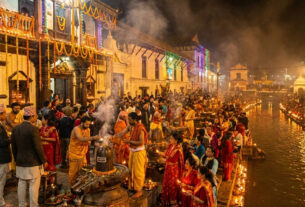
Nepal, widely known as the “Land of the Gods” and a nation of temples, possesses a deeply rooted spiritual culture where every ritual carries layered religious, philosophical, and scientific meaning. Among these rituals, the use of water in temples holds a central and irreplaceable role. From daily abhishek (ritual bathing of deities) to purification rites and the preservation of sacred water sources, water is not merely a symbolic offering—it is a scientifically and spiritually powerful medium.
This article explores how water is used in Nepali temples, examining its religious significance, scientific foundation, environmental logic, and cultural continuity.
1. Water as a Sacred Element in Sanatan Philosophy
In Sanatan Dharma, water is considered the foundation of life and purity. The ancient Panchatatva (five elements) theory identifies Jal (water) as one of the essential elements governing physical and spiritual existence.
In temples, water represents:
Purity and renewal
Continuity of life
Balance between the physical body and subtle energy
This belief is not abstract symbolism alone. Ancient sages understood water’s ability to absorb, store, and transmit energy, which modern science now recognizes through molecular structure and vibrational studies.
2. Abhishek: Ritual Bathing and Its Scientific Logic
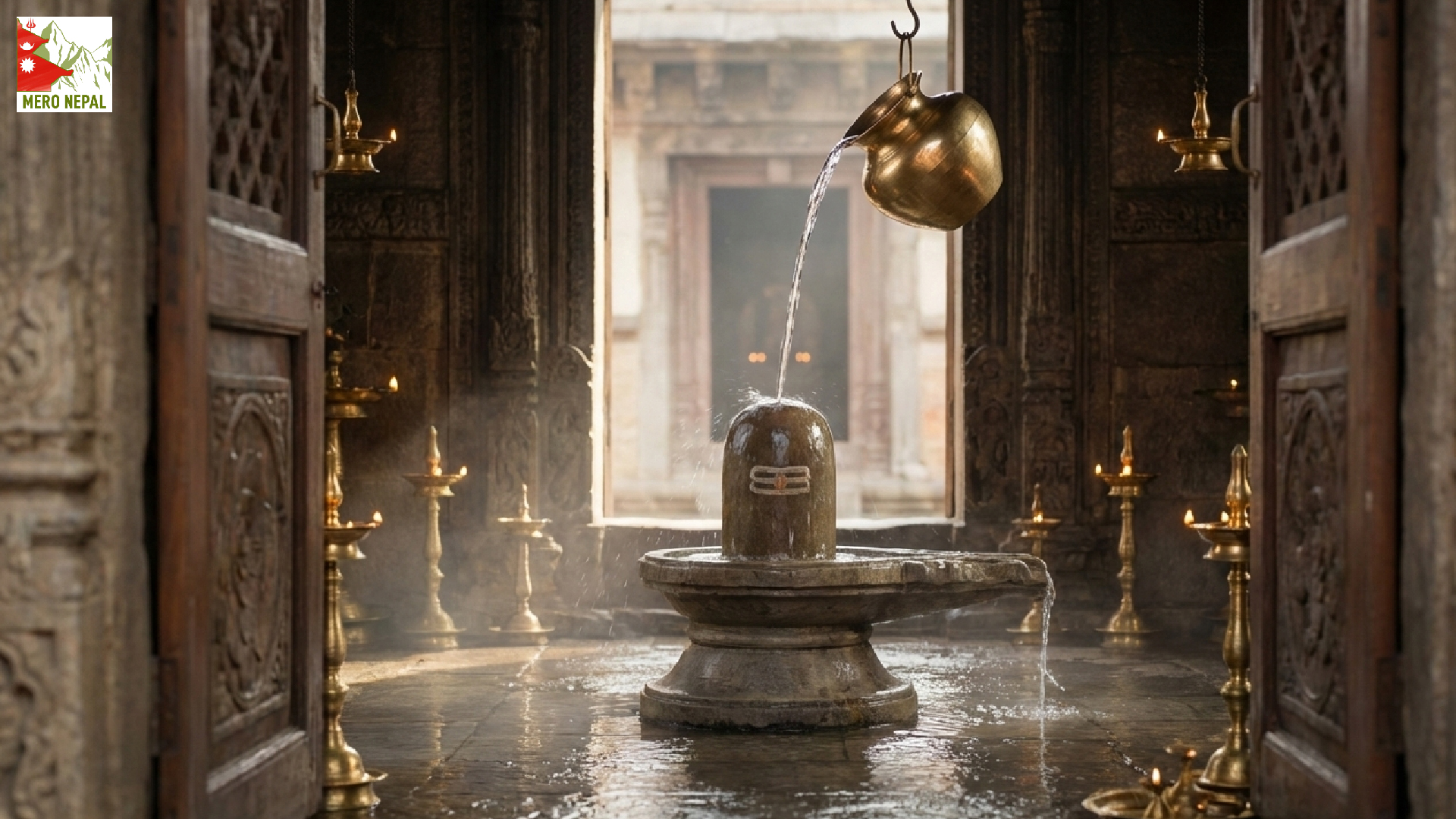
Abhishek refers to the ceremonial pouring of water, milk, curd, honey, ghee, or herbal-infused liquids over the deity. While devotion is the visible aspect, the process also has a strong scientific basis.
Thermal Regulation of Stone Deities
Most Nepali temples house stone idols. Stone absorbs heat during the day, especially in oil-lamp-lit sanctums. Regular abhishek:
Regulates temperature
Prevents micro-cracks
Preserves the structural integrity of idols
Acoustic and Vibrational Effects
When water flows over stone during mantra chanting, it creates a subtle vibrational field. These vibrations enhance:
Mental calmness
Focus during prayer
Harmonization of the surrounding space
3. Sacred Water Sources (Tirtha Jal) in Nepal
Nepal is home to numerous sacred water bodies—rivers, springs, ponds, and stone spouts (dhunge dhara)—many of which are directly linked to temples.
Natural Filtration and Mineral Balance
Most traditional temple water sources emerge from:
Underground aquifers
Rock-filtered springs
Forest-preserved catchment zones
This natural filtration ensures mineral-rich, bacteria-resistant water, explaining why such sources remained usable for centuries.
Ritual Use
Sacred water is used for:
Sprinkling during entry
Washing hands and feet
Offering to deities
Distributing as prasād
4. Purification Rituals and Hygiene Science
Temple rituals emphasize cleanliness long before modern hygiene systems existed.
Practices include:
Washing hands and feet before entry
Sprinkling water on the head
Cleaning ritual spaces multiple times daily
Scientifically, these practices:
Reduce pathogen transmission
Lower infection risk in crowded spaces
Maintain air and surface hygiene
The continuous use of flowing water prevents stagnation, which is a known source of bacterial growth.
5. Water, Sound, and Consciousness
Water reacts strongly to sound vibrations. Chanting mantras near water sources alters its molecular arrangement, a concept increasingly studied in modern water research.
In temples:
Bells and mantras energize water
Energized water is used for rituals
Devotees consume or apply it believing in its calming effect
This interaction between sound, water, and consciousness is one of the most advanced aspects of temple science.
6. Environmental Wisdom Embedded in Temple Design
Traditional Nepali temples were designed to:
Protect water sources
Prevent contamination
Encourage sustainable usage
Temple ponds and stone spouts acted as:
Rainwater harvesting systems
Groundwater recharge points
Community water reserves
Thus, religious water use also supported ecological balance and community survival.
7. Cultural Continuity in Modern Times
Despite urbanization, water rituals remain unchanged in Nepali temples. This continuity reflects:
Respect for ancestral knowledge
Practical effectiveness of rituals
Cultural resilience
Even today, devotees instinctively follow these practices without needing scientific explanation—proof of how deeply ingrained this wisdom is.
Understanding Nepali Temple Traditions with Mero Nepal App
To understand the deeper meaning behind rituals like abhishek, sacred water use, festivals, tithis, and daily religious practices, Mero Nepal App serves as a reliable digital resource.
The app provides:
Authentic explanations of Nepali Sanatan traditions
Information on temples, rituals, and festivals
Daily religious insights in a simple and organized format
By bridging ancient knowledge with modern technology, Mero Nepal App helps preserve and share Nepal’s spiritual heritage with today’s generation.
👉 Available on Google Play:
https://play.google.com/store/apps/details?id=com.meronepal.app
Conclusion
The use of water in Nepali temples is neither ritualistic habit nor blind belief. It is a refined system where science, spirituality, environmental awareness, and human psychology intersect. From abhishek to sacred springs, every practice reflects a deep understanding of nature and the human body.
The next time you sprinkle temple water on your head or witness abhishek being performed, remember that you are participating in a tradition perfected over thousands of years—one that nurtures both the soul and the body.