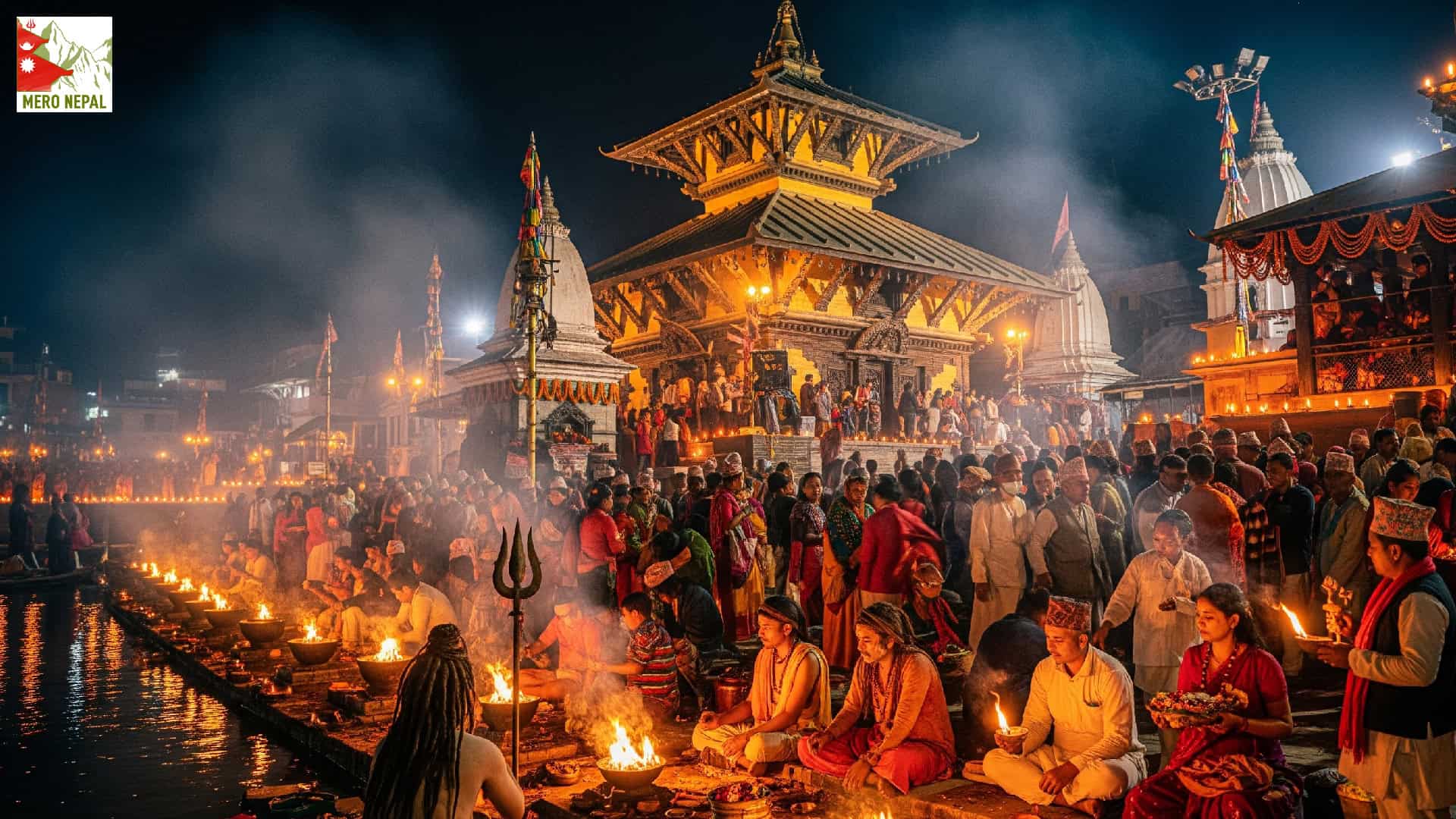
Maha Shivaratri, meaning “the great night of Shiva,” is one of the most significant Hindu festivals, dedicated to Lord Shiva. Celebrated across Nepal, India, and the global Hindu community, this festival reaches its spiritual pinnacle in Pashupatinath Temple, Kathmandu, Nepal. Every year, thousands of devotees, sadhus, naga babas, and yogis gather here to immerse themselves in the rituals and prayers dedicated to Shiva.
This festival is not only a religious observance but also a cultural and social celebration, showcasing Nepal’s rich heritage and spiritual devotion.
1. Historical and Mythological Significance
Maha Shivaratri has several legends associated with its origin:
Tandava Dance: On this night, Lord Shiva is believed to have performed the cosmic Tandava, the dance representing creation, preservation, and destruction.
Marriage of Shiva and Parvati: Another legend states that Shiva and Parvati were married on this day, symbolizing divine union and spiritual balance.
Samudra Manthan (Churning of the Ocean): During the churning of the ocean, Shiva drank the lethal poison (Halahal) to save the universe, turning his throat blue and earning the name Neelkanth.
These stories make Maha Shivaratri a festival of cosmic significance, divine love, and selfless sacrifice.
2. Religious Importance
Maha Shivaratri is considered a night for spiritual awakening and purification.
Devotees observe fasting and offer bilva leaves, milk, yogurt, ghee, honey, and water to the Shiva Linga.
Chanting the mantra “Om Namah Shivaya” continuously is believed to absolve sins and grant spiritual merit.
Staying awake all night for prayer, meditation, and devotional songs strengthens self-discipline, faith, and spiritual energy.
Observing the rituals is believed to bring longevity, prosperity, family peace, and even moksha (liberation).
3. Maha Shivaratri at Pashupatinath
Pashupatinath Temple is the heart of Shiva worship in Nepal, and Maha Shivaratri here is an extraordinary event.
Gathering of Sadhus and Yogis: Thousands of Indian and Nepali sadhus, including Naga babas, gather at the temple.
Dhuni and Meditation: Sadhus sit near sacred fires (dhuni), meditate, and demonstrate ascetic practices.
Abhishek and Darshan: Devotees offer Panchamrit (milk, yogurt, ghee, honey, sugar) on the Shiva Linga and wait in long queues for darshan.
Cultural Atmosphere: Bhajans, mantras, and traditional chants fill the air, creating a spiritual yet festive environment.
4. Life of Sadhus and Naga Babas
During Maha Shivaratri, observing the lifestyle of sadhus and naga babas is an integral part of the experience:
Some Naga babas remain unclothed, applying ash over their bodies as a form of spiritual discipline.
They meditate near the dhuni and consume minimal food or ritual substances such as cannabis for religious purposes.
Their presence adds a unique, living spiritual dimension to Pashupatinath Temple.
5. Social and Cultural Significance
Maha Shivaratri is more than a religious festival; it is also a cultural and social gathering:
The ghats and streets around the temple feature food stalls, traditional crafts, and festival offerings.
People of all communities come together, showcasing religious tolerance and unity.
Foreign tourists often visit to witness the grandeur and spiritual atmosphere of this festival.
6. Symbolism
All-night Vigil (Jagaran): Triumph of light over darkness and knowledge over ignorance.
Fasting and Discipline: Spiritual purification and self-control.
Shiva Linga Worship: Reminder of the eternal cycle of creation, preservation, and destruction.
Sadhus’ Asceticism: Renunciation of material desires and pursuit of spiritual enlightenment.
7. Maha Shivaratri in Modern Times
Today, Maha Shivaratri combines tradition with modern management:
Authorities ensure safe and smooth darshan with proper crowd and traffic management.
Electric lights and media coverage enhance the festival’s visibility and appeal.
Yet, the core essence remains—devotion, meditation, and spiritual awakening.
Conclusion
Maha Shivaratri is not merely a festival; it is a spiritual journey and cultural celebration. The grandeur of Pashupatinath Temple during this night represents Nepal’s religious pride, heritage, and devotion.
It reminds devotees that life’s true greatness lies not only in worldly pursuits but also in faith, discipline, and meditation. Worshiping Lord Shiva brings purification, self-realization, and a path to liberation.
Mero Nepal
For complete guides on Nepali festivals, rituals, and spiritual events, download Mero Nepal:
Nepali calendar (Patro)
Festival information
Horoscope
News and cultural articles