Mha Puja is a unique, culturally and spiritually significant festival celebrated by the Newar community of Nepal. It is observed on the first day of the Nepal Sambat New Year and focuses on personal purification, self-awareness, spiritual renewal, and inner empowerment. Unlike other festivals that honor deities, Mha Puja venerates the individual, recognizing the body, mind, and soul as sacred.
Significance of Mha Puja
“Mha” means self, and “Puja” means worship. This festival emphasizes self-respect, health, and mental and spiritual well-being. Celebrated at the start of the Nepal Sambat calendar, Mha Puja marks the new year with positive energy, purity, and the promise of prosperity.
The festival strengthens not only spiritual practices but also mental and social awareness. It encourages individuals to begin the new year with self-consciousness, clarity, and physical wellness.
Rituals and Practices
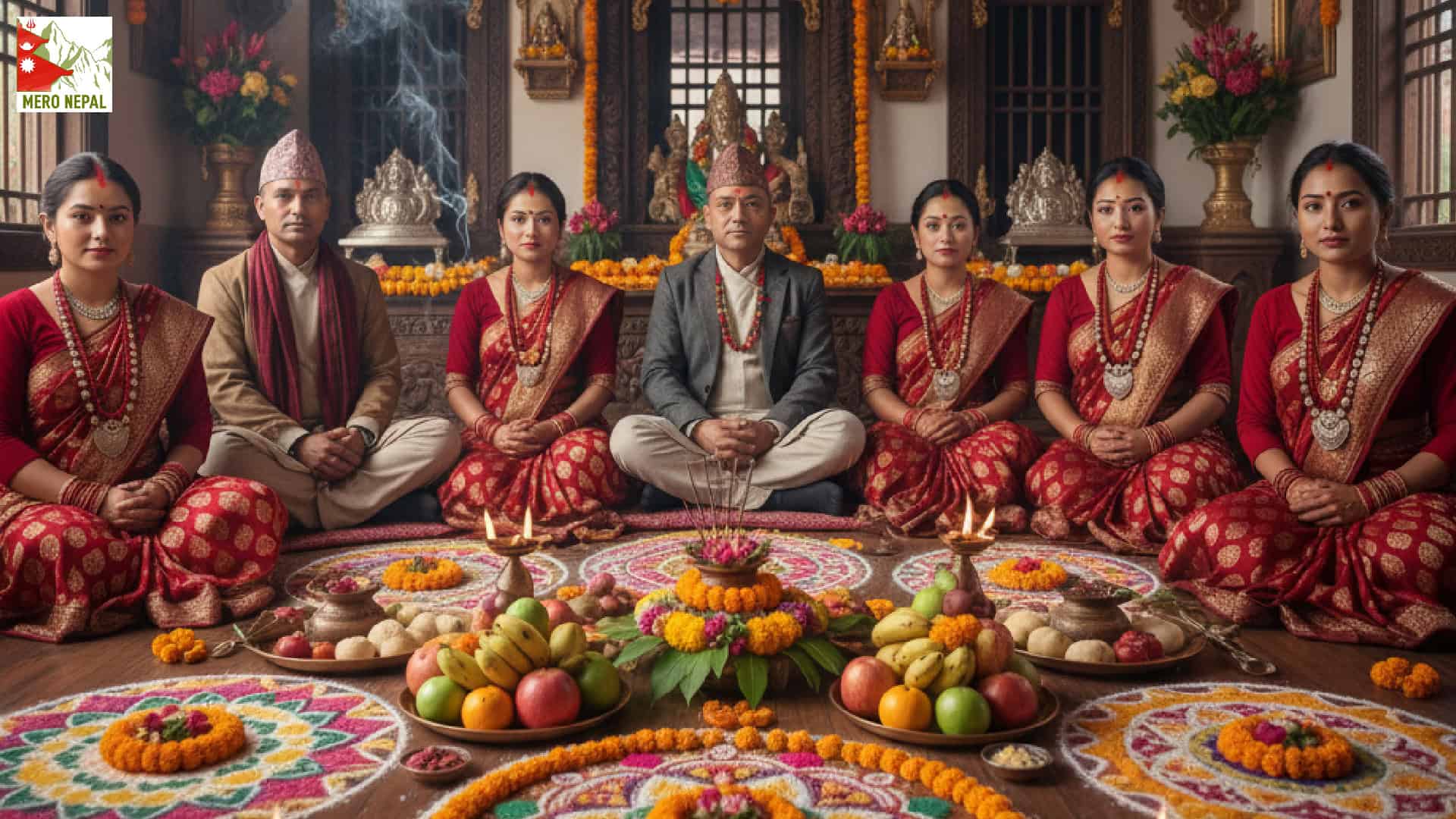
The central feature of Mha Puja is the creation of individual mandalas on the floor. Newar families use colored powders, rice, grains, and flowers to design these mandalas. Each family member sits on their personal mandala and performs the rituals.
Offerings include fruits, flowers, yogurt, incense, oil lamps, and other sacred items, symbolizing prosperity, health, purity, joy, and abundance. Elders and priests recite mantras while family members participate in prayers for long life, health, and success. This practice strengthens spiritual energy and self-awareness for every participant.
The rituals also emphasize household cleanliness, familial bonding, and a sacred environment, promoting both spiritual and material harmony.
Social and Cultural Importance
Mha Puja is not just a spiritual ritual but a vital social and cultural event. Families and communities gather, strengthening relationships and communal bonds. The festival teaches respect for oneself and others and reinforces cooperation, harmony, and social cohesion.
Mha Puja in Modern Times
Even today, Newar families in cities and abroad continue to observe Mha Puja. Rituals are performed at home or in community halls, bridging traditional practices with contemporary lifestyles and fostering cultural awareness among younger generations.
Digital platforms, social media, and mobile apps have expanded access to information about the festival. Families and communities share rituals, cultural stories, and Nepali heritage online, ensuring both preservation and promotion of the tradition.
Connection with Nepal Sambat
Mha Puja coincides with the Nepal Sambat New Year, a calendar system that originated thousands of years ago within the Newar community. It highlights the Newar contribution to Nepalese culture, history, and society. Mha Puja and Nepal Sambat together ensure that cultural pride and traditional knowledge are passed down to new generations, marking the new year with spiritual and social significance.
Personal Purification, Health, and Spiritual Learning
The festival provides an opportunity for self-reflection and renewal. Mha Puja emphasizes the importance of mental clarity, inner peace, and a healthy lifestyle. The rituals, mantra recitations, and sitting on mandalas enhance inner strength, confidence, and spiritual focus.
It reminds participants that the new year is not only the passage of time but also a chance to nurture personal health, inner purification, mindfulness, and social responsibility.
Conclusion
Mha Puja is more than a religious festival—it is a celebration of self-awareness, spiritual purification, social harmony, health, and cultural identity. The Newar community observes it as a symbol of new beginnings and personal growth.
Mha Puja reminds us that the start of a new year is an opportunity for inner purification, health, mental clarity, and social responsibility.