Navaratri, celebrated in Nepal and India, is one of the most important religious, cultural, and spiritual festivals. The word Navaratri means “nine nights,” during which the nine forms of Goddess Durga are worshipped. While Sharadiya Navaratri (autumn) is the most widely observed, Chaitra Navaratri is also celebrated. Each day honors a different goddess, symbolizing her power, qualities, and teachings.
Navaratri is not only about rituals but also about embracing positive energy, spiritual growth, and social harmony. Homes, temples, and communities organize special events that preserve cultural heritage and religious traditions.
The Nine Goddesses of Navaratri
During the nine days of Navaratri, the following goddesses are worshipped:
Shailaputri – Symbol of strength, patience, and courage. Worshipped on the first day, she is considered the daughter of the Himalayas and represents nature, power, and the essence of life.
Brahmacharini – Goddess of knowledge, penance, and discipline. On the second day, she is worshipped for her devotion, restraint, and self-control.
Chandraghanta – The goddess of bravery and protection from hardships. Devotees believe her worship removes fear, enemies, and negative forces.
Kushmanda – Goddess of creation, life, and light. On the fourth day, she is honored as the creative force and source of brightness in the universe.
Skandamata – Symbol of motherhood and compassion. She is the mother of Lord Skanda (Kartikeya) and represents nurturing and the power of maternal love.
Katyayani – The goddess of valor, courage, and positive energy. Worshipped on the sixth day, she blesses her devotees with self-confidence and fearlessness.
Kalaratri – Fierce destroyer of darkness. On the seventh day, she is invoked to remove enemies and overcome life’s obstacles.
Mahagauri – Symbol of purity, peace, and growth. On the eighth day, she purifies the body, mind, and surroundings, bringing inner calm.
Siddhidatri – The goddess of perfection, success, and spiritual accomplishment. On the ninth day, she is worshipped for fulfillment of goals and inner awakening.
Each goddess is honored with special mantras, flowers, rice grains, and rituals, providing devotees with positive energy, patience, courage, and moral strength.
Navaratri Rituals
1. Ghatasthapana
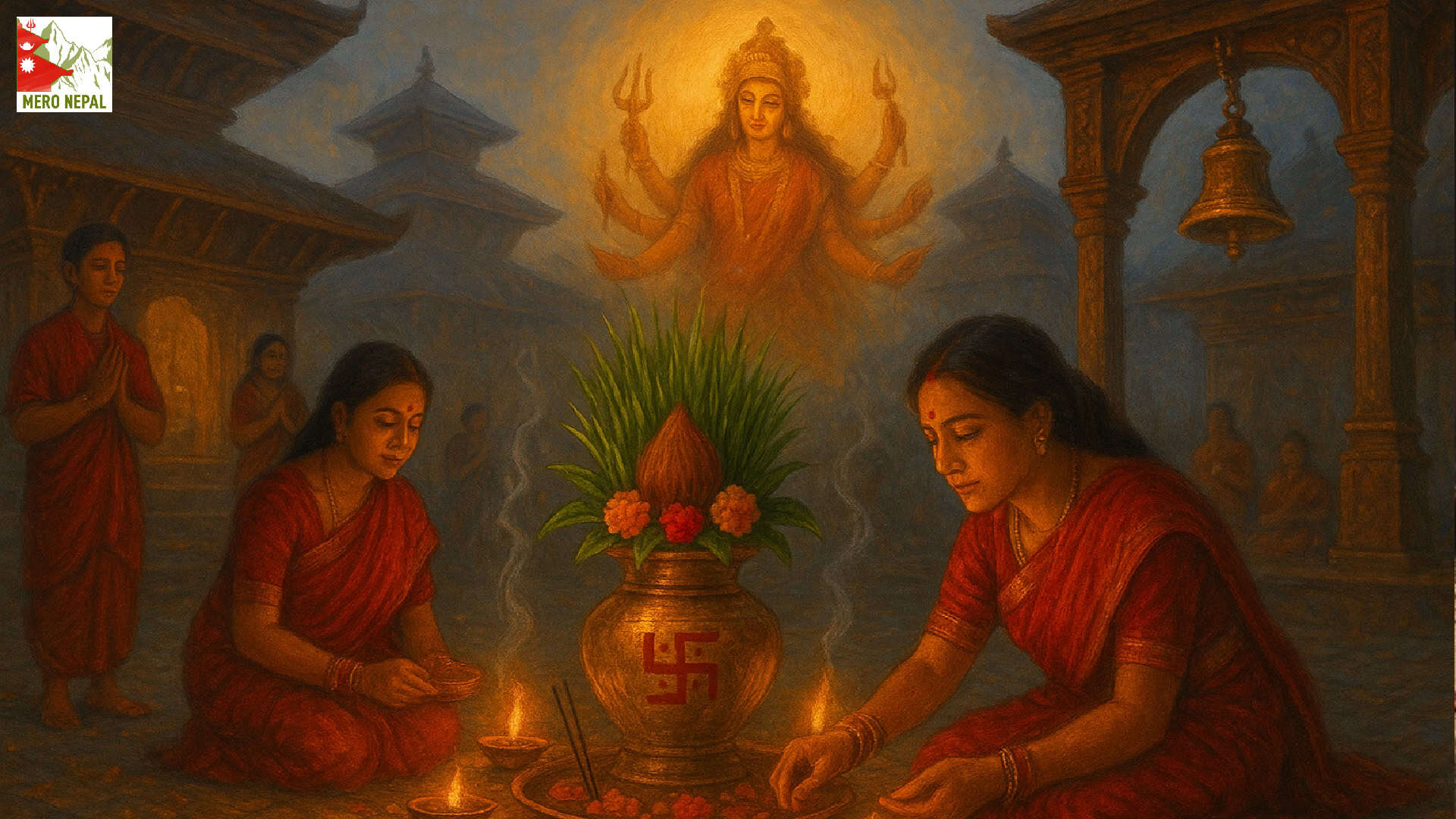
On the first day, a sacred pot (kalash) is established at home or in temples, symbolizing the presence of Goddess Durga. Holy water, grains, betel nut, and coins are placed inside, and a coconut is placed on top as a symbol of purity and fertility.
2. Daily Worship
Each day’s worship is performed according to the goddess being honored, with flowers, rice, incense, lamps, and offerings. Devotees chant hymns, sing bhajans, and meditate throughout the nine days.
3. Jamara Sowing
During Navaratri, barley seeds (jamara) are sown, which grow by Vijaya Dashami and are distributed along with tika as blessings. Jamara represents agricultural fertility and prosperity.
4. Charity and Service
Navaratri is also a time for donations, service, and community events, promoting dharma, morality, and social harmony.
Spiritual and Cultural Significance of Navaratri
Navaratri is not just a religious festival—it channels positive energy, mental peace, and inner strength to devotees. It also preserves agricultural, social, and cultural values.
By worshipping each goddess, devotees absorb her qualities—patience, courage, compassion, purity, and success. The festival concludes on Vijaya Dashami, when tika and jamara are offered as blessings.
Community gatherings, temple rituals, and family ceremonies during Navaratri strengthen social bonds and promote cultural unity.
Make Navaratri More Convenient with Mero Nepal App
With the Mero Nepal App, you can easily access all Navaratri information directly on your phone:
Learn the significance of each goddess and each day.
Get reminders for tika and jamara distribution.
Share festival updates with family and relatives.
Access complete Dashain and Navaratri details in one place.
📱 Download Mero Nepal App today to make your Navaratri more meaningful and organized.
Conclusion
Navaratri is more than just nine nights—it is a symbol of power, faith, knowledge, and prosperity. By worshipping the nine goddesses, from Shailaputri to Siddhidatri, devotees attain spiritual growth, social harmony, and inner strength.
Through rituals, jamara sowing, tika distribution, charity, and devotional practices, Navaratri brings blessings of prosperity, positivity, and divine protection. With the Mero Nepal App, the festival becomes even more accessible, organized, and spiritually enriching.