

Introduction: A Small Act with Deep Meaning
In many Nepali households, children are often reminded not to sweep the house after sunset. At first glance, this practice may appear to be a simple superstition passed down through generations. However, this everyday rule reflects a layered understanding of spirituality, environment, and practical living. Far from being irrational, the tradition of avoiding sweeping after dusk carries cultural symbolism, ecological awareness, and household wisdom shaped over centuries of experience.
The Cultural Belief: Respecting Goddess Lakshmi
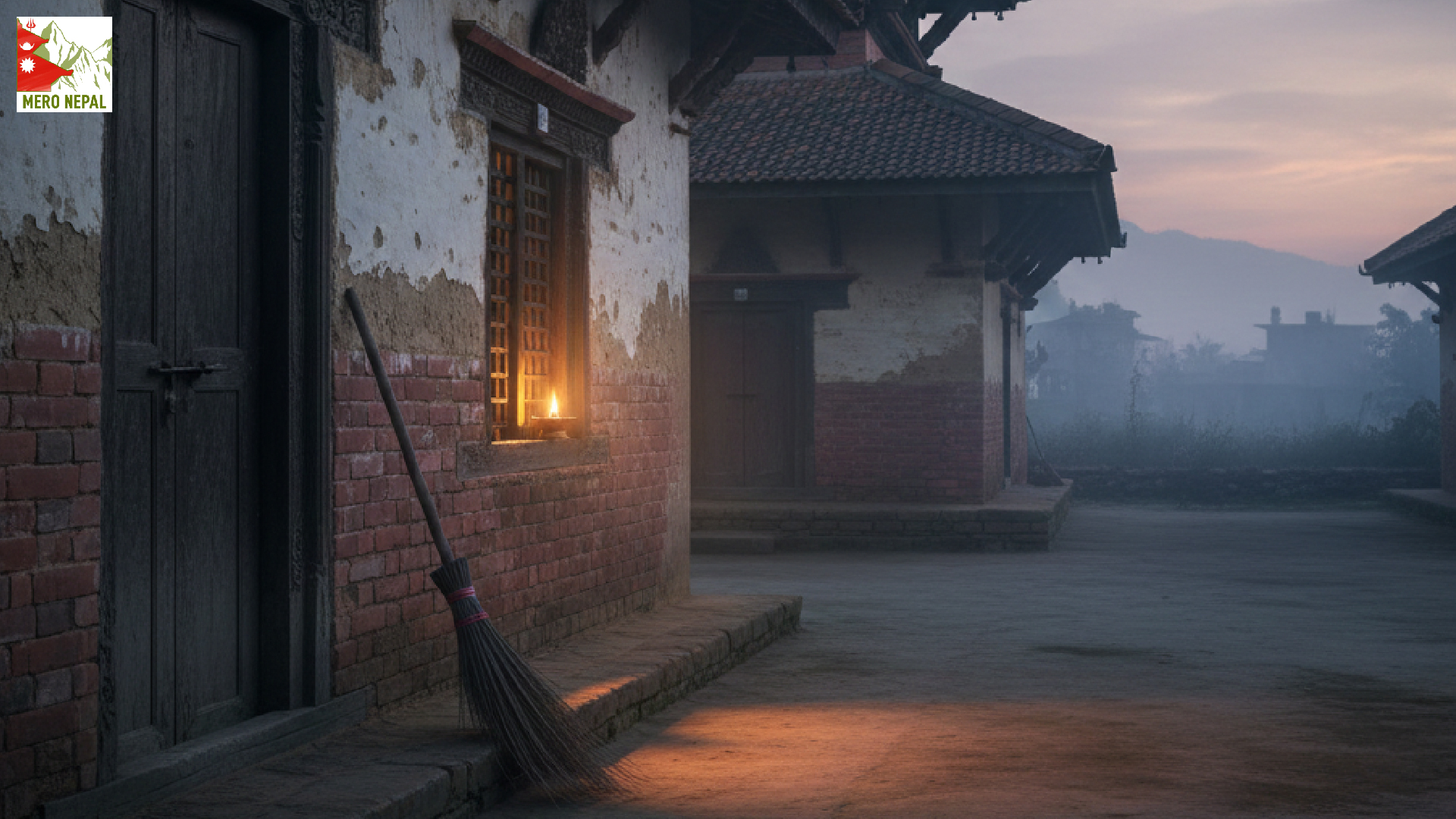
In Nepali Hindu tradition, Goddess Lakshmi represents wealth, prosperity, and well-being. Evening time—especially dusk—is considered the moment when Lakshmi enters the home. Sweeping at this time is culturally interpreted as “sweeping away” prosperity, peace, and good fortune.
This belief is not rooted in fear but in mindfulness. It encourages households to complete cleaning before evening, treat dusk as a sacred period, and set a calm, reflective tone for the night.
Dusk as a Sacred Transition
Sunset is considered a sandhya kaal—a transitional time between day and night. In Vedic and Nepali traditions, transitions like these are spiritually sensitive. During this time, many households light an oil lamp (diyo), offer prayers, or observe silence instead of performing physically disruptive activities.
Avoiding sweeping during this hour aligns with the broader idea that evenings are meant for stillness, reflection, and grounding.
Environmental and Practical Wisdom
Beyond cultural belief, there are practical reasons behind this tradition. Historically, Nepali homes relied on oil lamps or minimal natural light. Sweeping after sunset could inadvertently lead to the loss of coins, grains, or small jewelry.
Additionally, traditional floors made of mud, wood, or stone required daylight for effective cleaning. Dust stirred in low light could settle back inside the home, making cleaning less effective. What might seem like superstition today was historically practical household advice.
Cleaning Before Nightfall: Discipline and Order
The tradition indirectly promotes household discipline. By encouraging cleaning before sunset, families maintain organization, time management, and readiness. A clean home before nightfall symbolized preparedness for rest, prayer, and family togetherness.
This rhythm of daily life reduced stress, improved orderliness, and made evenings peaceful rather than chaotic.
Spiritual Psychology: Energy and Mental Calm
In Nepali beliefs, sweeping is considered an act of removing dust, waste, and stagnant energy. Performing such an action at night is thought to disturb settled household energy. Evening hours are associated with rest, family connection, and mental calm.
Avoiding sweeping at dusk subtly preserves household energy and mental peace. It also marks a psychological boundary between active labor and restful time—a concept modern lifestyles often overlook.
Relevance in Modern Nepali Life
Even in contemporary homes with ample lighting and fast-paced schedules, many families continue this tradition—not out of fear, but respect for culture. Urban apartments follow similar patterns: chores are completed during daylight, and evenings are reserved for relaxation, reflection, and worship.
This practice remains a reminder that not all traditions are outdated. Some, like this one, are timeless systems for balancing activity, rest, and mindfulness.
Understanding Timing in Daily Life
The custom of avoiding sweeping at dusk reflects a broader Nepali worldview: time matters. Just as certain days are auspicious for festivals or rituals, certain hours are considered better for specific actions. Observing this rhythm helps households live with fewer conflicts, more awareness, and smoother daily routines.
MeroNepal App: Tradition Made Practical
Conclusion: Tradition Rooted in Wisdom, Not Fear
Avoiding sweeping after sunset is not about superstition—it is about respect for time, space, and energy. The tradition reflects spiritual awareness, environmental understanding, and practical household intelligence cultivated over generations.
When traditions are understood rather than dismissed, they emerge as quiet systems of wisdom. The Nepali practice of not sweeping after dusk is less about restriction and more about mindful, harmonious living.


