

Introduction
Traditional handicrafts hold a central place in Nepal’s cultural identity. They are not only aesthetically pleasing and functional but also preserve Nepalese history, religion, social life, and traditional knowledge. In Nepali society, handicrafts are symbols of cultural, religious, and social values.
Local communities incorporate their environment, traditions, lifestyles, and religious beliefs into artistic expressions when creating handicrafts. Every item reflects communal knowledge, historical experience, and cultural narratives, making handicrafts a living cultural heritage rather than mere physical objects.
Handicrafts are closely tied to daily life and religious practices in Nepal. They play a key role in weddings, festivals, rituals, and ceremonies, ensuring the preservation and transmission of cultural traditions across generations.
History and Origins
Nepal’s handicraft history spans thousands of years. During the Lichhavi, Malla, and Shah periods, wood, metal, and clay art flourished. Carvings, sculptures, and artistic works in temples, palaces, and public spaces are evidence of this rich heritage.
Communities such as the Newars, Tamangs, Gurungs, Magars, Tharus, and others developed their own unique artistic styles. These styles not only provide aesthetic value but also reflect the religious beliefs, stories, and lifestyles of each community.
Types and Characteristics of Handicrafts
Nepal has a wide variety of handicrafts, each reflecting regional, communal, and religious influences:
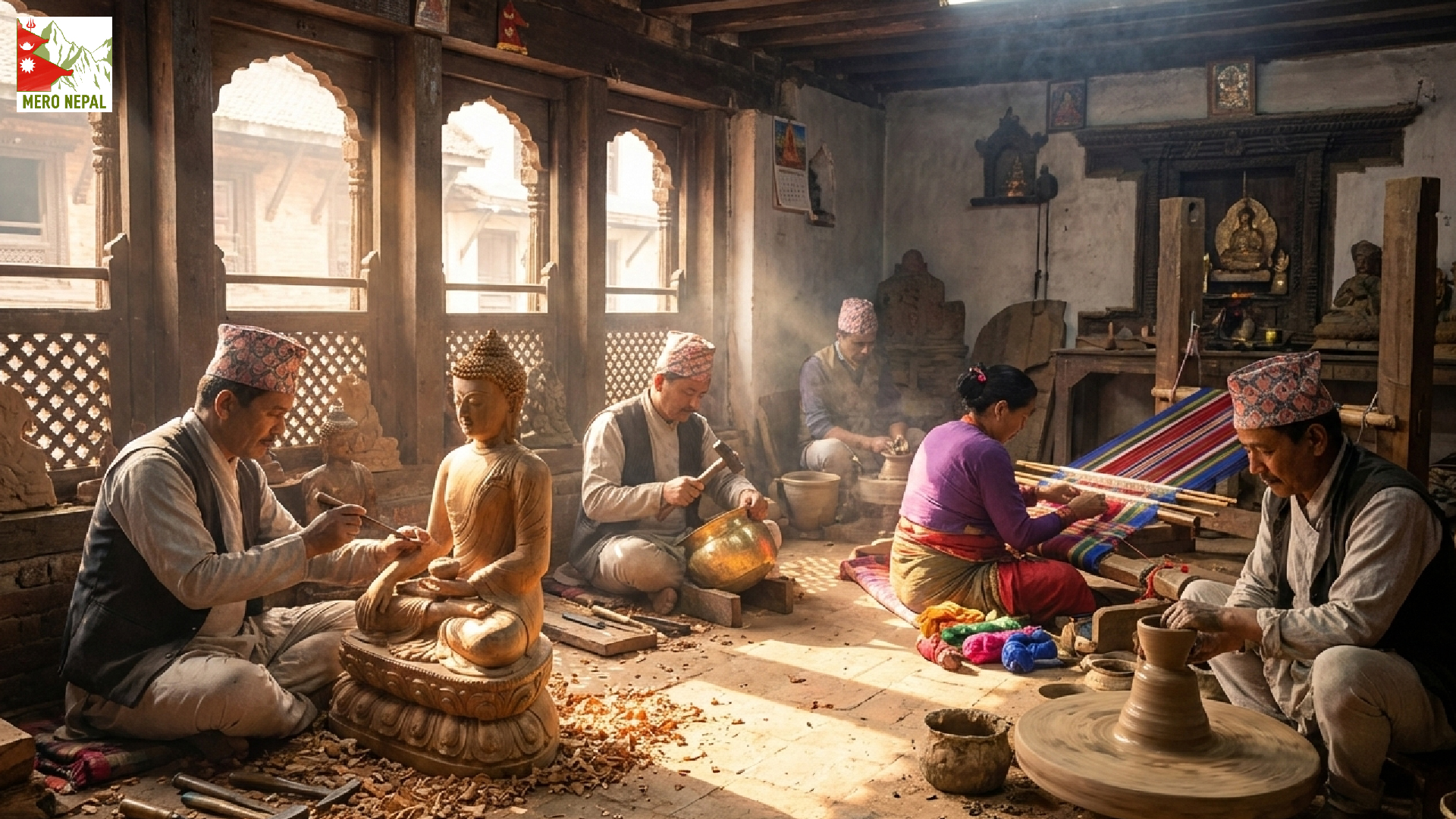
Wooden Handicrafts
Temple carvings, window and door designs, sculptures, and ritual objects
Commonly found in Kathmandu Valley, Bhaktapur, and Patan
Carvings often depict religious myths and cultural stories
Metal Handicrafts
Sculptures and items made of gold, silver, brass, and mixed metals
Includes ritual objects, vessels, and deity statues
Used in traditional ceremonies, especially among Newar and Tamang communities
Textiles and Fabrics
Handwoven Dhaka fabrics, traditional clothing, intricate embroidery
Used in weddings, festivals, and cultural events
Preserves weaving and embroidery techniques across generations
Clay and Stone Handicrafts
Pots, sculptures, religious artifacts, decorative items
Common in Gorkha, Pokhara, Chitwan, and other rural areas
Paper and Manuscript-Based Art
Thangkas, handwritten religious texts, and paintings
Preserves religious, historical, and cultural knowledge
Painting and Print-Based Crafts
Depict cultural stories and traditional lifestyles through paintings and posters
Cultural Significance
Handicrafts preserve Nepal’s cultural identity. They are integral to social and religious ceremonies, including weddings, naming rituals, festivals, and ancestor rituals.
Each community has its own unique style of creating wooden, metal, fabric, or clay items. This diversity respects cultural differences while maintaining social cohesion. Handicrafts are more than objects—they are repositories of stories, knowledge, and traditions.
Economic and Commercial Importance
The handicraft industry provides employment and income for local communities. Nepali handicrafts attract foreign tourists and art collectors, offering both economic benefits and international cultural recognition.
The use of local materials, training programs, and market management empowers communities. Exporting handicrafts also promotes Nepalese culture globally.
Religious and Social Connections
Many handicrafts are made for religious purposes. They are essential for temples, altars, rituals, and ceremonies. Handicrafts thus maintain spiritual practices as well as aesthetic beauty.
Socially, handicrafts strengthen community cohesion and cultural unity. During festivals, fairs, and public celebrations, handicrafts bring together people from all castes, classes, and communities.
Modern Challenges and Preservation
Modern lifestyles, technology, and digital culture have made preserving handicrafts challenging. Younger generations are increasingly adopting digital lifestyles over traditional crafts.
However, online platforms, mobile apps, and digital marketplaces make handicrafts more accessible. These tools encourage youth to engage with traditional knowledge. Workshops, art schools, and community initiatives help ensure that Nepali handicrafts survive for future generations.
Mero Nepal App – A Digital Guide to Handicrafts and Cultural Knowledge
The Mero Nepal App is a reliable tool for learning about traditional Nepali handicrafts, their history, cultural significance, and usage. Through the app, you can access:
Detailed descriptions of different handicrafts
Cultural and religious significance of each item
The role of handicrafts in festivals, rituals, and traditions
Guides to Nepali customs and traditional knowledge
This app links traditional knowledge with modern life, making it especially useful for education, research, and daily reference.
Download link: https://play.google.com/store/apps/details?id=com.meronepal.app
Future and Preservation
Preserving handicrafts is not only about protecting cultural heritage; it connects future generations to their identity and traditions. Collaboration among government, NGOs, communities, and educational institutions strengthens handicraft preservation.
Digitization, online sales, and exhibitions further promote Nepali handicrafts globally while keeping them relevant in modern society.
Conclusion
Nepalese traditional handicrafts are more than artistic objects—they are the foundation of cultural, social, and religious identity. Despite modern lifestyles, preserving these crafts helps protect Nepalese identity, empowers communities economically, and ensures the continuity of cultural heritage.
Handicrafts are not just relics of the past; they are living assets for the future, connecting Nepalese society to its roots, traditions, and heritage.


