Introduction
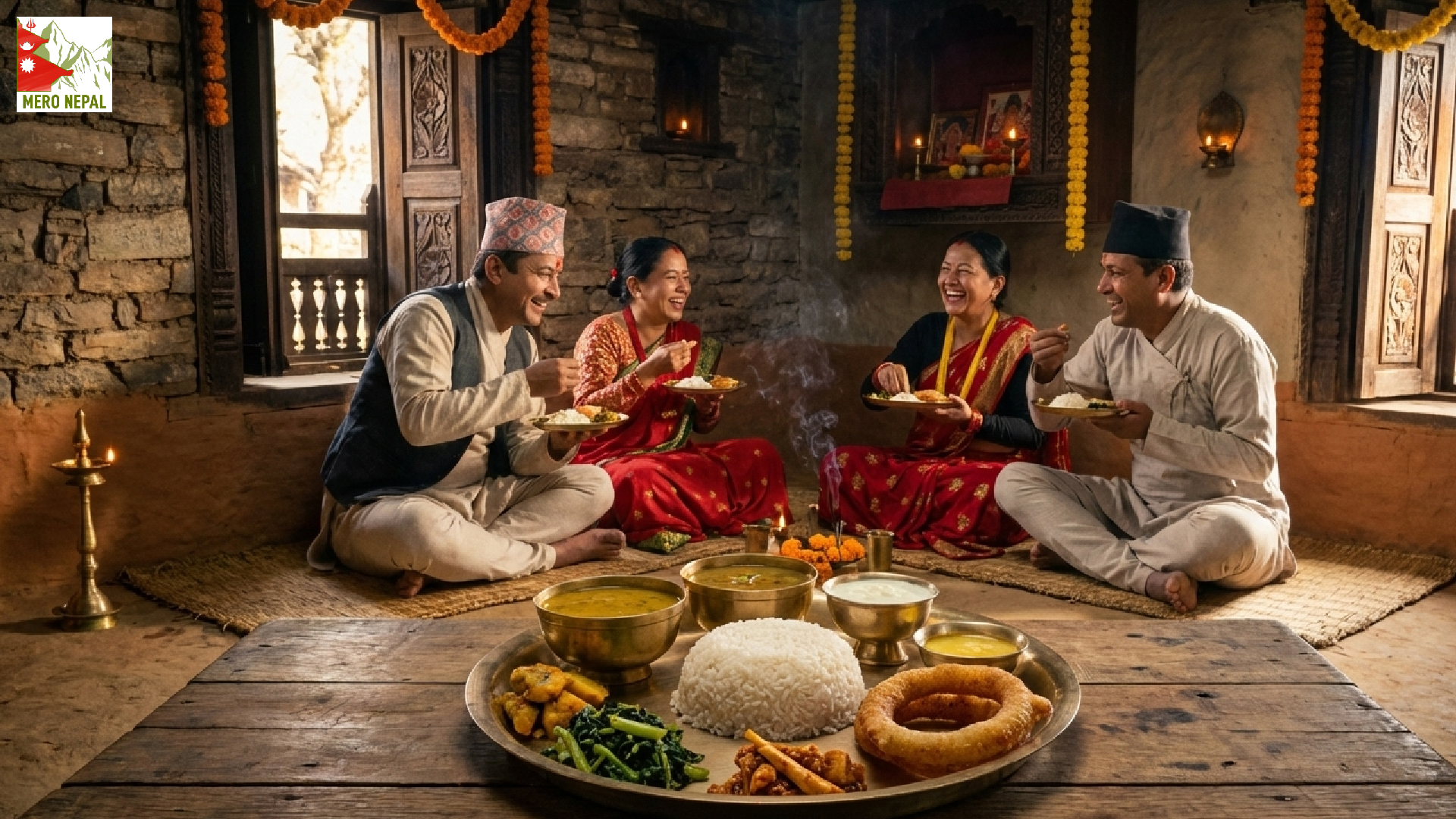
Nepal’s traditional food culture is not merely about eating; it represents a deep connection between history, religion, social structure, and daily life. In Nepali society, food is closely linked with nature, seasons, geography, and spiritual beliefs. Meals are seen as a means of nourishing not only the body but also the mind, soul, and community. This holistic understanding has shaped Nepal’s food traditions over centuries.
Food and Its Deep Connection with Religion
In Nepali religious life, food plays a central ritual role. During puja, fasting, yajna, ancestor rituals, and life-cycle ceremonies, food is prepared and offered according to strict religious rules. Naivedya offered to deities, prasad distributed among devotees, and specific foods consumed after fasting symbolize purity, discipline, and devotion. Festivals such as Dashain, Tihar, Teej, Chhath, Janai Purnima, and Maghe Sankranti demonstrate how food reinforces religious observance and spiritual order.
Symbolic Meanings Embedded in Food
Every traditional Nepali food item carries symbolic meaning. Rice represents life, prosperity, and purity. Lentils symbolize strength and balance. Milk, curd, and ghee signify purity and auspiciousness. Sesame seeds are associated with ancestral rituals, fruits symbolize longevity and abundance, and sweets represent happiness and celebration. Through these meanings, food becomes a spiritual language rather than just physical nourishment.
Seasonal Influence on Food Habits
Seasonality strongly influences Nepali food culture. Light and cooling foods are preferred in summer, immunity-boosting meals during the monsoon, and warming, energy-rich foods in winter. During Maghe Sankranti, foods like chaku, ghee, sesame, and tubers are consumed to generate warmth and strength. This tradition shows how Nepali cuisine aligns health, environment, and spirituality.
Geographical Diversity in Nepali Cuisine
Nepal’s geography—Himalayan, hilly, and Terai regions—has shaped diverse food traditions.
In Himalayan areas, wheat, buckwheat, potatoes, meat-based dishes, thukpa, dhido, and chyang are common due to cold climates.
In the hills, dhido, gundruk, sinki, maize, soybeans, and seasonal vegetables dominate daily meals.
In the Terai, rice, lentils, vegetables, fish, snails, flatbreads, and sweets are widely consumed.
Each region’s cuisine reflects local resources, climate, and lifestyle.
Ethnic Communities and Food Identity
Nepal’s ethnic diversity is reflected in its food traditions. The Newar community is known for dishes like samay baji, yomari, kwati, and chatamari. Tharu cuisine features fish, snails, and rice-based dishes. Gurung, Magar, Rai, and Limbu communities emphasize dhido, meat, fermented foods, and traditional beverages. These cuisines preserve community history, rituals, and social identity.
Festivals and Special Dishes
Nepali festivals are inseparable from food. Dashain is marked by meat dishes, Tihar by sel roti and sweets, Teej by dar, Chhath by ritual offerings, Maghe Sankranti by sesame sweets and chaku, and Janai Purnima by kwati. These foods enhance the religious and cultural meaning of each festival and maintain collective tradition.
Food and Social Life
Food plays a vital role in strengthening social relationships in Nepal. Weddings, feasts, rice-feeding ceremonies, initiation rites, ancestral rituals, and community gatherings involve shared meals. Serving food to guests is considered a sign of respect and hospitality. Communal eating fosters unity, cooperation, and mutual respect within society.
Modern Influence and Preservation of Tradition
Modern lifestyles, fast food culture, and globalization have challenged traditional food practices. However, there is a renewed interest in local, organic, and traditional foods. Increased awareness of health benefits and cultural value has encouraged preservation. Digital platforms, articles, videos, and mobile applications now help document and transmit traditional food knowledge to younger generations.
Mero Nepal App and Traditional Food Knowledge
The Mero Nepal App serves as a useful digital resource for understanding Nepali festivals, fasting practices, rituals, and their associated traditional foods. The app makes cultural and religious knowledge accessible in a practical, modern format.
Download link: https://play.google.com/store/apps/details?id=com.meronepal.app
Conclusion
Nepal’s traditional food culture is a living expression of religion, society, and harmony with nature. Each dish carries history, belief, and collective memory. While food practices continue to evolve with time, their cultural essence remains intact. Preserving traditional food culture means safeguarding Nepali identity, health wisdom, and cultural continuity for future generations.