Introduction
Nepal is not just a land of mountains, hills, and plains; it is a confluence of multiple civilizations, faiths, and identities. Thousands of years of historical development, Vedic and Buddhist traditions, local beliefs, and community practices have shaped Nepali culture. Understanding its cultural foundations is essential to appreciate the Nepali identity.
Nepali culture is not just historical or religious content—it is a living system that encompasses lifestyle, social values, food, dance, music, architecture, language, and festivals. Every Nepali strengthens this identity by understanding their culture.
1. Multi-Ethnic and Multi-Lingual Structure
Nepal is one of the most ethnically and linguistically diverse countries in the world, with over 125 ethnic groups and more than 120 languages.
Major Ethnic Groups
-
Khas-Arya: Predominantly in the hill and Himalayan regions.
-
Newar: Centered in the Kathmandu Valley, famous for their language, Guthi system, architecture, and cultural festivals.
-
Tharu: Living in the Terai, with agricultural and seasonal cultural practices.
-
Tamang, Gurung, Sherpa: Himalayan ethnic groups with mountain culture.
-
Magar, Rai, Limbu: Hill communities contributing to musical and dance traditions.
Language and Identity
Nepali is the official language, but languages like Maithili, Bhojpuri, Tharu, Tamang, Nepal Bhasa (Newari), Bantawa, and Limbu carry local culture. Language is not just a communication medium but a carrier of heritage and identity.
2. Religious Coexistence and Harmony
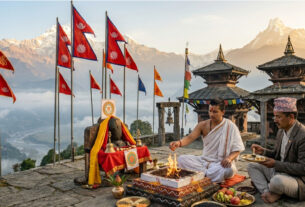
Nepal represents a harmonious blend of Hinduism and Buddhism. Both faiths coexist, often at the same sites.
Major Religious Sites
-
Swayambhunath Stupa: A major Buddhist stupa also visited by Hindu devotees.
-
Boudhanath Stupa: One of the world’s largest Buddhist centers.
-
Pashupatinath Temple: A sacred Hindu temple.
Religion is closely integrated into daily life, including worship, fasting, pilgrimages, and life-cycle rituals. This coexistence reflects social tolerance and cultural harmony.
3. Festivals and Traditions
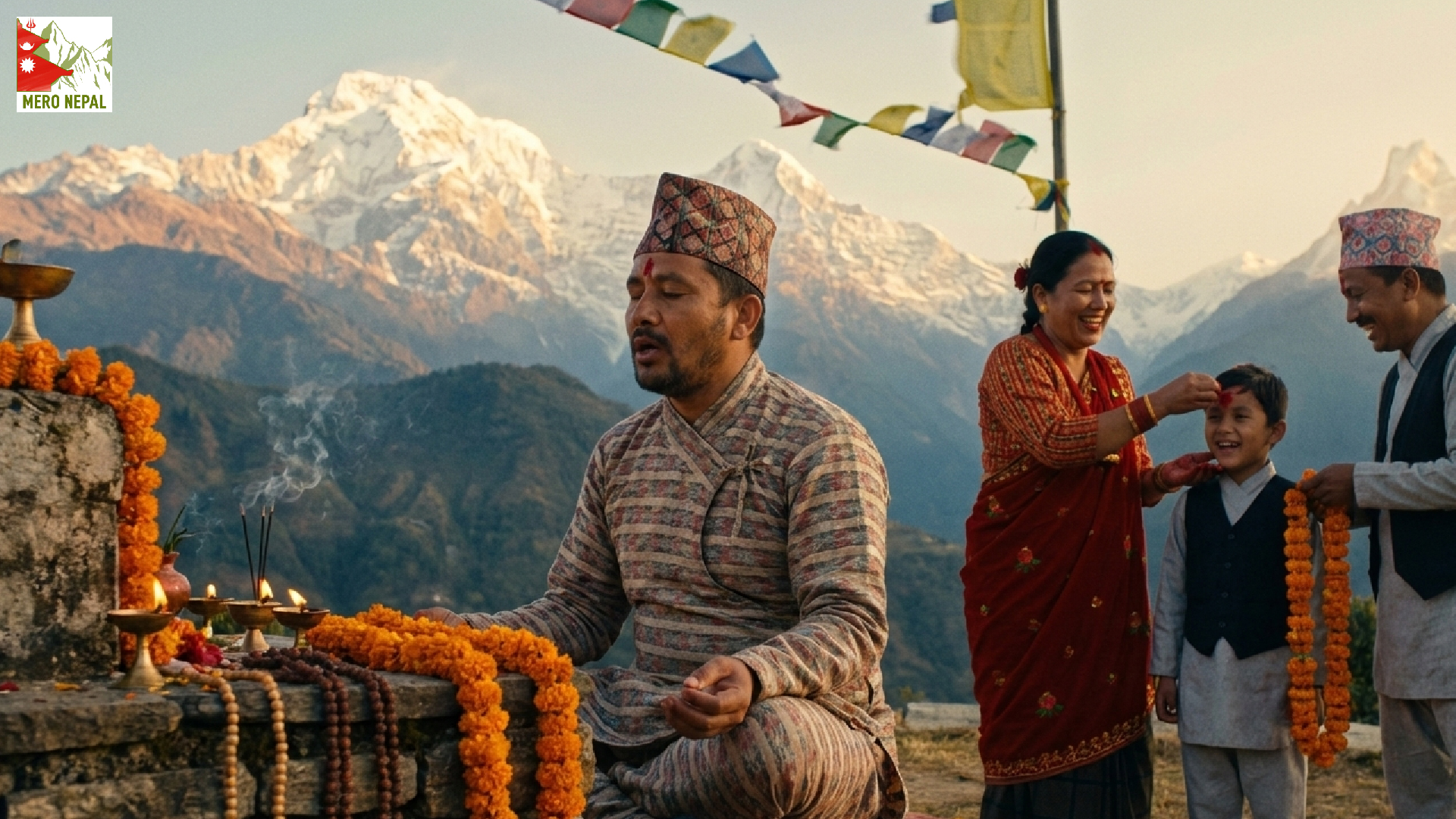
Nepal is known as the land of festivals. Year-round celebrations strengthen family, community, and religious bonds.
Key Festivals
-
Dashain: Celebrates the victory of good over evil, a time for family gatherings and blessings.
-
Tihar: Festival of lights honoring animals and family members.
-
Chhath: Sun worship, primarily in the Terai region.
-
Lhosar: Tibetan and Himalayan New Year.
-
Indra Jatra and Bisket Jatra: Cultural festivals of the Newar community.
-
Teej: Women’s fasting festival for family and marital well-being.
These festivals are not only religious rituals but also strengthen social cohesion and family relationships. Rituals vary by region, community, and time.
4. Life-Cycle Rituals
In Nepali society, rituals from birth to death establish spiritual and social connections.
Birth and Childhood
-
Nwaran (Naming Ceremony): Giving a baby their first name.
-
Pasni (First Rice Feeding): Introducing solid food to the child.
Youth and Religious Responsibility
-
Bratabandha (Sacred Thread Ceremony): Marking the child’s start of religious duties.
Marriage and Family Bonds
Marriage rituals strengthen social ties and community cohesion.
Death Rituals
-
Shraddha and Cremation: For peace of the soul and preservation of tradition.
These rituals frame life as a spiritual journey rather than a mere biological process.
5. Sacred Geography and Nature Worship
Nepal’s geography is considered sacred. Mountains, rivers, lakes, and forests are not just natural resources but also spiritual sites.
Sacred Sites
-
Gosainkunda Lake: A sacred lake associated with Lord Shiva.
-
Muktinath: Sacred to both Hindus and Buddhists.
-
Bagmati River: Used for cremation and religious rites.
-
Mount Everest: Represents not only the world’s highest peak but also the cultural identity of Sherpa and Himalayan communities.
Respect for nature is a central part of Nepali life. Mountains, rivers, and lakes are seen as divine or sacred entities.
6. Guthi System and Community Structure
The Guthi system, especially among the Newars, preserves temples, organizes festivals, and ensures continuity of cultural practices.
Community collaboration through youth clubs, local committees, and religious societies strengthens social unity.
7. Art, Craft, and Architecture
Nepal’s architecture and crafts are world-renowned.
Major Crafts
-
Wood Carving: Windows, doors, and temples.
-
Metal Sculpture: Statues of gods and goddesses.
-
Thangka and Paubha Painting: Associated with Buddhist traditions.
Heritage Sites
-
Patan Durbar Square, Kathmandu Durbar Square, Bhaktapur Durbar Square: UNESCO World Heritage Sites showcasing Newar artistry.
These arts are not only aesthetically pleasing but also convey spiritual and philosophical ideas.
8. Folk Culture and Oral Traditions
Nepalese villagers preserve history and beliefs through folk songs, dances, Deusi-Bhailo, Jhankri rituals, and oral storytelling.
Examples
-
Folk Songs and Dances: Linked to local festivals and rituals.
-
Deusi-Bhailo: Singing and dancing during Tihar.
-
Jhankri and Dhami Practices: Spiritual healing and rituals tied to nature and ancestral beliefs.
These living traditions strengthen community unity.
9. Food Culture
Nepali cuisine is not just nourishment; it symbolizes identity, rituals, and community.
National and Regional Dishes
-
Dal-Bhat-Tarkari: National staple.
-
Samay Baji: Traditional Newar platter.
-
Sel Roti, Yamari, Dhindo-Gundruk, Thakali Dishes: Regional delicacies reflecting diversity.
Food is often tied to festivals, rituals, and social gatherings.
10. Digital Era and Cultural Preservation
Modern technology allows people to learn and share culture digitally. Online platforms help Nepalis abroad preserve language and traditions.
Mero Nepal App serves as a useful digital tool for accessing:
-
Cultural and festival information
-
Historical and spiritual content
-
National heritage and identity resources
It helps the younger generation connect with their roots and traditions in a contemporary, accessible way.
Conclusion
Nepalese culture is based on diversity, coexistence, spirituality, and community awareness.