Introduction
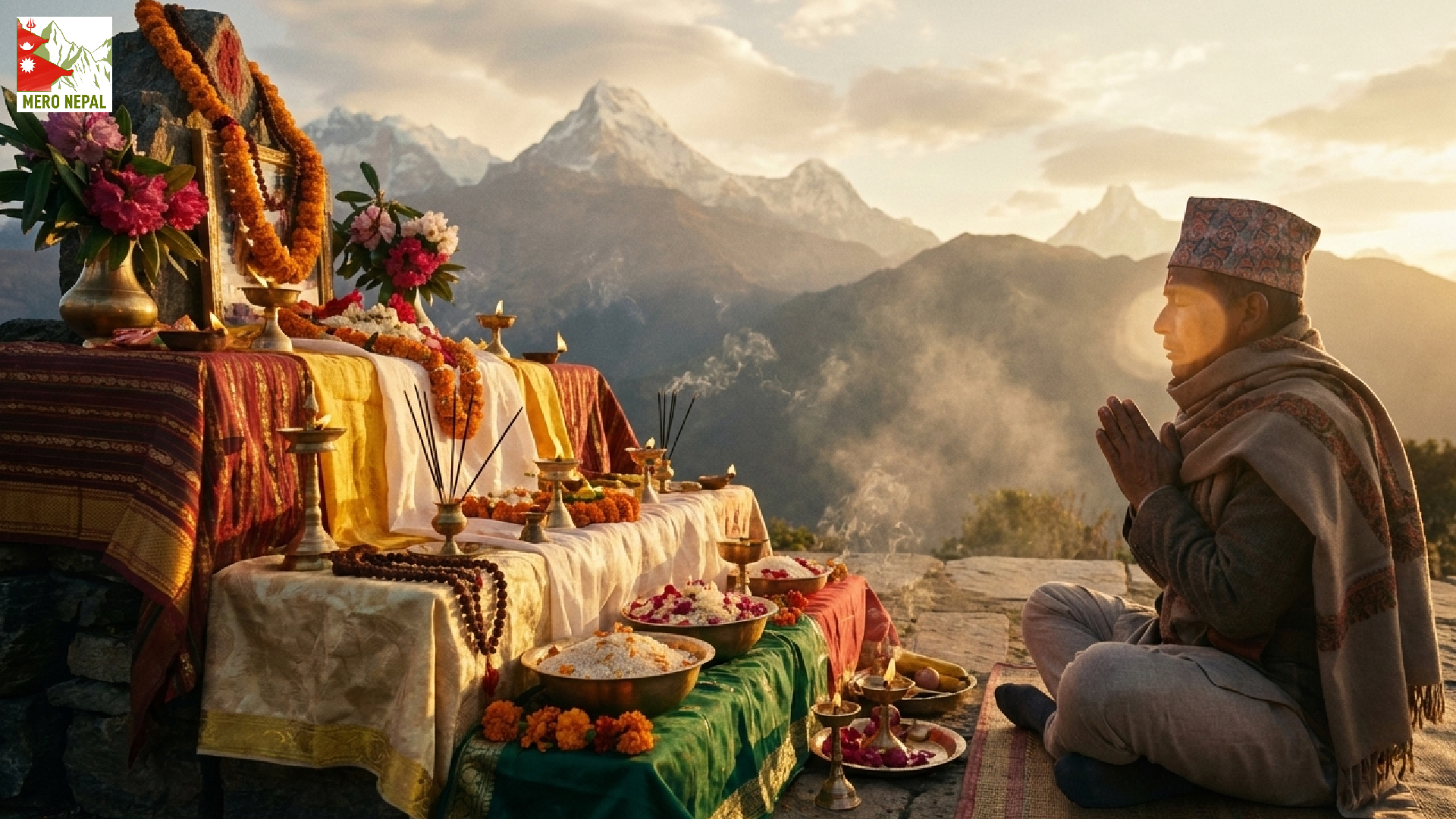
In Nepali culture, religion, and tradition, colors play an extremely important role. The colors used in every celebration, ritual, wedding, or festival do not merely enhance beauty — they also carry astrological and spiritual meanings. Selecting the right color according to planets, stars, and lunar days is believed to bring prosperity, health, mental peace, and good fortune.
In today’s digital age, traditional knowledge is easily accessible through apps like Mero Nepal App, which bridges modern life with age-old traditions.
1. Nepali Colors and Their Symbolism
Red
-
Symbol: Strength, energy, vitality, and love
-
Use: Weddings, Dashain, Teej, and powerful rituals
-
Astrological Aspect: Associated with Mars; enhances courage and action
-
Details: Women wear red sarees or outfits for weddings. Red is applied in tika as a symbol of good fortune and protection
Yellow/Orange
-
Symbol: Knowledge, wisdom, spiritual energy
-
Use: Saraswati Puja, Ganesh Puja, and fasting rituals
-
Astrological Aspect: Associated with Jupiter; enhances learning and religious success
-
Details: Yellow or orange flowers and attire are used at prayer sites to create positive energy
White
-
Symbol: Peace, purity, clarity, and spiritual cleansing
-
Use: Shraddha ceremonies, prayers, and peaceful rituals
-
Astrological Aspect: Associated with the Moon; promotes mental peace and spiritual growth
-
Details: White clothes and clean surroundings are considered auspicious during rituals
Green
-
Symbol: Prosperity, health, nature, and fertile life
-
Use: Crop rituals, housewarming, and natural offerings
-
Astrological Aspect: Associated with Mercury; supports knowledge, business, and health
-
Details: Green flowers or items are used during agricultural festivals or house entry ceremonies
Blue
-
Symbol: Calmness, stability, spiritual depth
-
Use: Shiva Puja, meditation, and mantra chanting
-
Astrological Aspect: Associated with Jupiter and Saturn; enhances focus and mental peace
-
Details: Light blue curtains or flowers are often used in meditation rooms
Black
-
Symbol: Protection, resistance to negative energy
-
Use: Remedying planetary faults, special rituals
-
Astrological Aspect: Associated with Saturn and Rahu
-
Details: Black objects at doorways or during specific rituals help neutralize negative effects
Gold
-
Symbol: Wealth, prosperity, and grandeur
-
Use: Weddings, rituals, and new ventures
-
Astrological Aspect: Associated with Jupiter and Venus
-
Details: Gold ornaments and decorations are considered highly auspicious
Purple
-
Symbol: Spirituality, knowledge, higher consciousness
-
Use: Meditation, guru worship, special rituals
-
Astrological Aspect: Associated with Jupiter and Saturn
-
Details: Purple drapes or ceremonial items are used in meditation or guru worship
2. Color Significance in Festivals and Dates
Nepali festivals are celebrated according to planets, lunar days, and stars, and color selection enhances their power and auspiciousness.
-
Dashain: Red tika and jamara symbolize good fortune and strength.
-
Tihar: Lamps and flower decorations in yellow and orange symbolize wealth, happiness, and positive energy.
-
Teej: Women wear red and green outfits and bangles for good luck.
-
Maghe Sankranti: Yellow and orange colors are used for sun worship and offerings.
-
Indra Jatra: Blue, red, and gold colors enhance the festival’s spiritual and visual appeal.
Tip: For accurate auspicious dates and color suggestions, you can use Mero Nepal App, which guides users based on tithi, nakshatra, and planetary positions.
3. Colors in Daily Life and Astrology
-
Clothing: Wearing the right color according to planets improves fortune, confidence, and mental calm.
-
Home Decoration: Colors in prayer rooms, temples, dining, and living areas enhance positive energy flow.
-
Business & Activities: Using auspicious colors in attire, shops, or decorations supports wealth and reputation.
Tip: The Mero Nepal App shows daily auspicious colors and timings, helping you make important life decisions easily and accurately.
4. Regional and Cultural Variations
-
Newar Community: Red and orange dominate temple and home decorations.
-
Tharu and Terai Communities: Green and yellow colors are linked to agriculture and lifestyle.
-
Himalayan Communities: Blue and white are commonly used in meditation and mountain rituals.
5. Colors and Mental Well-being
-
Red & orange: Boost energy and motivation
-
Blue & white: Promote mental peace, meditation, and clarity
-
Green: Supports health and life balance
-
Black: Protects against negative energy
Tip: Daily guidance on planetary positions and suggested colors is available in Mero Nepal App, helping maintain mental balance and positive energy.
6. FAQs (Frequently Asked Questions)
Q1. Which colors are most auspicious for daily prayers or housewarming?
-
A: Depending on planetary positions, generally green, white, and yellow are considered auspicious.
Q2. Which colors are recommended for weddings?
-
A: Red, orange, and gold are highly auspicious; selection should also consider planets and nakshatras.
Q3. Do colors really influence fortune and prosperity?
-
A: Astrology suggests that colors affect energy and mindset. Choosing the right color enhances positive energy flow.
Q4. How can I find auspicious colors and timings on Mero Nepal App?
-
A: The app provides suggestions based on tithi, nakshatra, and planetary positions. It displays auspicious colors and timing for weddings, house entries, and rituals.
Q5. Why do colors differ for different festivals?
-
A: Each festival has different planetary and lunar configurations. Proper color selection enhances the festival’s spiritual power and auspiciousness.
Q6. Can I find my personal lucky colors on Mero Nepal App?
-
A: Yes, by entering your birth date and planetary details, the app suggests your personal auspicious colors and muhurats.