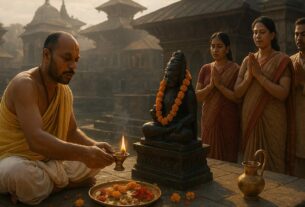
Nepal is a multicultural, multilingual, and multi-religious country. More than 125 ethnic groups, languages, and cultural communities reside here. Each of these communities has its own festivals, celebrations, and rituals, reflecting Nepal’s rich cultural diversity. Festivals are not only religious ceremonies but also symbols of social unity, family bonds, and cultural identity. Every festival in Nepal is associated with unique stories, worship practices, songs, dances, and traditional foods. These festivals enrich life not only spiritually but also socially, culturally, and mentally.
Major Nepali Festivals
Dashain
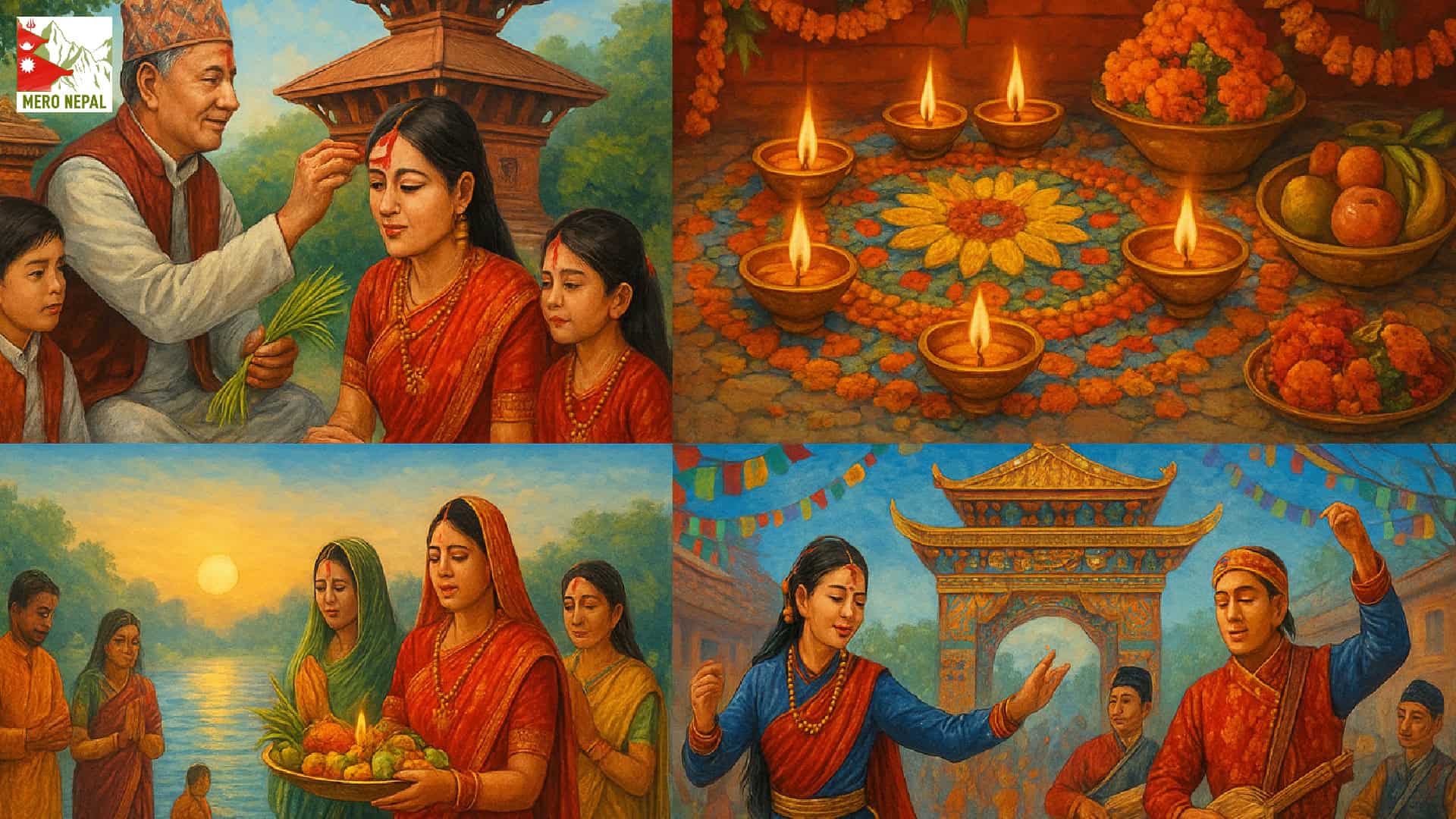
Dashain is the largest Hindu festival, also known as “Vijaya Dashami.” Devotees worship Goddess Durga to seek peace, prosperity, and happiness. Families and communities celebrate by applying tika, growing jamara, and decorating with flowers.
Highlights of Dashain:
Tika and Jamara: Elders and family members bless younger ones with tika and jamara.
Family Gatherings: Family members living abroad often return to participate.
Cultural Programs: Local fairs, songs, and dances are organized.
Tihar
Tihar is celebrated over five days and includes worship of Goddess Lakshmi, honoring dogs, cows, and brothers (Bhai Tika). Each day holds special significance:
Crow Day: First day, crows are worshipped.
Dog Day: Second day, dogs are honored.
Lakshmi Puja: Main day, worship of Goddess Lakshmi for wealth and prosperity.
Govardhan Puja & Bhai Tika: Strengthening family and community bonds.
Chhath
Chhath is mainly observed in the Terai region. Devotees worship the Sun God through fasting, rituals, songs, and dances.
Significance of Chhath:
Worship of the Sun God for health, prosperity, and happiness.
Practice of purity and self-discipline.
Promotion of harmony and cooperation within family and community.
Other Festivals
Nepal also celebrates Shivaratri, Bada Dashain, Gokulashtami, Lhosar, Buddha Jayanti, and other Hindu and Buddhist festivals. These celebrations promote religious tolerance, social harmony, and cultural education.
Social Importance of Festivals and Rituals
Festivals reinforce not only religious faith but also social and moral values.
Social Benefits:
Community Unity: Members participate collectively in rituals, dances, and other activities.
Strengthening Family Bonds: Through Bhai Tika, tika, and other ceremonies.
Cultural Education: The younger generation learns traditional songs, dances, and rituals.
Economic Activity: Festivals boost local markets, crafts, and products.
Mental and Spiritual Wellbeing: Festivals reduce stress, provide satisfaction, and connect people with their community.
Examples of Festivals and Rituals
Jamara in Dashain: Placed in the main area of the house; family members seek blessings.
Flowers and Diyos in Tihar: Homes are decorated with flowers and lit lamps.
Riverbank Worship in Chhath: Devotees pray at sunrise by the river for blessings.
Dance and Songs in Lhosar: Tibetan Buddhist communities organize special cultural programs for the New Year.
These examples show that Nepali festivals are not just religious rituals but also means of cultural education.
Festivals in the Digital Age: MeroNepal App
In today’s digital age, cultural celebrations and detailed information can be easily accessed via the MeroNepal app.
Features of the App:
Easy Access: Festival information and rituals directly on smartphones.
Schedule Planner: Follow festivals according to your own calendar.
Sharing Options: Share information with family and friends.
Detailed Information: Includes mythological stories, significance, and rituals for each festival.
The app connects users closely with Nepali cultural identity, whether they are abroad or within the country.
Future of Festivals and Rituals
Modern lifestyles and urbanization have led to less attention to traditional festivals and rituals. Digital platforms and apps help transmit traditions to younger generations.
Engaging the Youth: Festival information reaches mobile and tablet users.
Cultural Preservation: Digital records safeguard traditional songs, dances, stories, and rituals.
Sharing Opportunities: All members of society can learn and adopt festivals and rituals easily.
Conclusion
Nepali festivals and their rituals play a vital role in religious, social, and cultural life. They enrich not only material life but also social and spiritual well-being. Accessing information through digital platforms has become convenient and useful. The MeroNepal app serves as an excellent medium in this regard. Using the app to understand the significance of festivals, learn rituals, and celebrate with family and community helps preserve traditions while adapting to modern lifestyles.