Summary
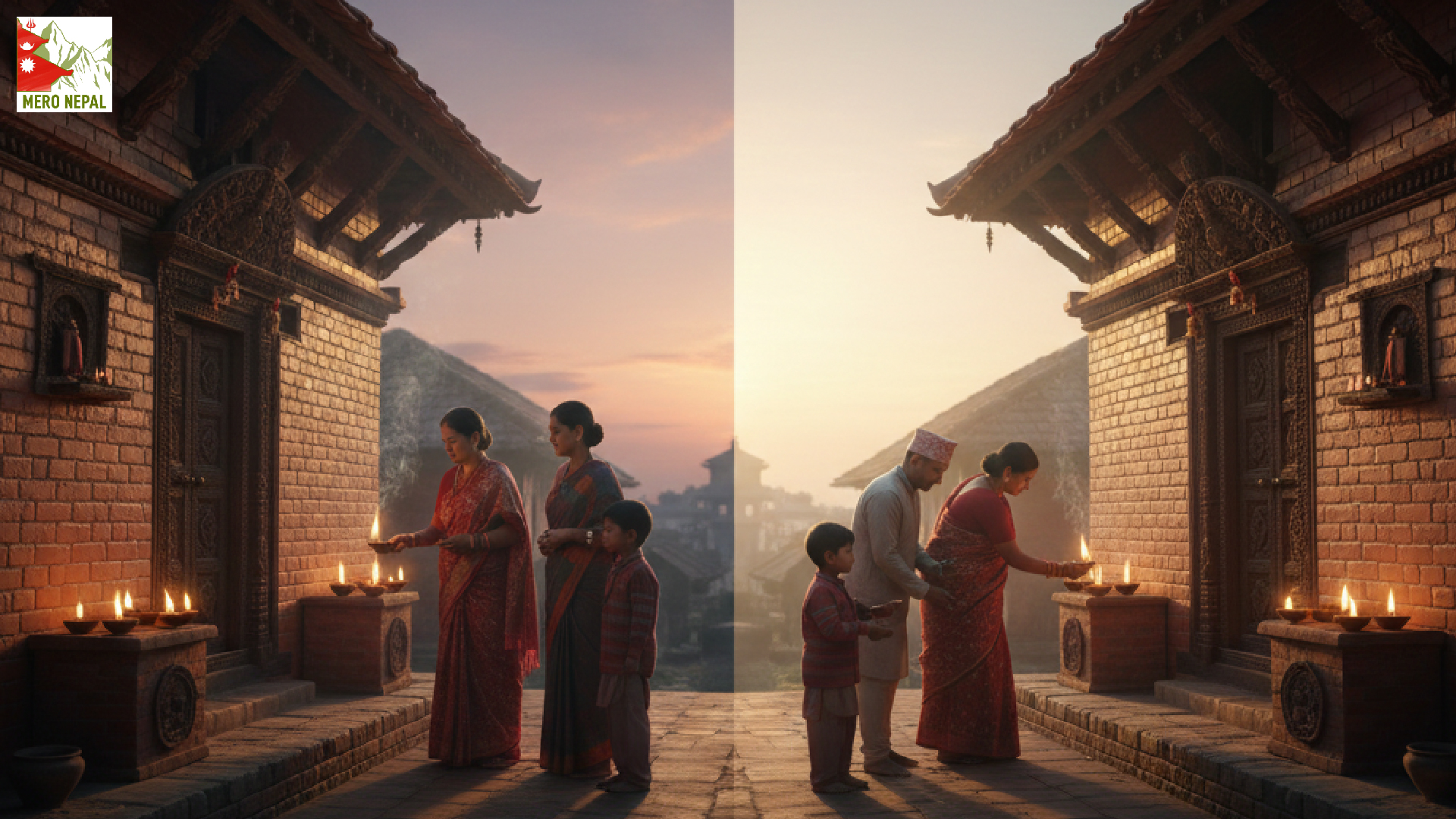
In many Nepali homes, lighting a diyo (oil lamp) at dawn and dusk is a tradition that has continued for generations. While it may appear as a simple daily practice, its roots run deep in cultural consciousness, Vedic time awareness, and mental discipline. Lighting a diyo is not merely an act of worship; it is a mindful acknowledgment of time transitions, a way to purify the household environment, and a practice that fosters inner stability. Even in modern life, this ritual remains relevant for its practical and spiritual value.
Transitional Time and Hindu Time Philosophy
In Hindu philosophy, time is not only measured by the clock but also understood as a flow of energy and consciousness. Dawn (pratah) and dusk (sandhya) are considered transitional periods—the boundaries between day and night.
During these times, both the human mind and the environment are particularly sensitive. Lighting a diyo during these periods helps stabilize awareness and signals the end of one phase and the beginning of another.
Diyo: Meaning Beyond Light
The diyo is more than a source of light; it symbolizes knowledge, awareness, and mindfulness. In Hindu thought, darkness represents ignorance and confusion, while light signifies truth and consciousness.
Lighting a diyo is not just about illuminating a room; it is a conscious effort to create clarity, discipline, and positive energy within the household. Traditionally, the lamp is lit with care, and a moment of silence is observed, emphasizing mindfulness.
Evening Diyo: Protection as Night Falls
Evening is a time when people are often tired from the day’s work, and the environment becomes dim and more sensitive. In Nepali tradition, lighting a diyo at dusk symbolizes protection for the household.
It acts as a boundary, keeping external chaos symbolically outside and creating a serene, safe atmosphere inside. Diyos are often placed near entrances or in prayer areas to safeguard key household spaces energetically.
Morning Diyo: Guiding the Day Ahead
Lighting a diyo in the morning represents a new beginning. Morning is seen as a time of purity and potential, and lighting a lamp aligns the household with focus, discipline, and intention for the day ahead.
The ritual is usually performed after cleaning the home and preparing the space for the day, helping to establish inner balance before external activity begins.
Connection to Sandhya Vandana
The tradition of lighting diyos at dawn and dusk is closely linked to Sandhya Vandana, a Vedic practice performed during transitional times. Even if formal mantras are not recited today, lighting a lamp serves as a simple, accessible form of acknowledging the sacredness of these moments.
Elders often emphasize lighting the lamp even when other rituals are skipped, recognizing the act itself as sufficient to honor time and awareness.
Continuity Across Nepali Homes
Across Nepal—from rural villages to urban apartments—the practice persists in various forms. Villages may use mustard oil diyos, while urban households might use ghee lamps or even electric diyos.
Although the form varies, the intention remains the same: respect for time and consciousness. This adaptability has allowed the tradition to survive into the modern era.
Digital Support for Tradition
In today’s fast-paced life, remembering tithis, sandhyakal, and auspicious times can be difficult. The MeroNepal App provides daily Panchanga, auspicious timings, festivals, and cultural information in a clear, easy-to-use format.
It allows people to follow tradition without feeling burdened, bridging ancient practices with modern daily life.
Psychological and Family Impact
Lighting a diyo has subtle psychological benefits. It creates a pause, bringing the mind back to the present and reducing stress.
Children who observe this practice daily develop an understanding of time, discipline, and cultural consciousness. Small daily rituals like this build long-term cultural memory and emotional stability in the household.
Modern Relevance
Artificial lighting and digital lifestyles have blurred the natural distinction between morning and evening. In this context, lighting a diyo serves as a grounding practice, reconnecting individuals with natural rhythms.
The ritual demonstrates a balance between tradition and modern life, showing that culture and technology can coexist harmoniously.
Conclusion
Lighting a diyo in Nepali homes at dawn and dusk is much more than a simple tradition. It honors time, fosters mindfulness, provides spiritual protection, and cultivates mental clarity.
The twice-daily flame reminds us to pause, reflect, and restore balance—an enduring practice that connects generations with their cultural and spiritual roots.