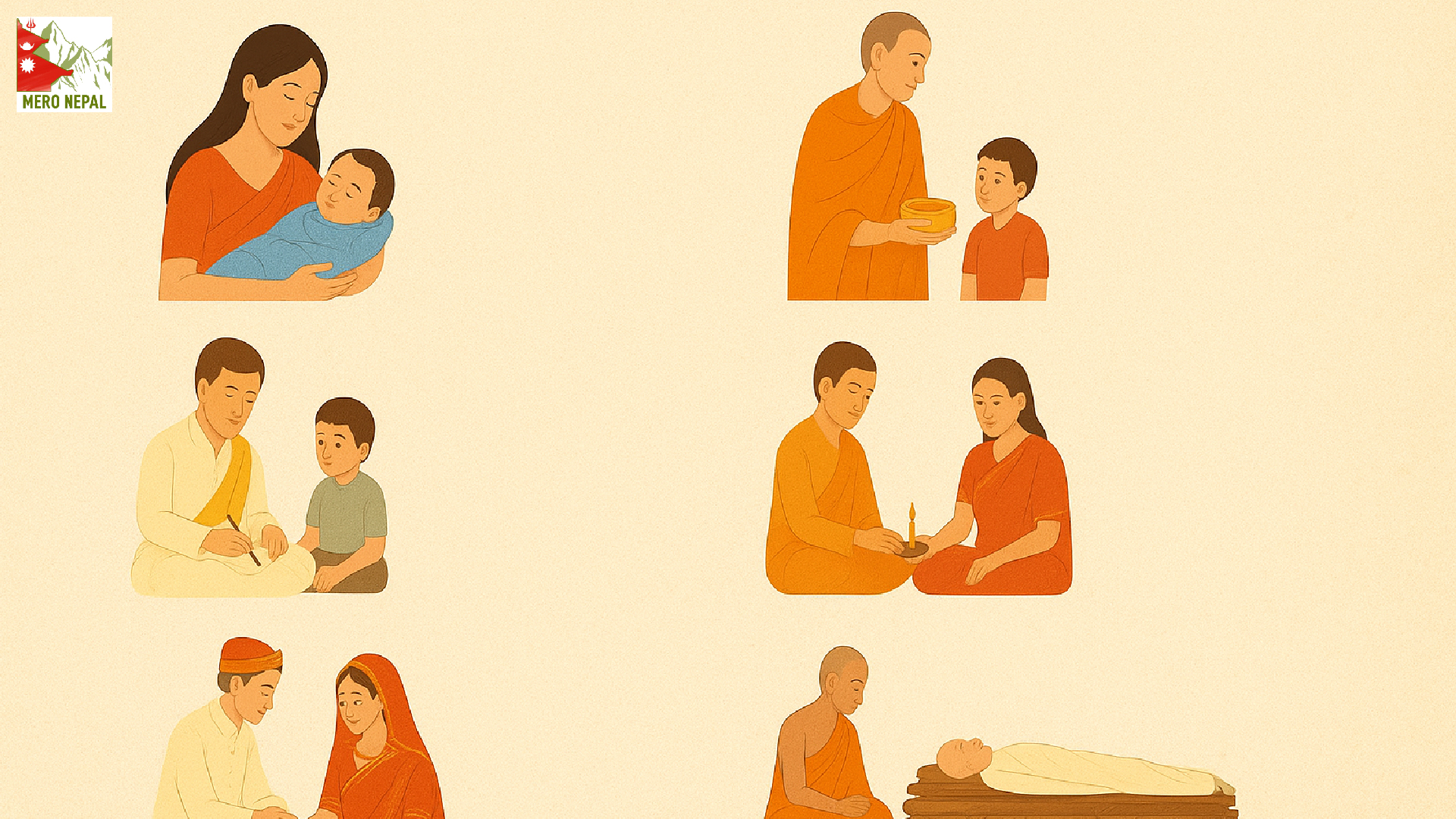
Nepal’s cultural structure is deeply connected with every stage of human life—birth, childhood, education, marriage, old age, and ultimately death. Both Hindu and Buddhist traditions give special importance to these life-cycle rituals, though the methods, purposes, and symbolic meanings differ between the two. These rituals are not only spiritual practices but also foundations of family unity, social bonding, and cultural preservation.
Birth Rituals
In Hindu families, the arrival of a newborn is marked by rituals such as Jatakarma and Nwaran. The baby is blessed with sacred sounds, the home is purified, and the name is chosen based on the child’s planetary alignment.
In Buddhist families, birth is seen as the arrival of new consciousness. Lamas or monks chant mantras for the newborn’s health and long life. Names are chosen based on elements, time of birth, and symbolic spiritual meanings.
Pasni and First Feeding
In Hindu tradition, Pasni is performed when the child is around five to six months old. The child tastes solid food for the first time, and the ritual is celebrated joyfully with blessings and family gatherings.
In Buddhist communities, Pasni also exists, but the focus is often on meditation, peaceful chanting, and compassionate wishes rather than structured rituals.
Beginning of Education
Hindu families perform Akhshararambha or Vidyārambha, where children begin learning by writing the first letter such as “अ” or “ॐ”.
In Buddhist culture, children begin their learning journey under the guidance of a lama or monk, with emphasis on wisdom and mental discipline.
Marriage Rituals
Hindu marriage rituals include sacred fire, mantras, and the seven steps (saptapadi), symbolizing a lifelong partnership.
Buddhist marriage ceremonies center around values such as compassion, cooperation, and mindful living. Monks offer blessings and guidance for a peaceful, meaningful married life.
Death Rituals
In Hindu tradition, death is followed by cremation, 13-day mourning rituals, annual shraddha, and other karmic rites. Death is considered a transition to a new life.
In Buddhist tradition, death is viewed as a transformation of consciousness. Monks perform prayers and chants to guide the departed soul. Rituals like Powa may continue for 49 days, symbolizing spiritual guidance during the transition phase.
Cultural Similarities and Differences
Both traditions give deep spiritual meaning to the stages of life. Both emphasize family involvement, community participation, blessings, and moral conduct.
The differences lie in practice:
– Hindu rituals focus more on Vedic procedures, deities, and karmic rites.
– Buddhist rituals emphasize meditation, peace, compassion, and mental balance.
– Hindu rituals are led by priests, while Buddhist rituals involve lamas or monks.
Importance of Rituals in Modern Society
In today’s digital lifestyle, many young people struggle to access or understand traditional knowledge, auspicious dates, or ritual methods. This is where digital tools become valuable.
MeroNepal App Promotion (integrated inside article)
Information about Nepal’s rituals—from birth to death—is now easily accessible through the MeroNepal app. It offers:
– Detailed explanations of life-cycle rituals
– Traditional procedures, meanings, mantras, and stories
– Auspicious dates, tithis, and timings
– Cultural practices across ethnic groups
– A simple and modern interface
For accurate and reliable cultural information, the app is available here:
Click Here to Download
It is helpful for youths, families, and anyone wanting to perform rituals correctly. It is especially useful for events like birth rituals, Pasni, marriage, and commemorative rites.
Conclusion
Hindu and Buddhist traditions in Nepal give deep spiritual meaning to every stage of human life. These rituals strengthen family bonds, preserve cultural identity, and provide a sense of guidance throughout life. In modern times, tools like MeroNepal help connect younger generations with their roots and ensure that these traditions continue to thrive.