Introduction
International Environment Day is celebrated worldwide on June 5 every year. Established after the 1972 United Nations Stockholm Conference, the day aims to raise global awareness about environmental protection, promote eco-friendly lifestyles, and encourage collaboration between governments, organizations, and communities.
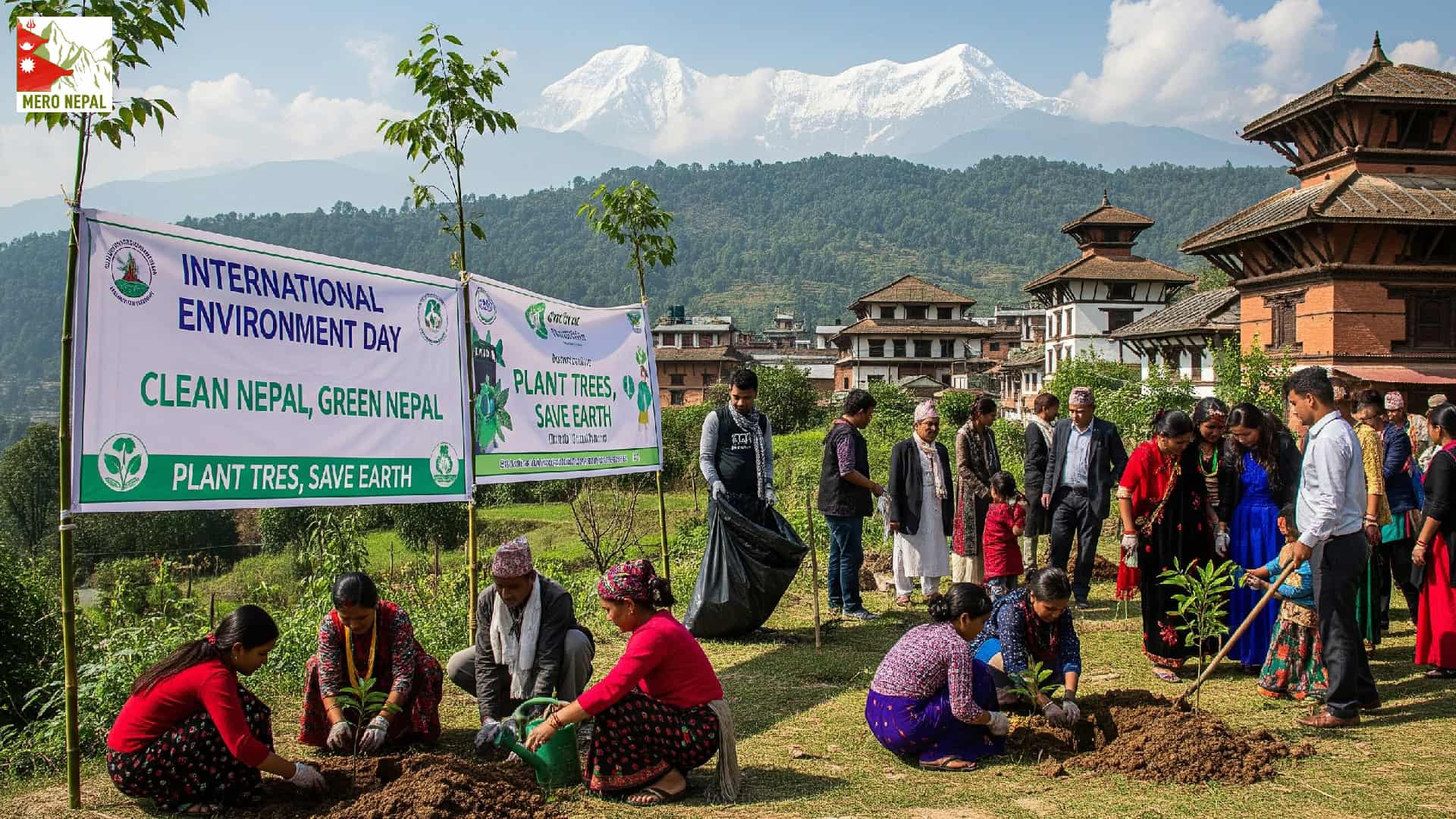
In Nepal, International Environment Day is more than a symbolic event. Schools, universities, government agencies, NGOs, media, communities, and youth actively participate. Activities such as tree planting, pollution control, sustainable agriculture, waste management, water conservation, and recycling are emphasized.
Global Significance
International Environment Day was established in 1972 and highlights a specific theme each year, such as climate change, biodiversity, or sustainable energy.
Countries worldwide organize awareness campaigns, tree planting drives, exhibitions, conferences, and collaborative projects.
The objective is to make environmental protection a shared responsibility rather than solely a government duty.
Practices in Nepal
1. Government Initiatives
Tree plantation programs in urban areas and public spaces.
Training in rural communities for community forest management.
Policies promoting climate adaptation, renewable energy, and sustainable development.
Awareness programs in schools and universities.
2. Community Participation
Local communities conduct river, forest, and public space cleanup drives.
Youth organizations organize eco-clubs, awareness rallies, and art competitions.
Farmers adopt organic fertilizers, water-saving techniques, and sustainable agriculture.
3. NGO and International Collaboration
NGOs such as WWF, IUCN, and ForestAction implement projects for biodiversity and forest conservation.
International partnerships fund education and community-based environmental programs.
Private companies contribute through Corporate Social Responsibility (CSR) initiatives promoting eco-friendly practices.
4. Cultural and Traditional Links
Nepalese culture emphasizes harmony with nature.
Planting trees near temples and homes, conserving rivers, and respecting forests are traditional practices.
These cultural values strengthen modern environmental conservation initiatives.
Challenges
Rapid urbanization causing deforestation and pollution.
Plastic waste and inefficient waste management.
Climate change leading to irregular rainfall and glacial melting.
Limited resources in rural areas for implementing sustainable practices.
Lack of environmental education and awareness in some communities.
Conclusion
International Environment Day in Nepal is more than a ceremonial observance. It fosters collective responsibility for environmental protection. The combined efforts of government policies, community participation, youth engagement, NGO initiatives, and traditional knowledge make the celebration meaningful. Strengthening these practices is critical to address climate change, pollution, and environmental degradation and to ensure a sustainable future.