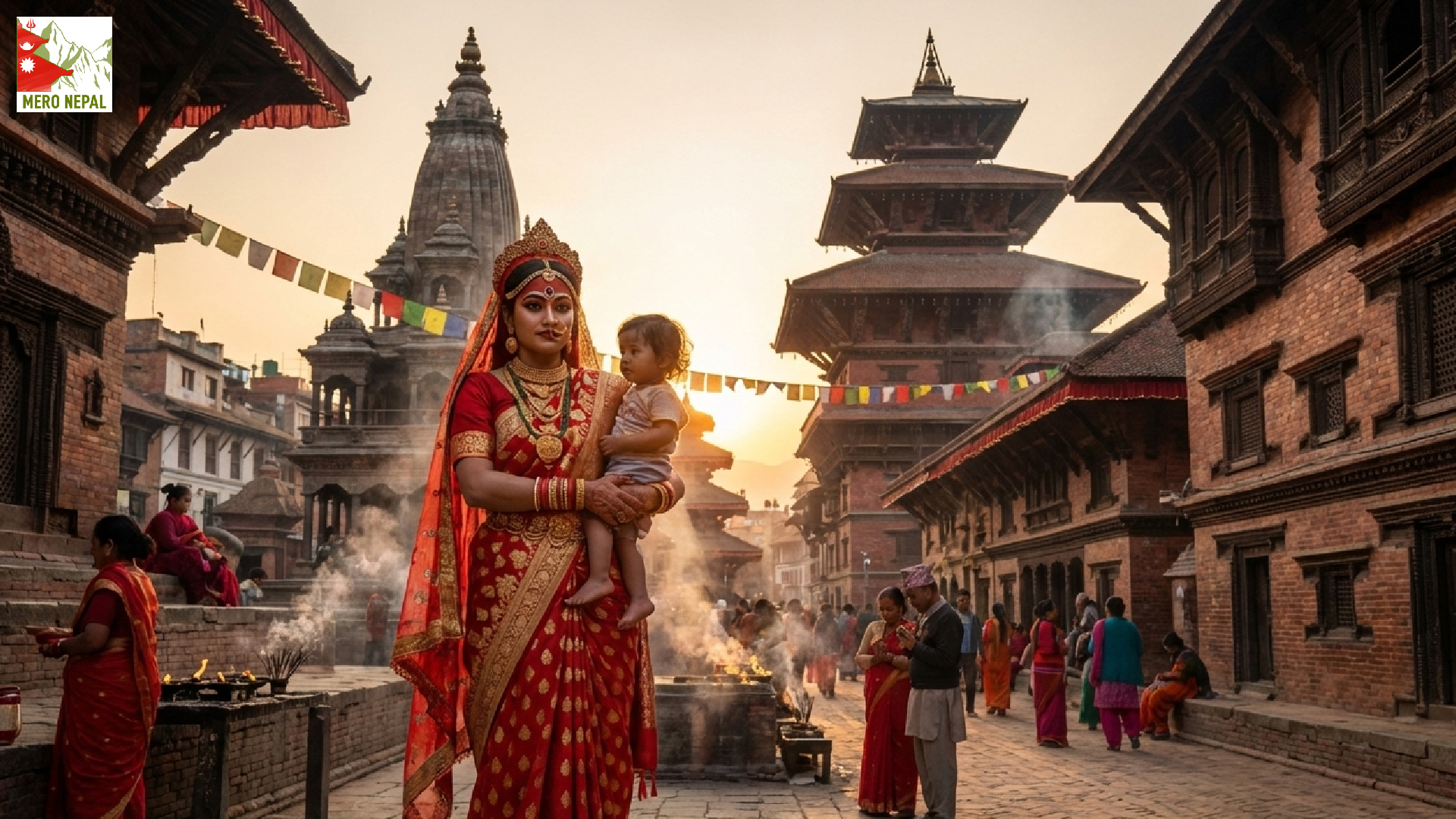
Lichhavi Period: Origins of Mother Goddess Worship
Historical records, inscriptions, and sculptures from the Lichhavi period show that mother goddess worship was an integral part of Kathmandu Valley life. Worship during this period was not just religious but also part of social and civic protection.
Malla Period: Institutionalization of the City Goddess
During the Malla era, city planning incorporated guardian deities into the urban layout:
-
City boundaries
-
Main squares
-
Directional entrances
Ajima shrines were established at key locations, demonstrating that Ajima Devi was considered a spiritual foundation of urban Newar society.
Ajima Devi as the City Protector
Ancient Newar towns were not secured by walls alone; spiritual protection was essential.
Ajima Devi:
-
Protected people from disease, epidemics, and untimely death
-
Blocked entry of harmful forces into the city
-
Maintained social order
Thus, she was regarded as the invisible guardian of the city.
Major Ajima Shrines in the Kathmandu Valley
Kathmandu
-
Lumdi Ajima
-
Bhadrakali (as an Ajima manifestation)
-
Indrayani Ajima
Lalitpur
-
Bangalamukhi Ajima
-
Chamunda Ajima traditions
Bhaktapur
-
Mahakali / Ajima forms
-
Neighborhood-specific Ajima shrines
These shrines remain central to local life to this day.
Ajima and the Ashtamatrika: Tantric Significance
Ajima Devi represents the localized and community-centered form of the Ashtamatrika (Eight Mother Goddesses).
The Ashtamatrika symbolize creation, protection, destruction, and spiritual awareness. Ajima embodies the combined powers of all these goddesses, specifically within her community and sacred spaces.
Symbolism of Her Fierce Appearance
Ajima Devi is often depicted as:
-
Having intense eyes
-
Strong posture
-
Red complexion
-
Armed with symbolic weapons
Her fierce appearance is a warning and a call for discipline, not to invoke fear—targeting injustice, arrogance, and ignorance.
The Compassionate Grandmother Aspect
Beneath the fierce exterior lies:
-
Deep care for the people
-
Responsibility toward the community
-
Protection for future generations
This is why Ajima Devi is worshipped with respect rather than fear.
Tantric Significance
In Newar tantric traditions, Shakti (divine power) is central. Ajima Devi is:
-
A symbol of awakened energy (Kundalini)
-
An emblem of fearlessness and spiritual growth
-
A guide for self-discipline
Her worship often involves night rituals, secret mantras, and formal ceremonies.
Festivals, Processions, and Community Worship
Ajima Devi’s worship is not individual but community-centered:
-
Neighborhood rituals and prayers
-
Processions during festivals
-
Collective participation strengthening social bonds
Preserving Newar Culture in the Digital Age: MeroNepal App
What is MeroNepal App?
The app is a digital platform presenting Nepali religion, culture, astrology, festivals, and historical knowledge in one place.
Information about Ajima Devi, Newar culture, Ashtamatrika, processions, and local deities is accessible easily via the app.
Why It Helps Preserve Traditions Like Ajima Devi
-
Provides reliable articles and explanations about Newar deities
-
Shares accurate timings and details for festivals and rituals
-
Connects younger generations with traditions through a digital medium
Ajima Devi and the Moral Structure of Newar Society
Ajima Devi conveys:
-
Wrong deeds have consequences
-
No one is above the social and moral order
-
Power comes with responsibility
These values have been passed down through generations via rituals and oral tradition.
Modern Relevance and Future
Even with urbanization and modern life, Ajima Devi continues to be vital:
-
A symbol of Newar cultural identity
-
A custodian of community memory
-
A representative of intangible cultural heritage
Preservation efforts include documenting oral history, maintaining temples, and educating younger generations.
Conclusion
Ajima Devi is a living embodiment of the powerful city-guardian, tantric energy, and grandmotherly figure in Newar culture.
She is not just a goddess to worship but a continuous reminder of discipline, compassion, communal consciousness, and cultural continuity.
Understanding Ajima Devi is to understand the heart of Newar civilization.