Ancient Era
Historical records and oral traditions in Nepal show evidence of the Bar-Pipal marriage. In ancient times, this ritual symbolized:
-
Respect for natural resources
-
Message of community harmony
-
Fertility and prosperity
Medieval Tradition
During the Lichhavi and Malla periods:
-
Bar-Pipal ceremonies became the cultural and social centers of villages and towns
-
Chautaris and tree sites served as spaces for justice, education, and rest
-
Participation of elders and priests was essential for ritual completion
Rituals and Procedures
Community involvement is essential in the Bar-Pipal marriage. The ritual typically includes:
-
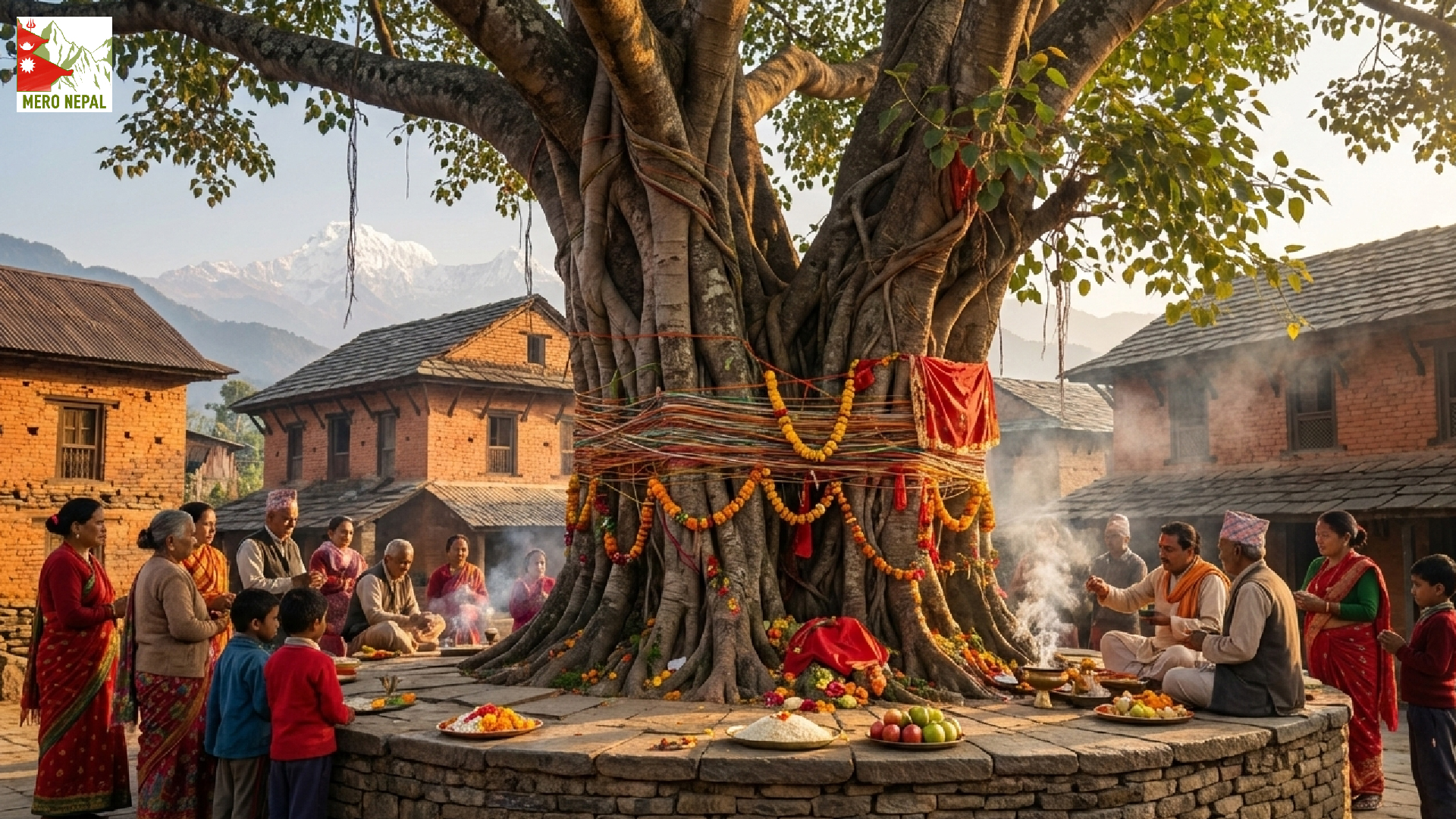
Selection of Trees: Mature and healthy Bar and Pipal trees are chosen.
-
Thread-Tying Ceremony: Colorful threads and cloths are tied between the trees.
-
Offerings: Flowers, incense, lamps, fruits, and chants are offered at the base.
-
Blessings from Priests and Elders: Local priests perform rituals, while elders narrate stories.
-
Community Feast and Music: Villagers celebrate with collective meals and traditional music.
This ritual unites cultural, social, and spiritual elements.
Spiritual and Environmental Significance
The Bar-Pipal marriage carries practical and spiritual importance:
-
Environmental Protection: Trees are preserved and prevented from being cut.
-
Spiritual Awareness: The community is reminded of their connection with nature.
-
Preservation of Oral Traditions: Stories, chants, and songs are passed down generations.
Through this ritual, the interrelationship between humans, nature, and society is emphasized.
Community and Social Unity
The Chautari and Bar-Pipal sites are not only religious but also community hubs:
-
Social interactions, discussions, and storytelling
-
Community decisions and conflict resolution
-
Teaching children morals and respect for traditions
The ritual strengthens social cohesion, mutual trust, and community responsibility.
Oral Stories and Legends
Different villages in Nepal have unique stories and folklore associated with the Bar-Pipal marriage:
-
In some areas, it is believed that if the marriage is not performed, rainfall patterns will be irregular.
-
In others, villagers stay awake all night, performing rituals and communicating with the trees.
-
Children learn moral lessons and respect for nature through these narratives.
Modern Relevance and Challenges
Urbanization, road construction, and deforestation have threatened these sacred sites.
Conservation measures include:
-
Preserving Bar-Pipal marriages and Chautaris
-
Community awareness and education programs
-
Digital archiving through mobile apps
Preserving Tradition in the Digital Era: MeroNepal App
In today’s digital age, mobile apps play a crucial role in preserving cultural heritage. MeroNepal App provides easy access to information on Nepalese religion, culture, festivals, and historical knowledge.
How MeroNepal App Helps
-
Digital archives of Bar-Pipal marriages and Chautaris
-
Information about community rituals and stories
-
Connecting new generations to traditions
-
Preserving Nepalese cultural and religious knowledge safely
The app ensures that these rituals, nature traditions, and communal memory are preserved for future generations.
Conclusion
The sacred marriage of Bar and Pipal under the spiritual shelter of the Chautari is a timeless symbol of cultural harmony, social cohesion, and respect for nature.
This ritual helps the Nepalese community:
-
Maintain social unity
-
Foster respect for nature and cultural heritage
-
Preserve generational memory and traditions