

Introduction
Tihar, also known as the Nepali version of Diwali, is a five-day festival celebrated across Nepal. The third day of Tihar is dedicated to cows and Goddess Laxmi, the deity of wealth and prosperity. Cows, revered in Hinduism, symbolize nourishment, abundance, and Mother Earth, while Laxmi represents prosperity, well-being, and happiness.
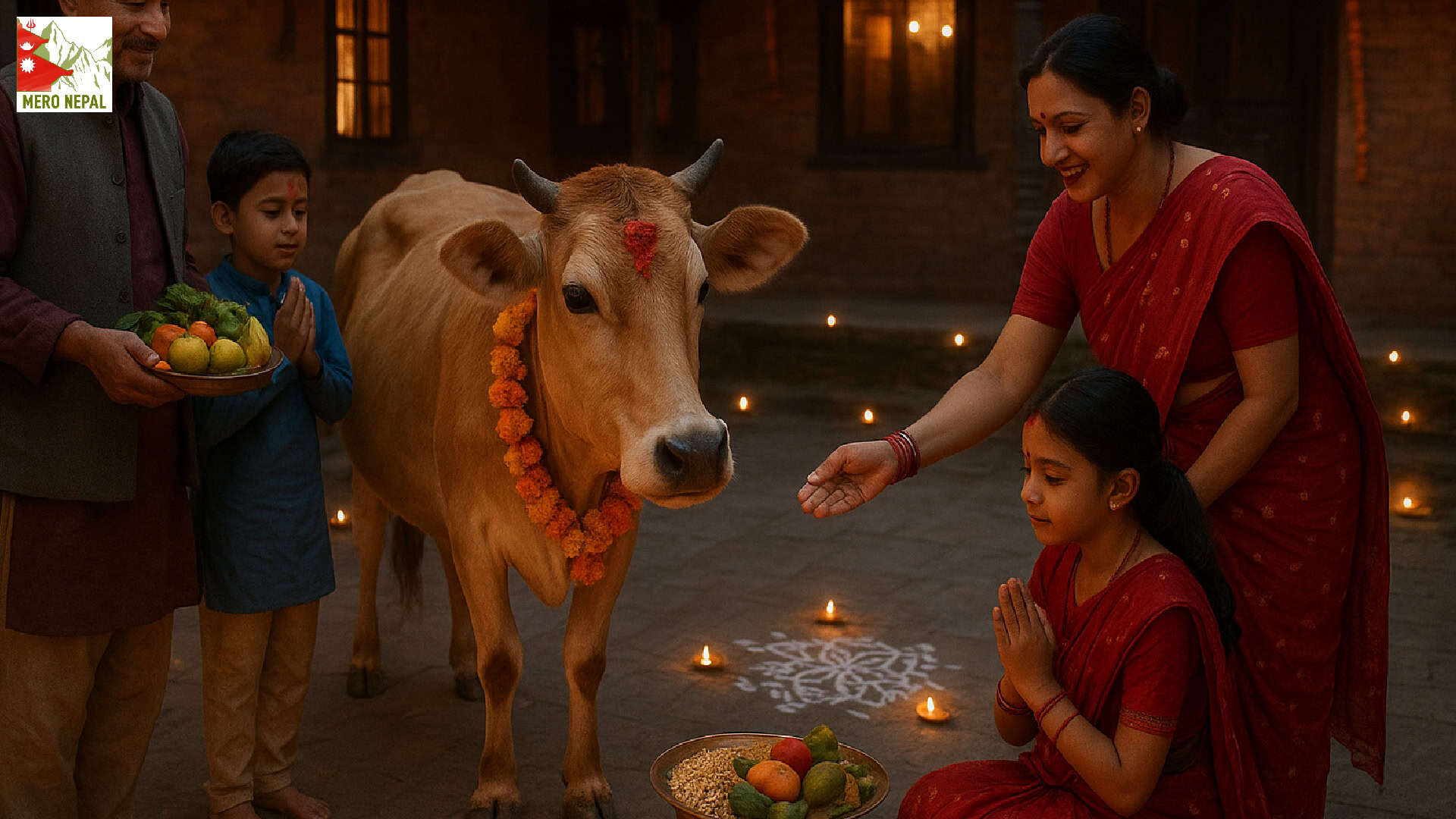
On this day, families honor cows with decorations, tika, and offerings, and in the evening, perform Laxmi Puja, lighting oil lamps (diyo) to invite the goddess into their homes. This dual celebration reflects the Nepali tradition of combining nature worship with spiritual devotion, emphasizing harmony between humans and the natural and divine worlds.
Historical and Cultural Background
Cows have been considered sacred in Hinduism for centuries, providing milk, ghee, and agricultural support. Laxmi, the goddess of wealth, prosperity, and well-being, is invoked to bless households with financial security, health, and happiness.
In Nepal, Gai Tihar and Laxmi Puja are celebrated together to honor both earthly and divine abundance. The day embodies the principle that spiritual devotion and respect for nature together ensure holistic prosperity.
Gai Tihar: Rituals and Traditions
The main rituals of Gai Tihar include:
-
Decoration: Cows are adorned with garlands, tika, and colorful cloth, symbolizing reverence and sanctity.
-
Offering Food: Families offer home-cooked rice, lentils, vegetables, fruits, avoiding meat, as a token of gratitude.
-
Prayer and Blessing: Family members pray for the health, longevity, and well-being of the cows.
-
Community Participation: Stray and neighborhood cows are also fed, reflecting Nepal’s values of compassion and inclusivity.
Gai Tihar emphasizes family unity, respect for animals, and environmental responsibility beyond mere ritual.
Laxmi Puja: Evening Worship
-
Cleanliness and Decoration: Homes are thoroughly cleaned and decorated with alpana (floor designs) and rangoli patterns.
-
Lighting Lamps (Diyo): Oil lamps are lit throughout the house to symbolize the goddess’s arrival.
-
Offering Prayers: Fruits, sweets, flowers, and water are offered to Goddess Laxmi, seeking blessings for wealth, health, and happiness.
-
Family Participation: Every family member actively participates, promoting unity and devotion.
Laxmi Puja serves as a symbolic welcome of prosperity and divine blessings into homes.
Symbolism and Spiritual Significance
-
Cows: Represent nature, nourishment, patience, and generosity.
-
Goddess Laxmi: Symbolizes wealth, prosperity, and spiritual blessings.
-
Integration: Honoring both cows and Laxmi emphasizes the balance between nature and divine favor in human life.
-
Social Lesson: The festival teaches gratitude, harmony, and compassion.
Modern Observance
Today, Gai Tihar and Laxmi Puja are celebrated across rural and urban Nepal:
-
Urban Adaptation: People may worship images or statues of cows if live animals are not available.
-
Community Events: Schools and cultural groups organize collective puja, alpana competitions, and cow-feeding programs.
-
Eco-Friendly Practices: Modern households use LED lights, minimal offerings, and sustainable materials.
-
Digital Guidance: Mobile apps like Mero Nepal App provide step-by-step rituals, auspicious timings, and cultural insights.
Regional Variations
-
In rural areas, working cows are honored with elaborate decorations and special offerings.
-
Newar communities add alpana designs, devotional songs, and traditional music to the worship.
-
In Terai regions, regional sweets and grains are used as offerings.
These variations enrich the festival while keeping the core spiritual and cultural essence intact.
Conclusion
Gai Tihar and Laxmi Puja remind Nepali families to honor nature and divine blessings together. Cows symbolize earthly nourishment and support, while Laxmi ensures spiritual and material prosperity. The festival teaches gratitude, harmony, and devotion, forming the heart of Tihar’s celebration.
Mero Nepal App


