📱 App Promo: Struggling to plan your rituals on time? Mero Nepal guides you through daily Panchang, auspicious dates, and spiritual insights—because even your divine timing deserves a reminder.
Introduction
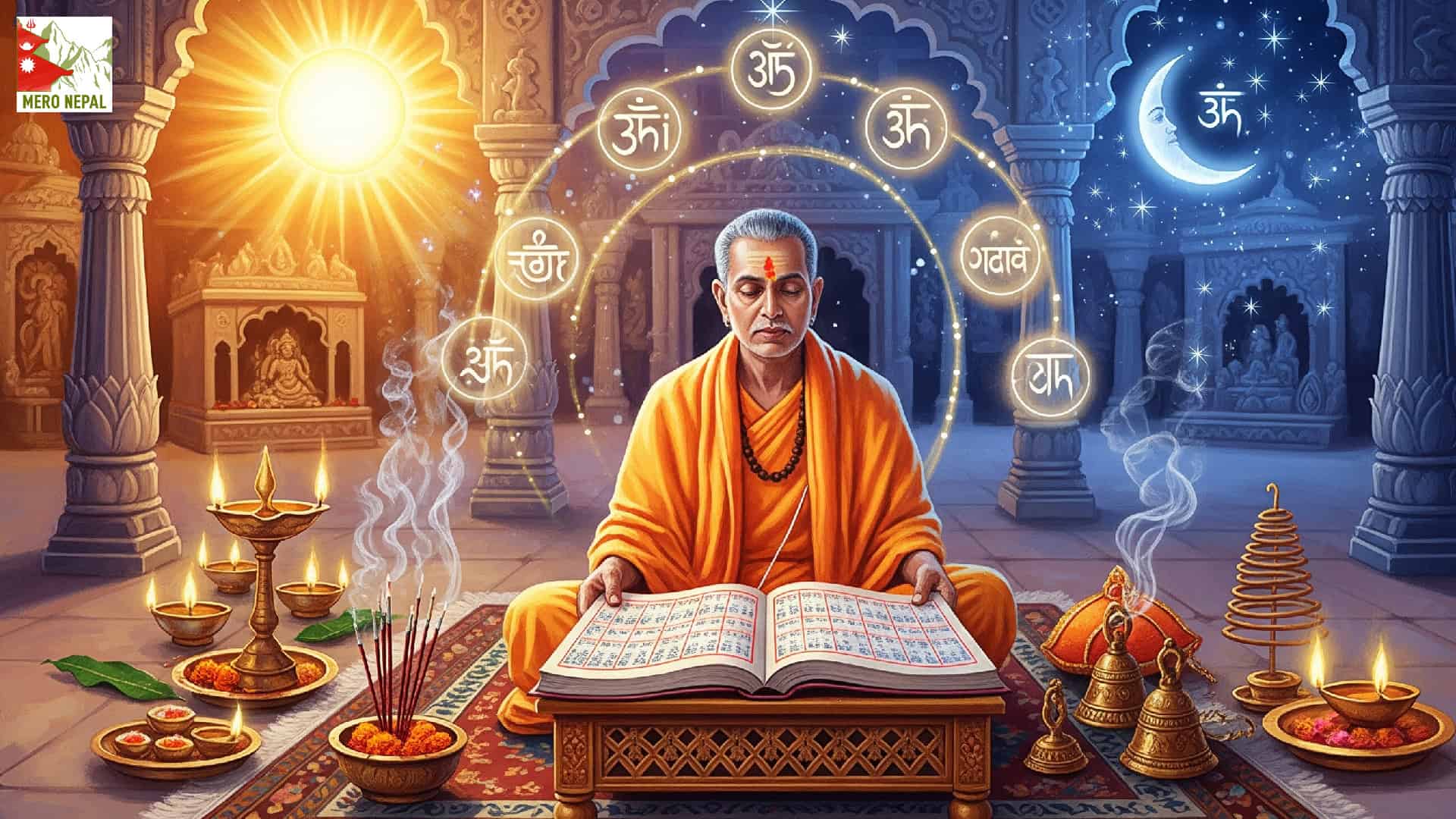
Panchang, the traditional Hindu calendar, is essential for planning pujas, festivals, and other religious activities. It provides detailed information on Tithi (lunar day), Nakshatra (constellation), Yoga (auspicious combination), Karana (half lunar day), and planetary positions.
Following Panchang Puja Timing ensures rituals are performed at the most favorable moments, maximizing spiritual benefits, reducing negative influences, and enhancing success. Using Panchang in daily life also aids in better time management.
Key Components of Panchang
Tithi (Lunar Day)
Definition: A Tithi is based on the angular distance between the Sun and Moon.
Significance: Each Tithi carries its own auspicious or inauspicious qualities.
Amavasya (New Moon): Ideal for ancestral rituals, meditation, and respectful prayers.
Purnima (Full Moon): Favorable for fasting, meditation, and spiritual practices.
Usage: Helps determine the right time for pujas, fasting, or special activities.
Nakshatra (Lunar Constellation)
Definition: There are 27 lunar constellations, each with specific energies, deities, and qualities.
Significance: Nakshatra influences the effectiveness of rituals.
Usage: Selecting the right Nakshatra enhances rituals like weddings, housewarmings, and naming ceremonies.
Yoga (Auspicious Combination)
Definition: A Yoga is the combination of Sun and Moon positions producing specific energies.
Significance: Some Yogas are highly auspicious, while others may be avoided for major activities.
Usage: Ensures optimal timing for rituals and spiritual practices.
Additional Panchang Elements
Karana: Half of a Tithi; indicates the quality of time for specific activities.
Vaar (Weekday): Each day is associated with a deity and influences certain activities.
Planetary Positions: Important for determining auspicious timing for key life events.
Practical Applications of Panchang Puja Timing
Daily Rituals: Choose favorable Tithi and Nakshatra for prayers, meditation, or fasting.
Festivals: Align celebrations like Diwali, Mahashivratri, Janmashtami with auspicious Panchang timings.
Life Events: Consult Panchang before weddings, housewarmings, or starting new ventures.
Spiritual Benefits: Performing rituals during favorable Tithis and Yogas maximizes positive energy.
Family and Community Guidance: Helps members perform rituals at the correct time for harmony.
Scriptural References
Shrimad Bhagavat Purana & Gita: Emphasize the importance of auspicious timing for rituals.
Manusmriti: Highlights purification of the environment and protection from negative influences.
Following Panchang ensures blessings and divine favor.
Modern Usage and Digital Assistance
Apps like Mero Nepal make Panchang easily accessible:
Provides daily Tithi, Nakshatra, Yoga, and Karana information.
Helps schedule weddings, housewarmings, and daily rituals.
Notifications and reminders ensure regular spiritual practice.
Conclusion
Using Panchang Puja Timing is more than tradition; it’s a practical method to align human activities with cosmic rhythms. Correct planning of rituals based on Tithi, Nakshatra, and Yoga ensures spiritual, cultural, and personal balance. Daily Panchang use enhances positive energy, mental peace, and spiritual growth.
😎 App Promo: Never miss an auspicious moment. Mero Nepal helps you navigate Panchang, Tithi, Nakshatra, and Yoga effortlessly for all your rituals and spiritual practices.