Introduction
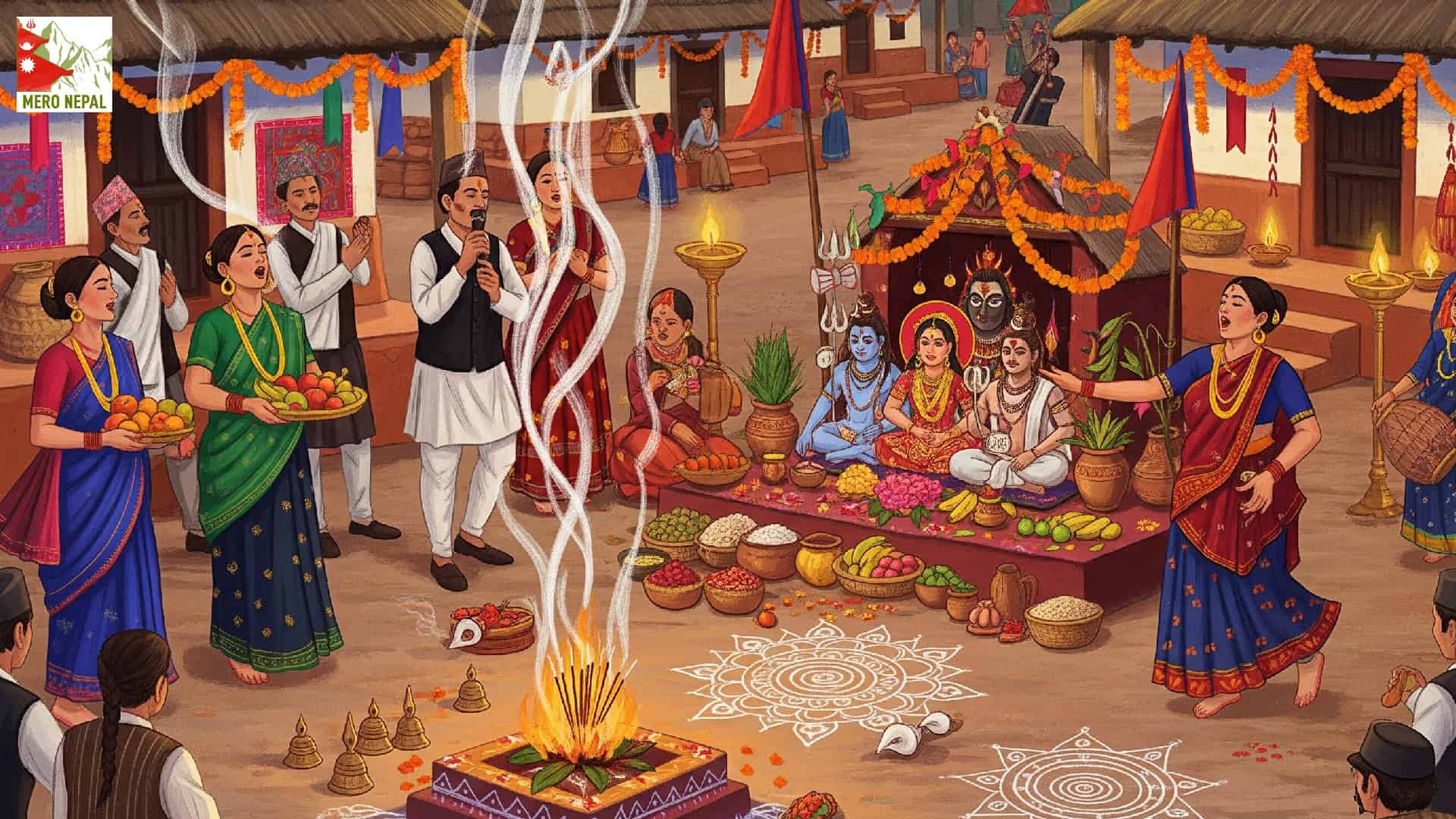
Gaura Parva is a major Hindu festival celebrated primarily in the far-western and mid-western regions of Nepal. Dedicated to Goddess Gaura (Parvati), the festival symbolizes marital devotion, spiritual faith, community bonding, and cultural preservation. During the festival, both women and men participate in rituals, fasting, prayers, folk songs, and traditional dances.
Gaura Parva is not only a religious celebration but also a means of fostering social cooperation, preserving cultural heritage, and strengthening community ties. Folk songs, dances, and storytelling play a vital role in transmitting cultural knowledge across generations.
Significance of Gaura Parva
Marital Devotion: Married women worship Goddess Gaura and Lord Shiva to pray for the long life, health, and prosperity of their husbands.
Cultural Unity: The festival strengthens social bonds as the community comes together through rituals, songs, and dances.
Fertility and Prosperity: Devotees also pray for children, family health, and overall prosperity.
Preservation of Folk Tales and Traditions: Songs and dances narrate Gaura and Shiva’s stories, preserving religious and cultural heritage.
Timing and Duration
Gaura Parva is usually celebrated in Ashwin (September–October) according to the lunar calendar. The festival lasts four to five days, varying with local traditions.
Main Days and Activities:
Day 1 – Preparation: Collecting puja items, cleaning homes, and community preparations.
Day 2 – Fasting Begins: Women observe fasts and start preliminary prayers.
Day 3 – Cultural Performances: Folk songs and Deuda dances are performed.
Day 4/5 – Main Puja and Community Feast: Final rituals, offerings, blessings, and a communal feast.
Rituals and Practices
Preparation of Puja Items
Women gather barley, grains, holy threads (Janai), flowers, pulses, and other sacred items.
These items are cleaned and sanctified for use in rituals.
Fasting and Worship
Married women observe fasts and perform worship at home or community spaces.
Special prayers and mantras are offered for marital devotion, family well-being, and longevity.
Traditional Songs and Dances (Deuda)
Communities sing folk songs and perform Deuda dances depicting the stories of Gaura and Shiva.
These performances serve both devotional and cultural preservation purposes.
Offerings and Blessings
Offerings include fruits, grains, and flowers.
Elders bless younger members, promoting harmony and goodwill.
Community Feasts and Social Bonding
A communal feast follows the rituals.
This strengthens cooperation, friendship, and social unity within the community.
Festival Stories and Moral Lessons
Folk tales associated with Gaura Parva teach values, morality, and devotion.
Women pass these stories to younger generations, preserving traditions.
Cultural Impact
Gaura Parva plays a crucial role in preserving the cultural identity and religious life of far-western Nepalese communities. The festival promotes social unity, devotion, and cultural knowledge transmission through folk songs, dances, and storytelling.
Conclusion
Gaura Parva is a vibrant celebration of religious devotion, cultural heritage, and social unity. It emphasizes marital devotion, family prosperity, and community solidarity while honoring Goddess Gaura and Lord Shiva. The festival contributes to spiritual, cultural, and social well-being in the lives of far-western Nepalese communities.
📚 Mero Nepal
Learn more about Gaura Parva, other festivals, and Nepalese cultural traditions on the Mero Nepal App. Access detailed articles, rituals, timings, and cultural insights in one place.