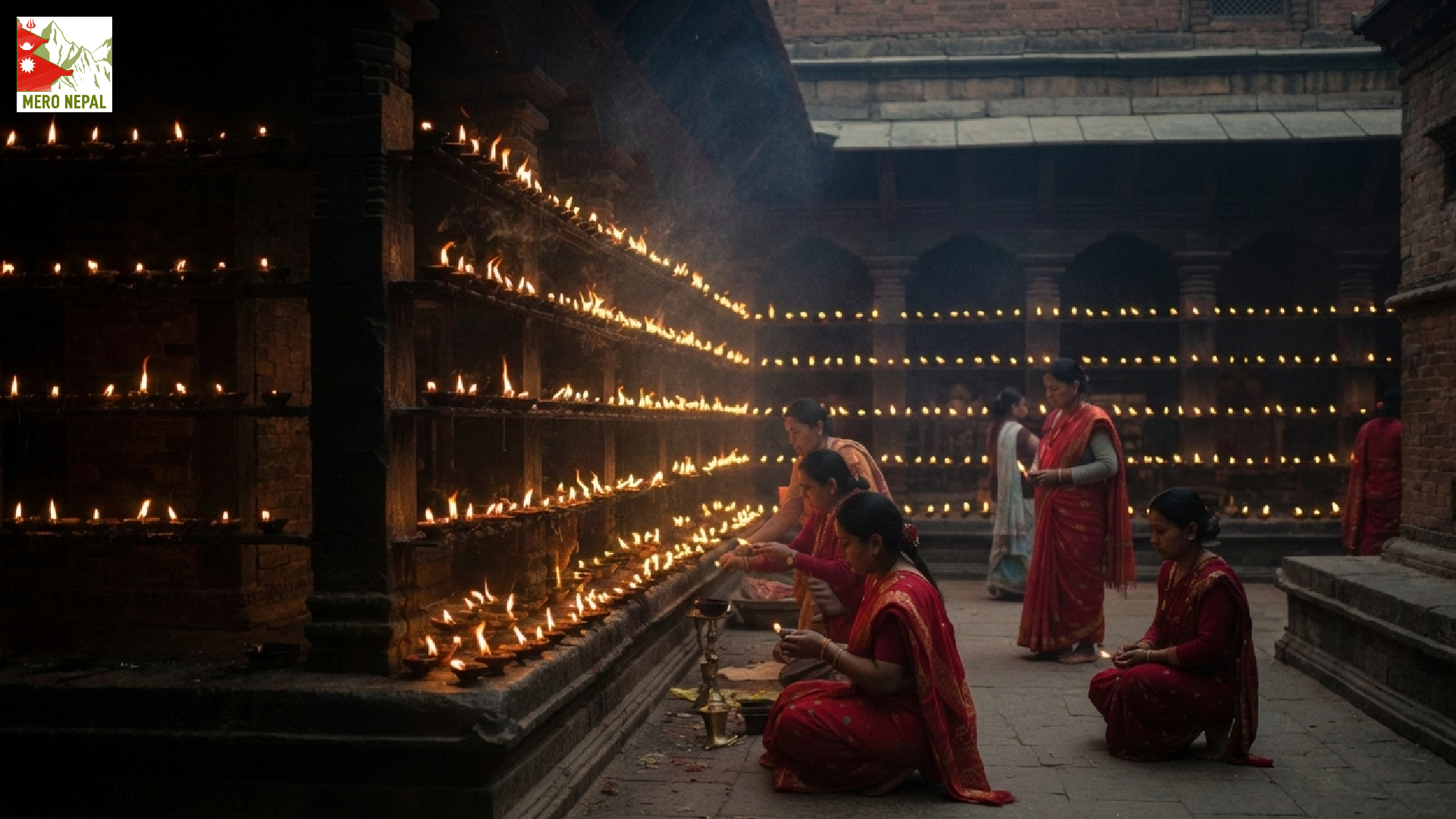
Nepal is a country enriched by ancient civilization, Sanatan philosophy, and a deep-rooted temple culture. Every ritual performed in Nepali temples is not merely a tradition but the result of thousands of years of observation, experimentation, and applied wisdom. Among these rituals, lighting a lamp (Deep Prajwalan) is one of the most common yet profoundly meaningful practices.
Although lighting a lamp appears to be a simple act of devotion, its deeper purpose is to purify, stabilize, and awaken human consciousness. The combination of light, combustion, energy flow, psychology, and spirituality makes lamp lighting a highly effective spiritual practice.
This article explores the religious, scientific, psychological, and social dimensions of lamp lighting in Nepali temples in detail.
1. The Role of Fire and Light in Sanatan Philosophy
According to Sanatan philosophy, the universe is formed from five fundamental elements—Earth, Water, Fire, Air, and Space. Among them, Fire (Agni) is considered the most active and transformative element. Fire purifies impurities, activates dormant energy, and transforms darkness into light.
Lighting a lamp in a temple signifies beginning worship in the presence of Agni as a witness. This is why Vedic yajnas, homa rituals, aarti, and lamps are all centered around fire. The steady flame of a lamp symbolizes divine presence and spiritual knowledge.
2. Scientific Difference Between Oil Lamps and Electric Light
Even in the modern age of electricity, temples continue to use traditional oil or ghee lamps. This is not merely due to tradition, but due to sound scientific reasoning.
Oil lamps produce a stable and continuous flame, which has a calming effect on the optic nerves. Electric lights, on the other hand, produce subtle flickering that can overstimulate the brain and disturb focus. Since temples are spaces meant for concentration and meditation, the steady flame of a lamp is far more suitable.
Additionally, the light emitted by natural oils and ghee aligns better with the human biological rhythm compared to artificial lighting.
3. Combustion Process and Environmental Impact
The fuels traditionally used in Nepali temples—ghee, sesame oil, and mustard oil—are natural substances. When burned in small quantities, they produce minimal smoke and do not heavily pollute the air.
Traditional knowledge suggests that ghee and sesame oil possess antimicrobial properties. Modern research has also shown that certain natural oils can inhibit the growth of microorganisms. This helped keep temple environments relatively hygienic despite large gatherings of devotees.
4. The Relationship Between Flame and the Human Brain
Focusing the eyes on a steady flame is known in yogic practice as Trataka. Temple worship naturally incorporates this practice.
When a devotee gazes at a lamp flame:
Mental restlessness decreases
Concentration improves
Stress levels reduce
Neuroscience explains that such focused visual attention induces alpha brain waves, associated with calm awareness and mental balance. This state is ideal for prayer, meditation, and introspection.
5. Symbolic Meaning of the Lamp’s Components
A traditional oil lamp represents the philosophy of life itself.
The lamp vessel represents the human body
The oil represents desires and tendencies within a person
The wick represents ego
The flame represents knowledge and consciousness
As the lamp burns, the oil diminishes and the wick shortens, symbolizing the gradual dissolution of ego and desires through the growth of wisdom. This subtle message lies at the heart of lamp lighting rituals.
6. Psychology of Darkness and Light in Temple Design
Nepali temples are rarely brightly illuminated. Instead, they maintain a softly dark interior where lamps serve as the primary light source.
Psychologically, dim surroundings reduce sensory stimulation. When light is limited, the mind naturally focuses inward. The visible flame becomes a center of attention, drawing the devotee away from external distractions.
Seeing light emerge from darkness creates a powerful mental association—knowledge overcoming ignorance—which reinforces the spiritual purpose of worship.
7. Collective Lamp Lighting and Social Energy
During festivals and special rituals, hundreds of lamps are lit simultaneously in temples. This creates not only visual beauty but also collective energy.
The combined warmth and light improve air circulation, while the shared devotional act synchronizes emotional and mental states among devotees. This collective harmony enhances feelings of peace, unity, and spiritual elevation.
Understanding Nepali Religious Traditions with Mero Nepal App
To understand rituals such as lamp lighting, abhishek, tithis, fasts, festivals, and temple traditions in depth, Mero Nepal App serves as a reliable digital resource.
The app provides:
Authentic explanations of Nepali Sanatan traditions
Information on temples, rituals, and festivals
Daily religious insights in a simple and organized format
By connecting tradition with technology, Mero Nepal App helps preserve and share Nepal’s spiritual knowledge with modern generations.
Available on Google Play:
https://play.google.com/store/apps/details?id=com.meronepal.app
Conclusion
Lighting a lamp in Nepali temples is not a simple ritualistic act. It is a refined practice that integrates combustion science, light psychology, environmental awareness, and spiritual philosophy. The steady flame stabilizes the mind, illuminates consciousness, and guides devotees on an inner journey.
The next time you light a lamp in a temple, do not treat it as a mere obligation. Spend a few moments observing the flame. That light is not only illuminating the space around you—it is meant to awaken the consciousness within you.