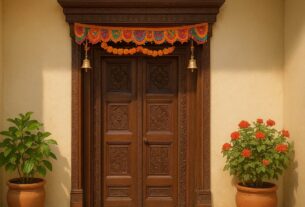
Vedic Vastu Shastra is an ancient architectural science that balances human life with natural and cosmic energies. Its purpose is not merely the construction of a building but the creation of harmony between people and their environment. In Nepal—a nation rich in culture, tradition, and geography—Vastu Shastra continues to influence life deeply, from house design to temple architecture and city planning.
Origin and Philosophy of Vedic Vastu Shastra
The roots of Vastu Shastra lie in the Vedic era. References in the Atharva Veda, Rig Veda, and Sama Veda explain that the universe is governed by five fundamental elements: Earth, Water, Fire, Air, and Space. The central idea is that every structure should maintain balance with cosmic energy.
In Nepal, the use of Vastu principles can be seen since ancient civilizations. The temples and royal palaces built during the Licchavi and Malla periods—such as Patan Durbar, Bhaktapur’s Nyatapola Temple, and Hanuman Dhoka—are perfect examples of Vastu-based architecture. Each structure was designed with precise directional orientation, ensuring both spiritual energy and architectural harmony.
Role of Directions in Nepali Architecture
Direction plays a vital role in traditional Nepali design. The east, where the sun rises, symbolizes enlightenment and purity, so houses and temples are often east-facing.
East: Symbol of light, knowledge, and spiritual awakening—ideal for entrances and prayer rooms.
South: Symbol of stability and strength—ideal for bedrooms.
West: Symbol of peace and calm—ideal for study areas.
North: Symbol of prosperity—suitable for safes and financial spaces.
Traditional Newari homes were designed considering airflow, sunlight, and social balance, aligning perfectly with these directional principles.
The Five Elements of Vastu and Their Harmony in Nepal
Earth (Prithvi): Stability and grounding. Nepali homes, often built on hilly terrain, consider slope, direction, and land energy before construction.
Water (Jal): Source of life and wealth. Ponds, wells, and taps are commonly located in the northeast direction.
Fire (Agni): Represents energy and transformation. The kitchen is placed in the southeast to utilize the sun’s warmth effectively.
Air (Vayu): Symbol of freshness and communication. Windows and balconies face west or north for balanced airflow.
Space (Akash): Symbol of openness and spiritual expansion. Courtyards and terraces are included in most homes for light and ventilation.
When these five elements are balanced, it is believed that peace, health, and prosperity prevail in the home.
Vastu Principles in Nepali Temples
Most famous temples in Nepal—such as Pashupatinath, Manakamana, and Mayadevi temples—are built using Vastu principles.
The temple architecture considers three major aspects:
Site Selection: Sacred locations near rivers, forests, or hills.
Orientation: Usually east-facing so that the first rays of the sun illuminate the sanctum.
Energy Flow: Entrance gates, bells, and incense arrangements are designed to maintain spiritual energy circulation.
This demonstrates that Vastu is not just structural engineering—it is spiritual energy management.
Revival of Vastu Shastra in Modern Nepal
In recent years, modern architects and engineers in Nepal have been combining Vastu with contemporary design and green building practices.
Homes are designed to ensure natural light, airflow, and energy conservation.
Office layouts are planned according to Vastu to promote productivity and positivity.
Digital Vastu consultation apps and experts have made this knowledge more accessible.
Green building concepts also align with Vastu principles, focusing on harmony with nature and sustainable energy use.
Scientific Basis of Vastu Shastra
Vastu Shastra is often seen as spiritual, but it also has scientific grounding:
East-facing houses receive morning sunlight, purifying indoor air and providing vitamin D.
Kitchens in the southeast help hot air and smoke exit naturally.
Bedrooms in the southwest align with the earth’s magnetic field, improving sleep quality.
Prayer rooms in the northeast stimulate calmness and focus.
Thus, Vastu principles reflect environmental science, physics, and human health.
Youth and the Digital Age of Vastu
Today’s generation, despite living modern lifestyles, is showing renewed interest in Vastu. Many consult Vastu experts when building or buying homes and offices. Apps like “Mero Nepal App” provide easy access to Vastu advice, astrology, and auspicious timing.
The digital age has reintroduced ancient knowledge through 3D mapping, digital compasses, and energy flow visualization—bridging tradition and technology.
Conclusion
Vedic Vastu Shastra is not merely a religious tradition but a science of balance. It aligns human life with the forces of nature and cosmic energy. In Nepal, its influence extends from ancient temples and royal palaces to modern apartments and offices.
Vastu not only enhances architectural beauty but also promotes mental peace, health, and prosperity. By blending ancient wisdom with modern innovation, Nepal is reviving Vastu Shastra as a vital part of its cultural and environmental identity.
Mero Nepal App :
To explore more about Vedic Vastu Shastra, astrology, auspicious timing, and planetary effects, download “Mero Nepal App.” It offers expert guidance to bring balance and harmony to your home, business, and life.