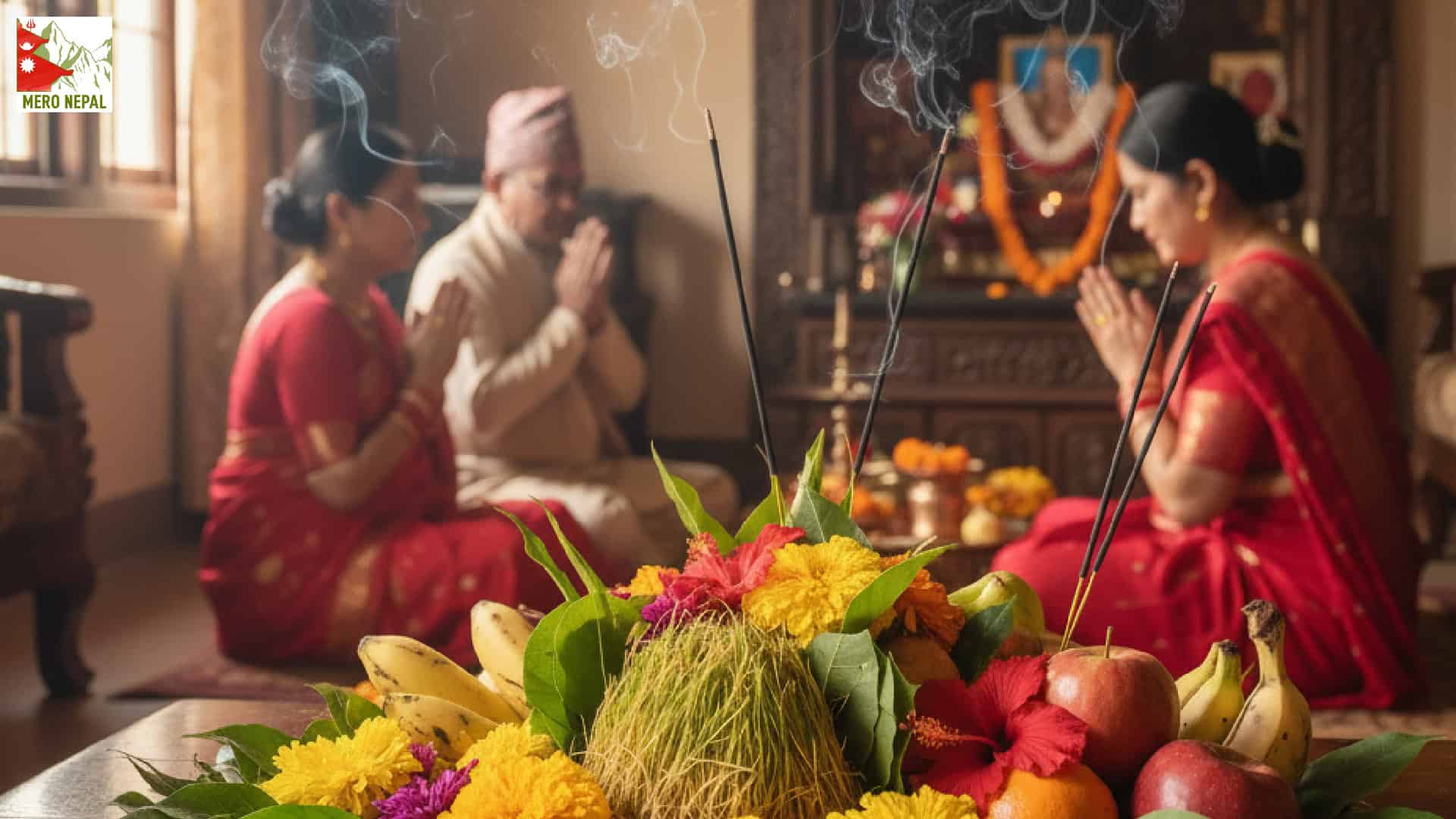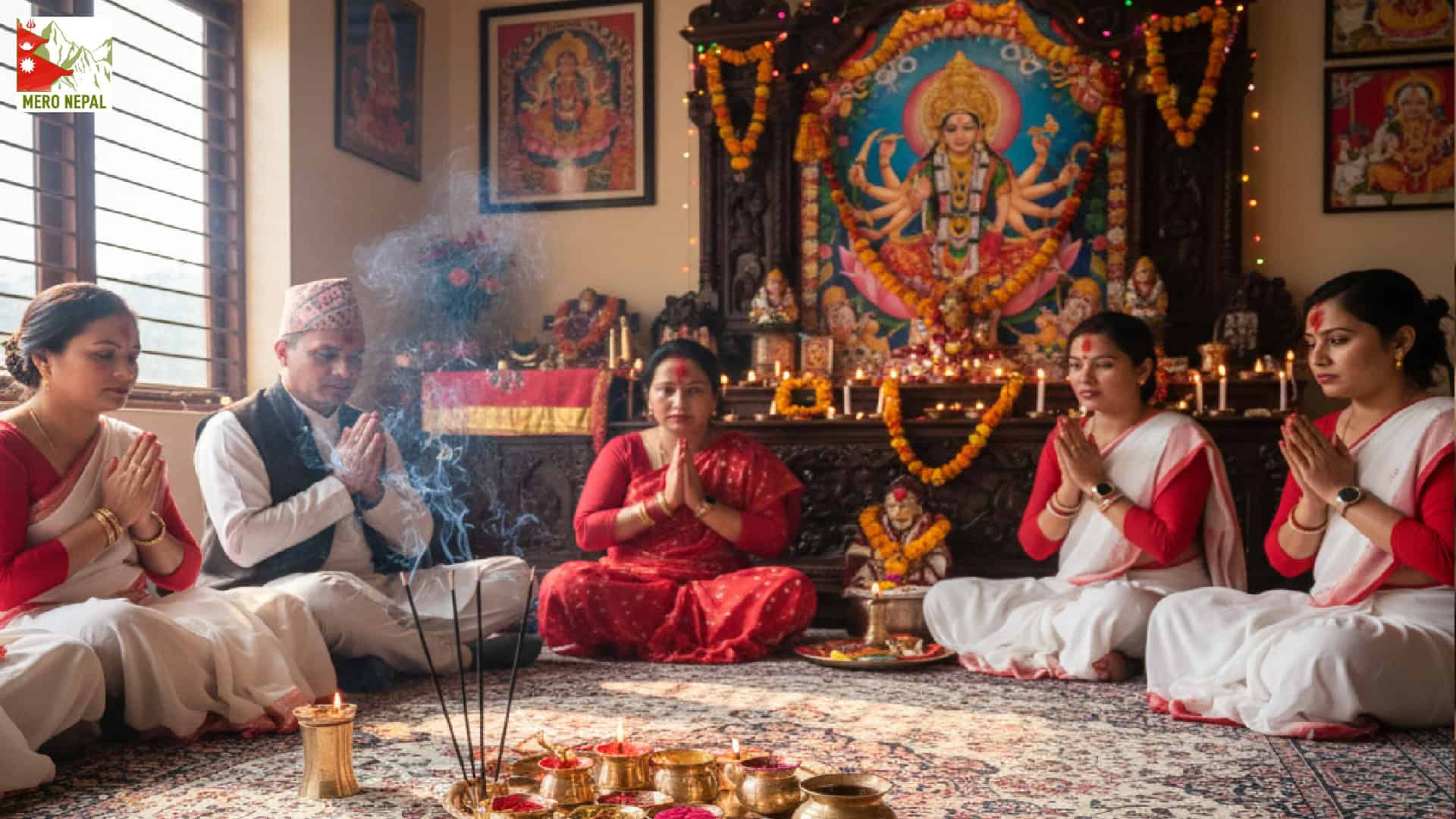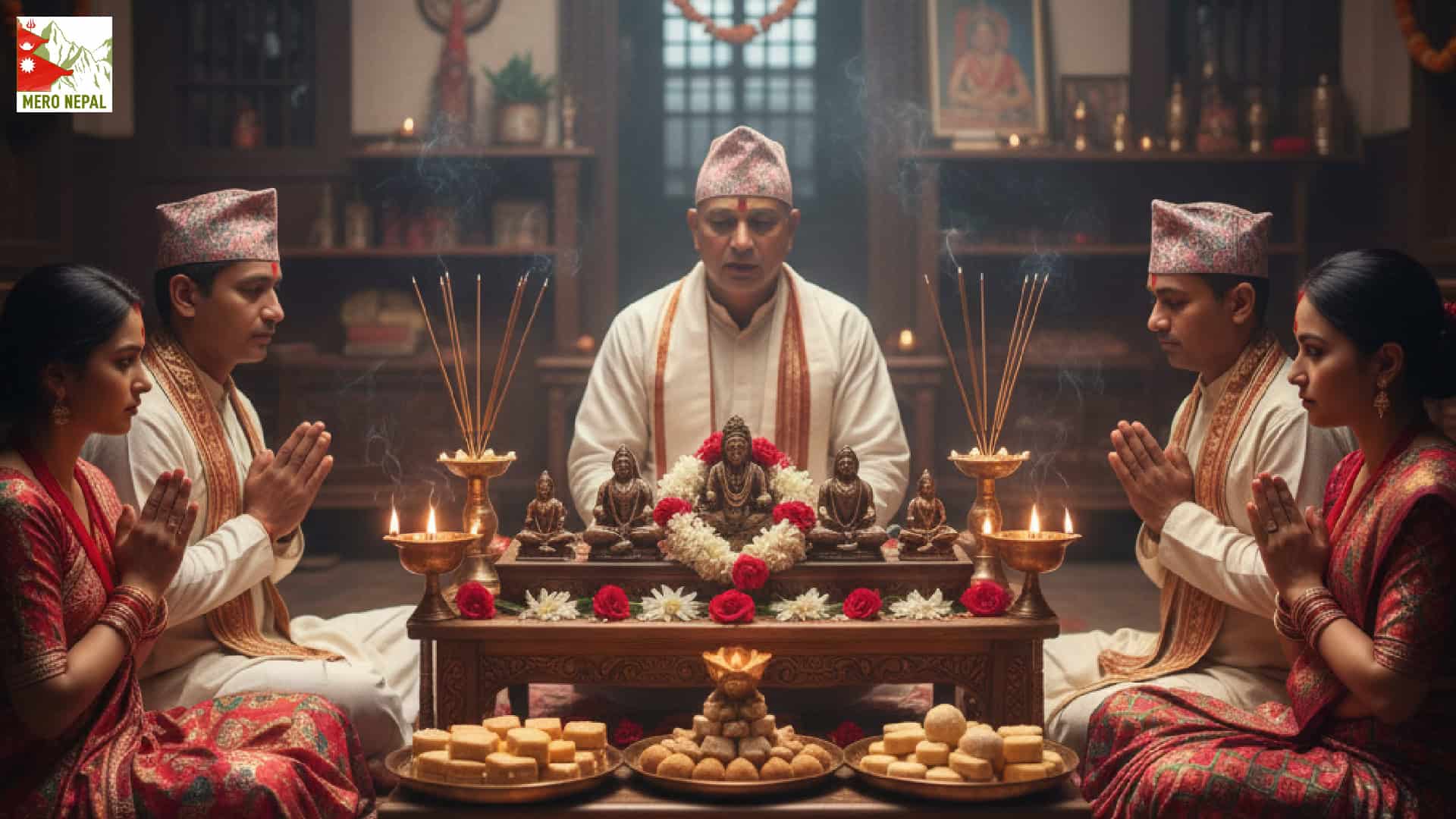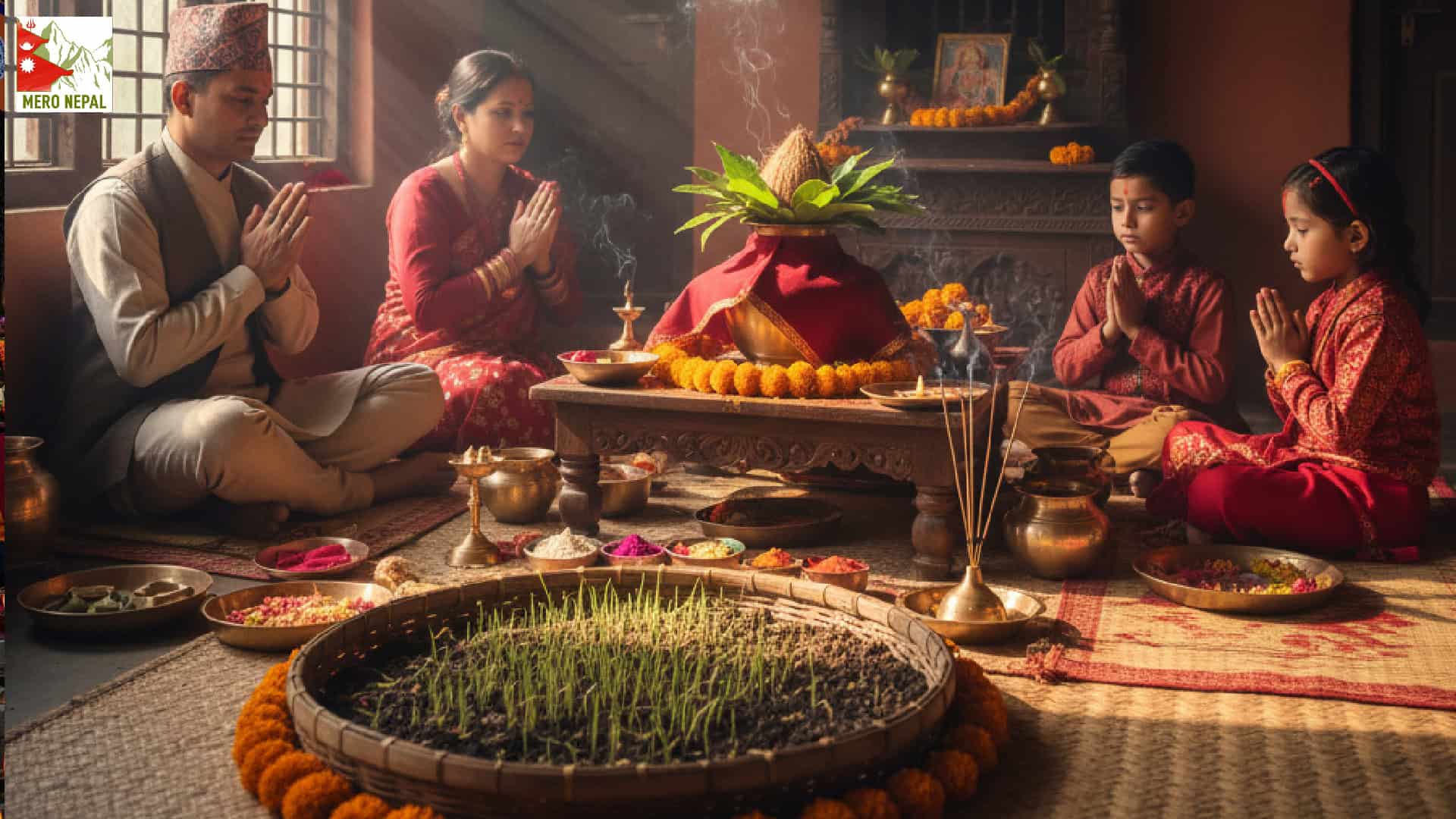
Maha Navami: The Religious, Historical, Cultural, and Social Significance of the Ninth Day of Dashain

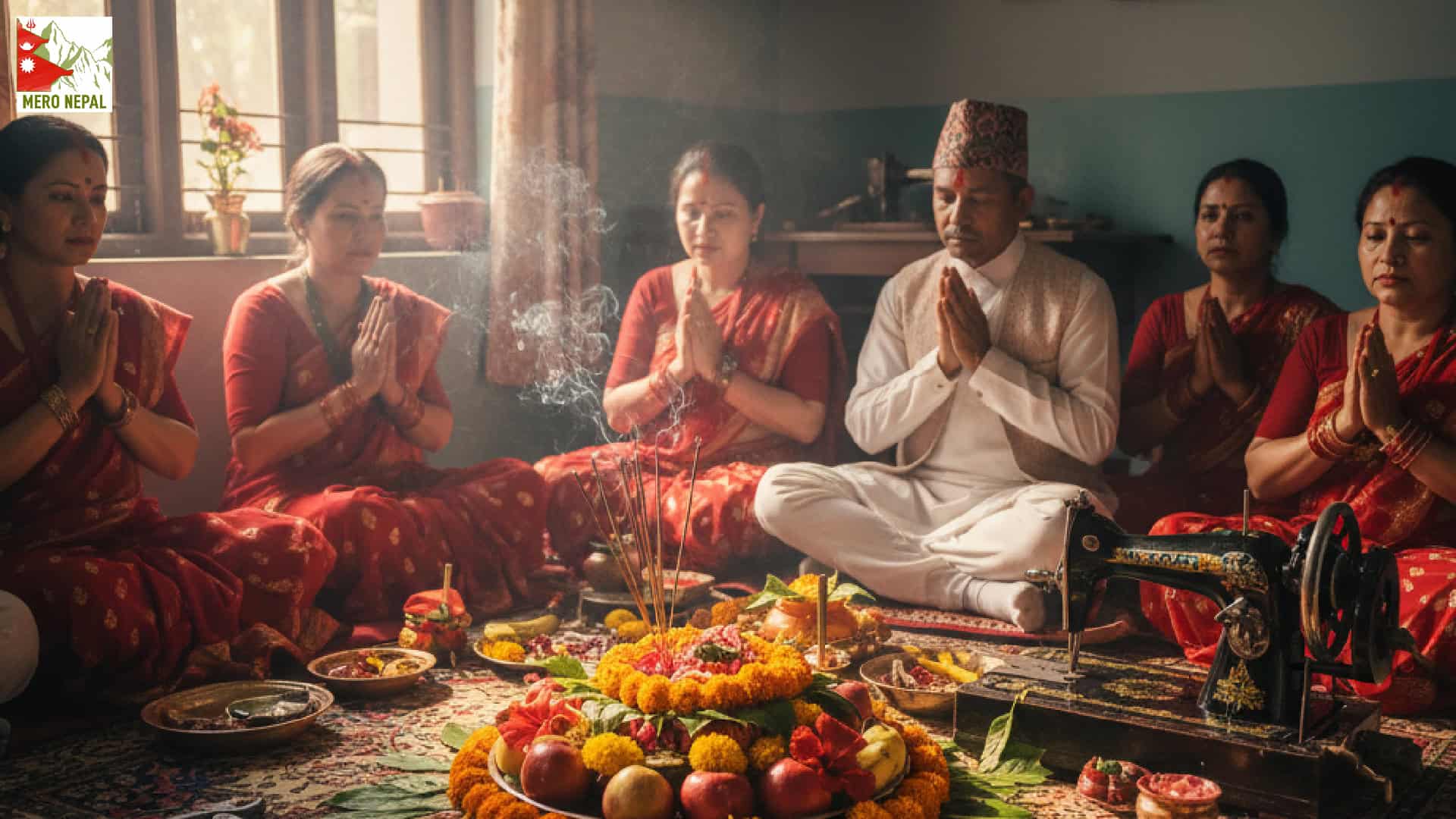
Introduction Maha Navami is the ninth day of the Dashain festival, dedicated to the worship of Vishwakarma and tools, weapons, and machinery. This day symbolizes power, protection, devotion, and prosperity. Households, workplaces, factories, and industrial sites across Nepal perform Vishwakarma Puja. Maha Navami is not only about worshipping deities but also about blessing tools, weapons, […]

Continue Reading
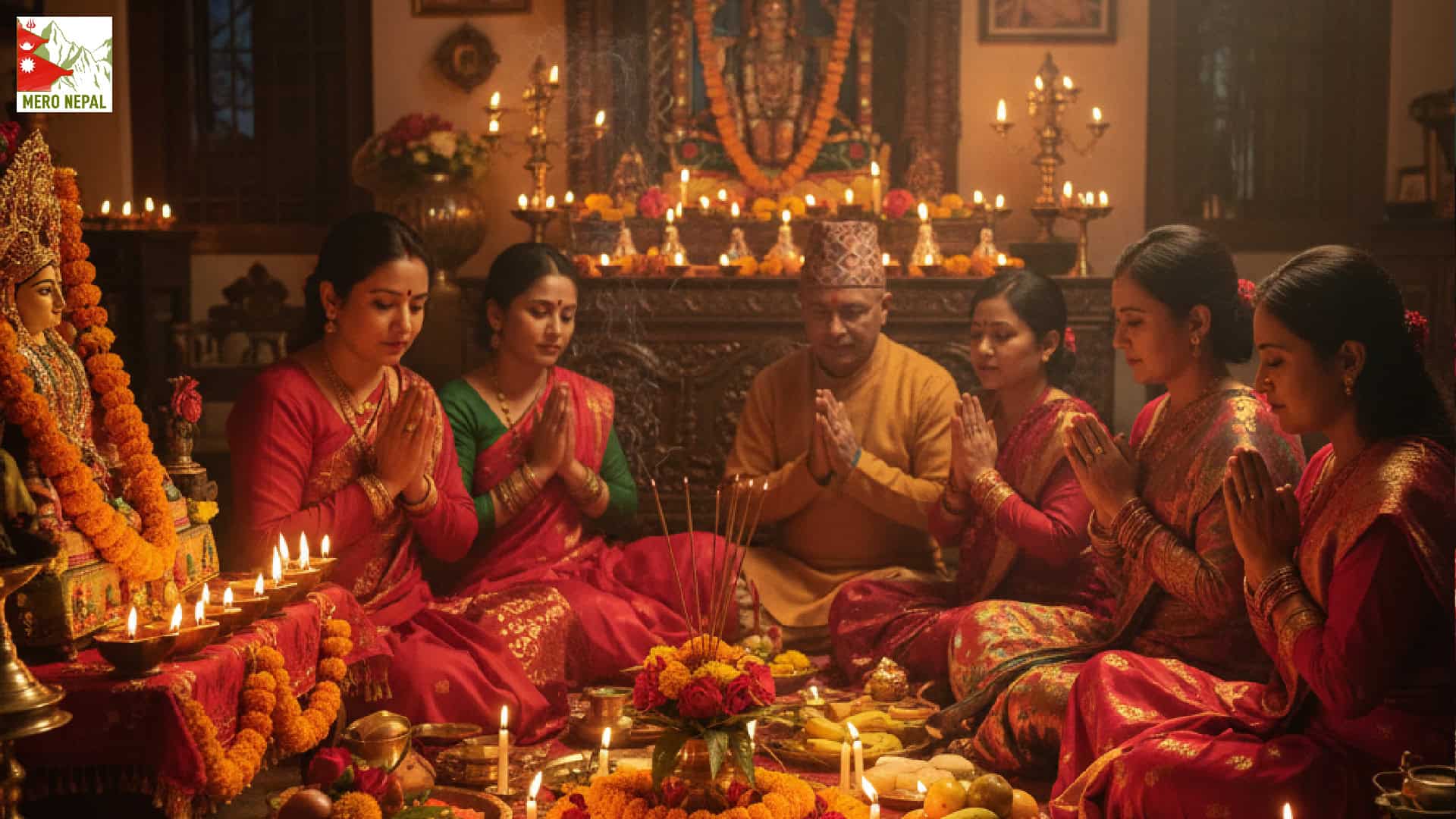
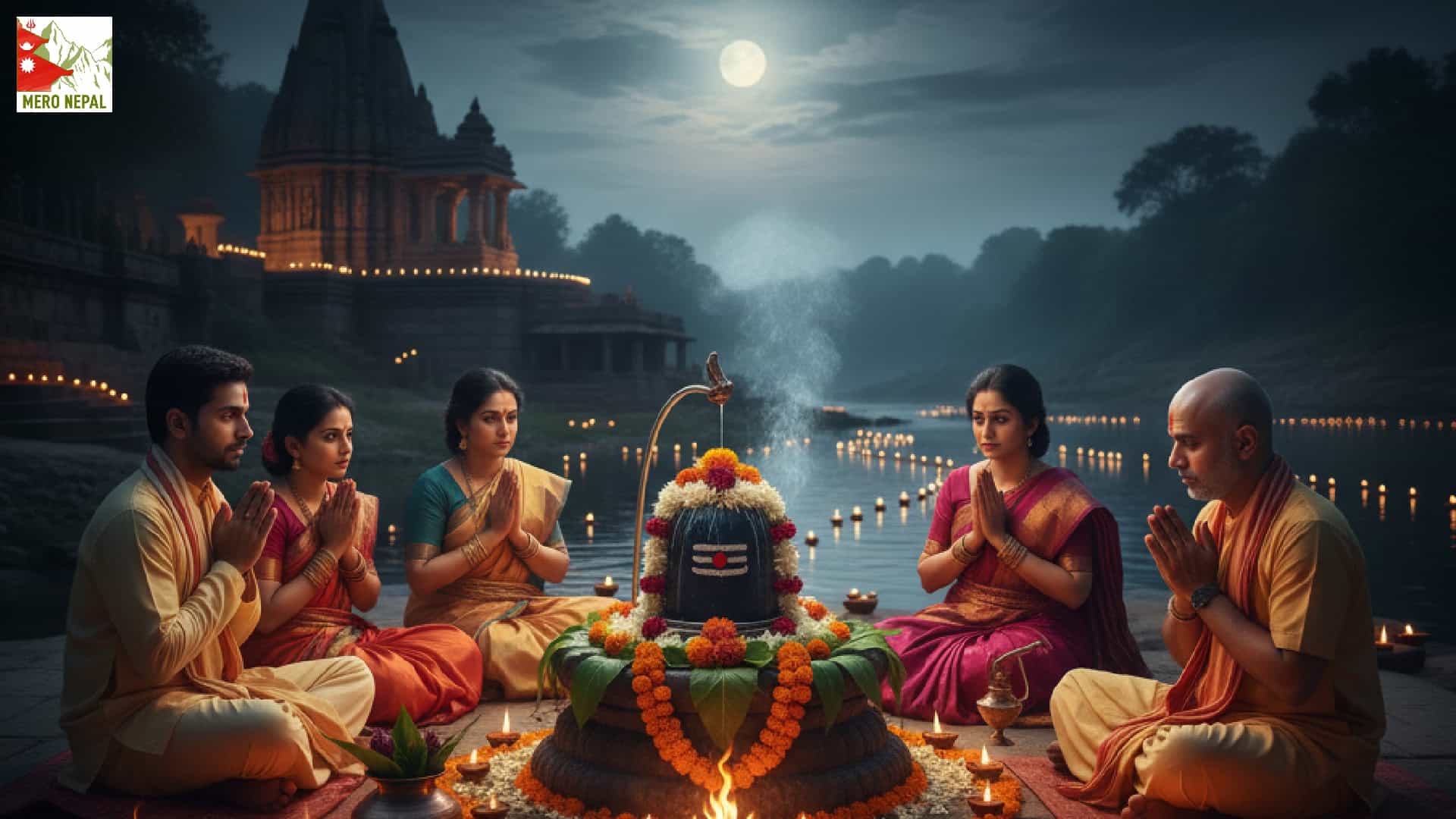
Kojagrat Purnima – The Final Day of Dashain with Lakshmi Puja

Introduction to Kojagrat Purnima Kojagrat Purnima marks the fifteenth and final day of the grand Dashain festival in Nepal. This full moon day is considered highly auspicious and is associated with the worship of Goddess Lakshmi, the goddess of wealth and prosperity. The word “Kojagrat” means “who is awake,” symbolizing that Goddess Lakshmi blesses the […]

Continue Reading

Shaniwar Pradosh Vrat: Fasting and Puja Method

Shaniwar Pradosh Vrat is an important Hindu observance dedicated to Lord Shiva. It falls on Pradosh Kaal, the twilight period of the 13th (Trayodashi) and 12th (Dwadashi) lunar day of every month, specifically when it coincides with Saturday (Shaniwar). Devotees believe observing this Vrat helps in removing sins, relieving hardships, ensuring family harmony, and bringing […]

Continue Reading

Phulpati (Phulpati): The Historical, Religious, Cultural, and Social Significance of the Seventh Day of Dashain

Introduction Dashain is Nepal’s biggest festival, celebrated over nine days. Each day is dedicated to worshipping a different form of Goddess Durga. The seventh day, known as Phulpati, holds immense importance not only from a religious perspective but also historically and culturally. On this day, households bring in essential items for worship, including jamara, flowers, […]

Continue Reading

Maha Ashtami: The Religious, Historical, Cultural, and Social Significance of the Eighth Day of Dashain

Introduction Maha Ashtami is the eighth day of the Dashain festival, dedicated to worshipping Goddess Durga Bhawani. This day symbolizes power, devotion, and religious rituals. On Maha Ashtami, households prepare special items for worship, including jamara, flowers, bel leaves, incense, fruits, and grains. The day is believed to remove negative energies, bring positive energy, and […]

Continue Reading

Navagraha Shanti Puja: Method to Remove Graha Dosh

Introduction Navagraha Shanti Puja is performed to reduce negative planetary effects (Graha Dosh) and enhance the positive influence of planets in one’s life. This Vedic ritual is most effective when conducted under the guidance of a knowledgeable priest. Essential Materials Navagraha idols, images, or yantras Kalash (sacred pot), water, Panchamrit Oil lamp (diya), ghee, incense […]

Continue Reading

Ghatasthapana: The Sacred Beginning of Dashain

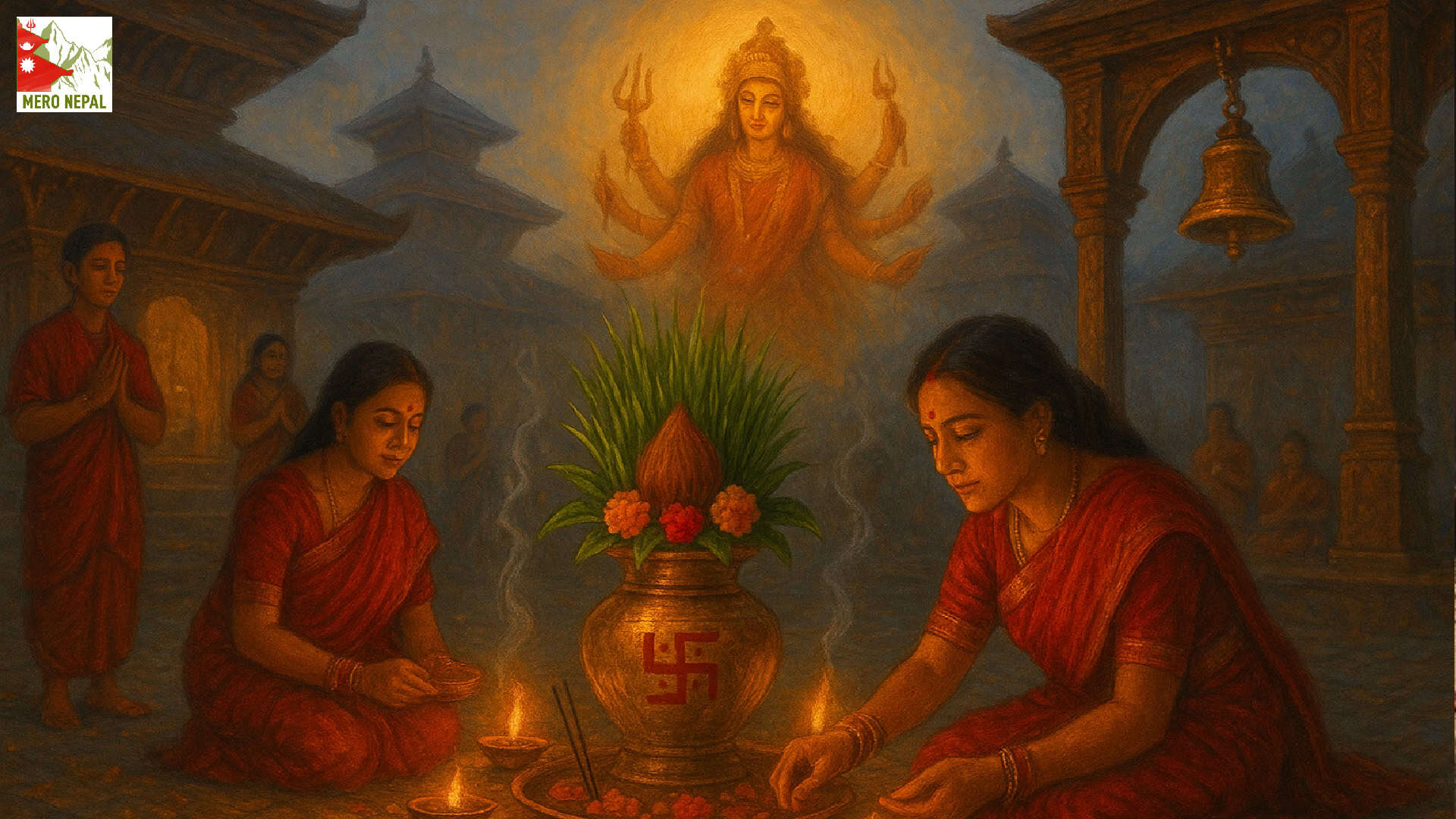
Dashain, Nepal’s biggest festival, begins with Ghatasthapana. This day holds immense religious, cultural, and spiritual significance. The fifteen-day festival starts with this ritual, which sets the tone for the celebrations. On this day, Goddess Durga is invoked, and jamara (barley sprouts) are sown, which later become central to the entire Dashain rituals. Rituals of Ghatasthapana […]

Continue Reading

Navaratri: Worship of Nine Goddesses and Spiritual Significance

Navaratri, celebrated in Nepal and India, is one of the most important religious, cultural, and spiritual festivals. The word Navaratri means “nine nights,” during which the nine forms of Goddess Durga are worshipped. While Sharadiya Navaratri (autumn) is the most widely observed, Chaitra Navaratri is also celebrated. Each day honors a different goddess, symbolizing her […]

Continue Reading

Kalaratri: Goddess of Navaratri Saptami

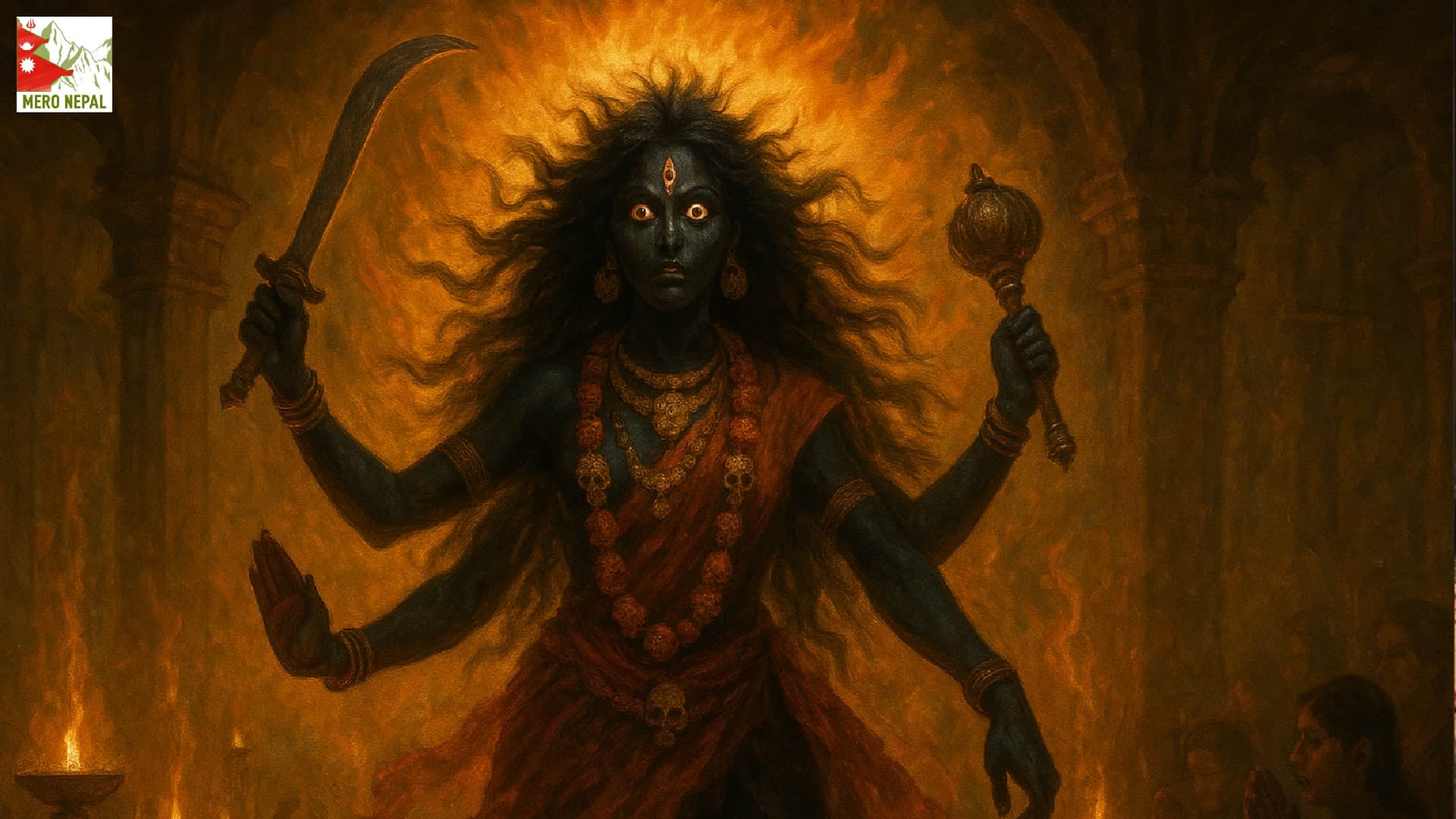
On the seventh day of Navaratri, known as Saptami, devotees worship the seventh form of Goddess Durga – Kalaratri. She is considered the most fierce and powerful manifestation of Durga. Through her worship, devotees pray for the destruction of fear, darkness, and negative energies. The Appearance of Kalaratri The form of Goddess Kalaratri is extremely […]

Continue Reading

Surya Sankranti and Its Impact on Daily Life

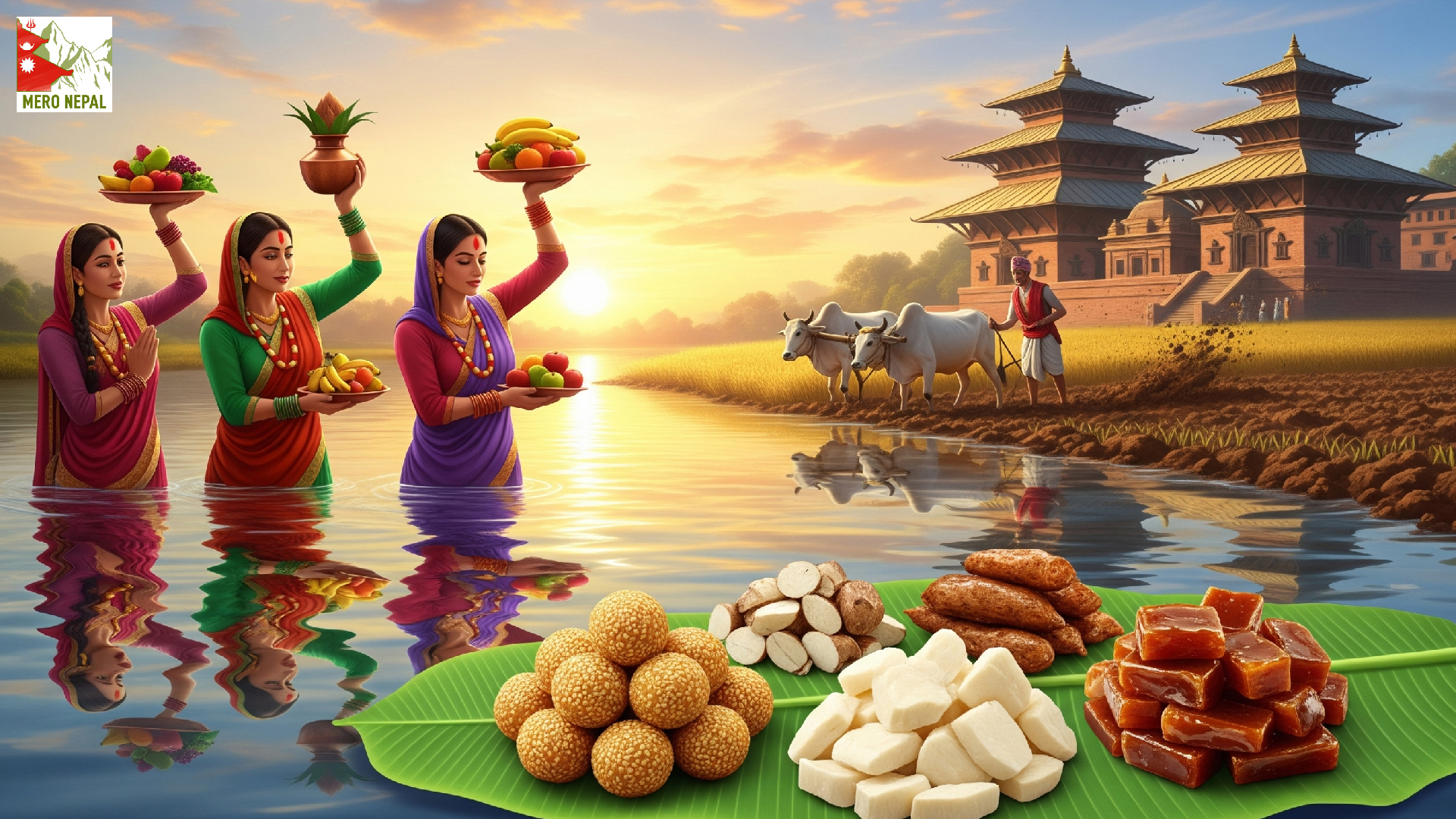
Introduction Surya Sankranti comes from the Sanskrit word Sankramana, meaning the entry of the Sun from one zodiac sign to another. In Nepal, every monthly Sankranti carries special significance. It is not only religious but also deeply connected with astrology, health, agriculture, and social life. Surya Sankranti is celebrated in Nepal with family and community […]

Continue Reading