Introduction
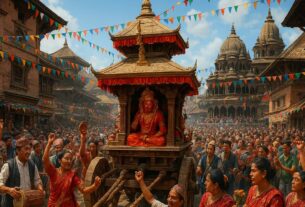
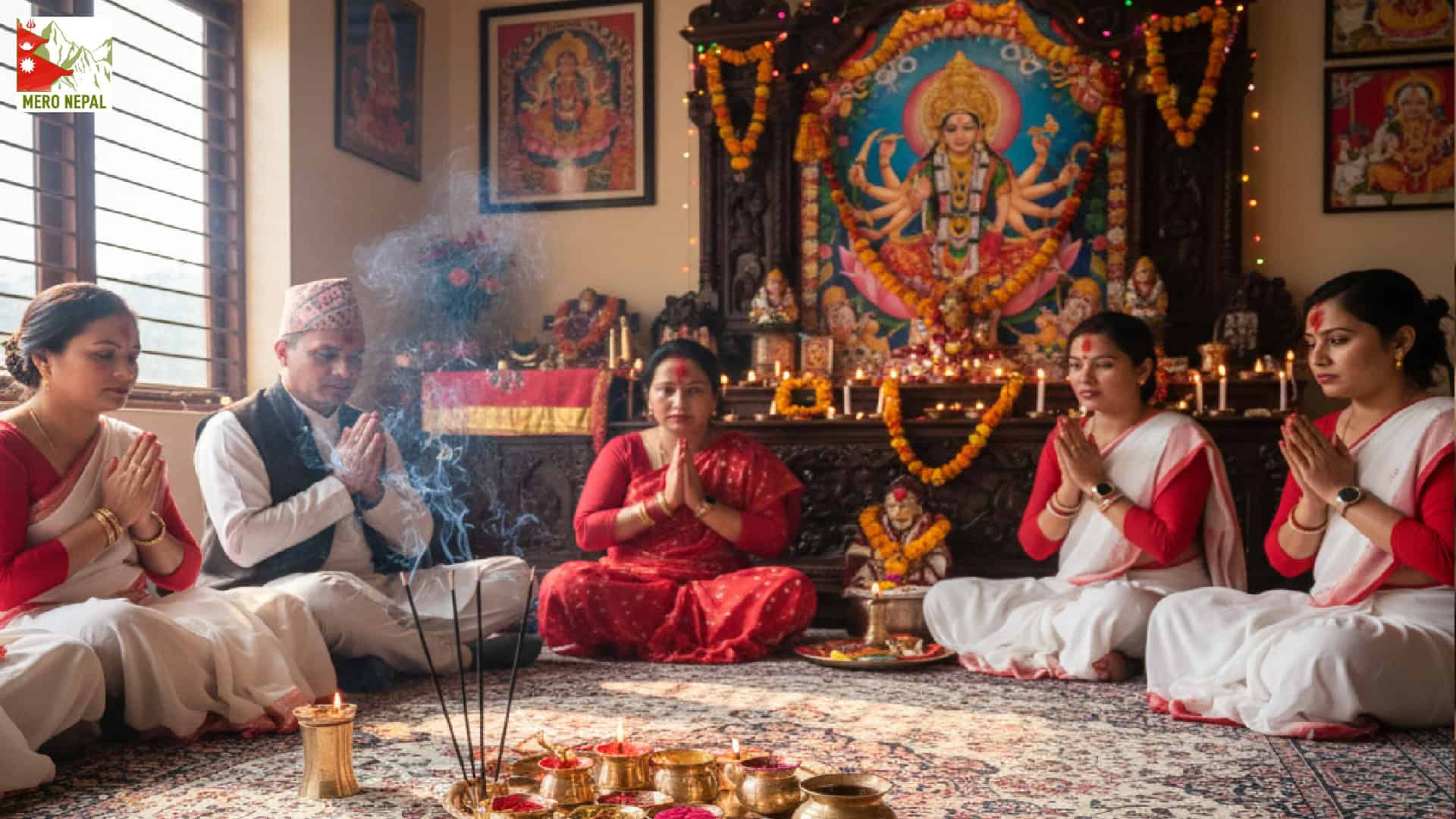
Maha Ashtami is the eighth day of the Dashain festival, dedicated to worshipping Goddess Durga Bhawani. This day symbolizes power, devotion, and religious rituals. On Maha Ashtami, households prepare special items for worship, including jamara, flowers, bel leaves, incense, fruits, and grains. The day is believed to remove negative energies, bring positive energy, and receive the blessings of the Goddess. Household rituals, community ceremonies, and traditional sacrifices make this day especially significant.
Historical Background
Maha Ashtami has a long-standing tradition in Nepal. Historical records show that this day is closely associated with worshipping the Goddess for power and protection. In ancient times, kings and citizens collectively performed worship and sacrifices to Durga Bhawani. The day was seen as a symbol of state security, power, and prosperity. In Kathmandu and other historical palaces, elaborate ceremonies were conducted with soldiers, priests, and palace officials performing rituals. Traditional sacrifices were believed to please the Goddess and ensure the well-being and prosperity of the kingdom.
Household Traditions
On Maha Ashtami, families prepare jamara, flowers, bel leaves, incense, oil lamps, fruits, and grains for worship. All family members gather to perform the rituals with devotion. Women usually take charge of indoor puja, while men handle preparation of materials and sacrifice arrangements. In some villages and towns, sacrifices (bali) are still offered to please the Goddess, either as animals or symbolic items such as vegetables or flowers. The purpose is to invite the Goddess’s blessings and protection.
Religious Significance
Maha Ashtami is considered an extremely sacred day. Worship focuses on the eighth form of Goddess Durga, Mahishasuramardini.
-
The Goddess’s power and courage are invoked.
-
It is believed to remove negative energy and bring positive energy.
-
Sacrifices symbolize the Goddess’s satisfaction and protection.
-
It is also believed to ensure blessings for household, agriculture, business, and family life.
Religious texts highlight Maha Ashtami extensively, recounting the Goddess’s victory and power, making this day profoundly holy.
Social and Cultural Significance
Maha Ashtami also has strong social and cultural dimensions. Villages and cities organize collective worship, sacrifices, and communal feasts, strengthening social bonds. Elders teach children the significance of Durga Bhawani’s worship and sacrifice, ensuring the transmission of tradition across generations. Families from distant places return home, reinforcing family unity. Traditional songs, dances, and cultural performances turn Maha Ashtami into a shared community experience.
Modern Context
Today, Nepalese living in cities or abroad also participate in Maha Ashtami rituals and blessings digitally. Social media, video calls, and apps are widely used to exchange greetings. While traditional worship and sacrifices remain important, some communities now adopt modern alternatives, such as offering vegetables or symbolic items instead of animals. Maha Ashtami successfully blends tradition with modern lifestyle practices, preserving its relevance.
Conclusion
Maha Ashtami is not just the eighth day of Dashain; it is a symbol of power, devotion, family unity, and social cohesion. Historically, it strengthens the religious and social structure of Nepalese society. Religiously, it provides an opportunity to seek the blessings of Goddess Bhawani. Culturally, it preserves Nepalese identity and heritage. Maha Ashtami connects people with their history, faith, and societal values, making it an integral part of Nepalese life.