

1. Introduction: The Power of Water and Mental Peace
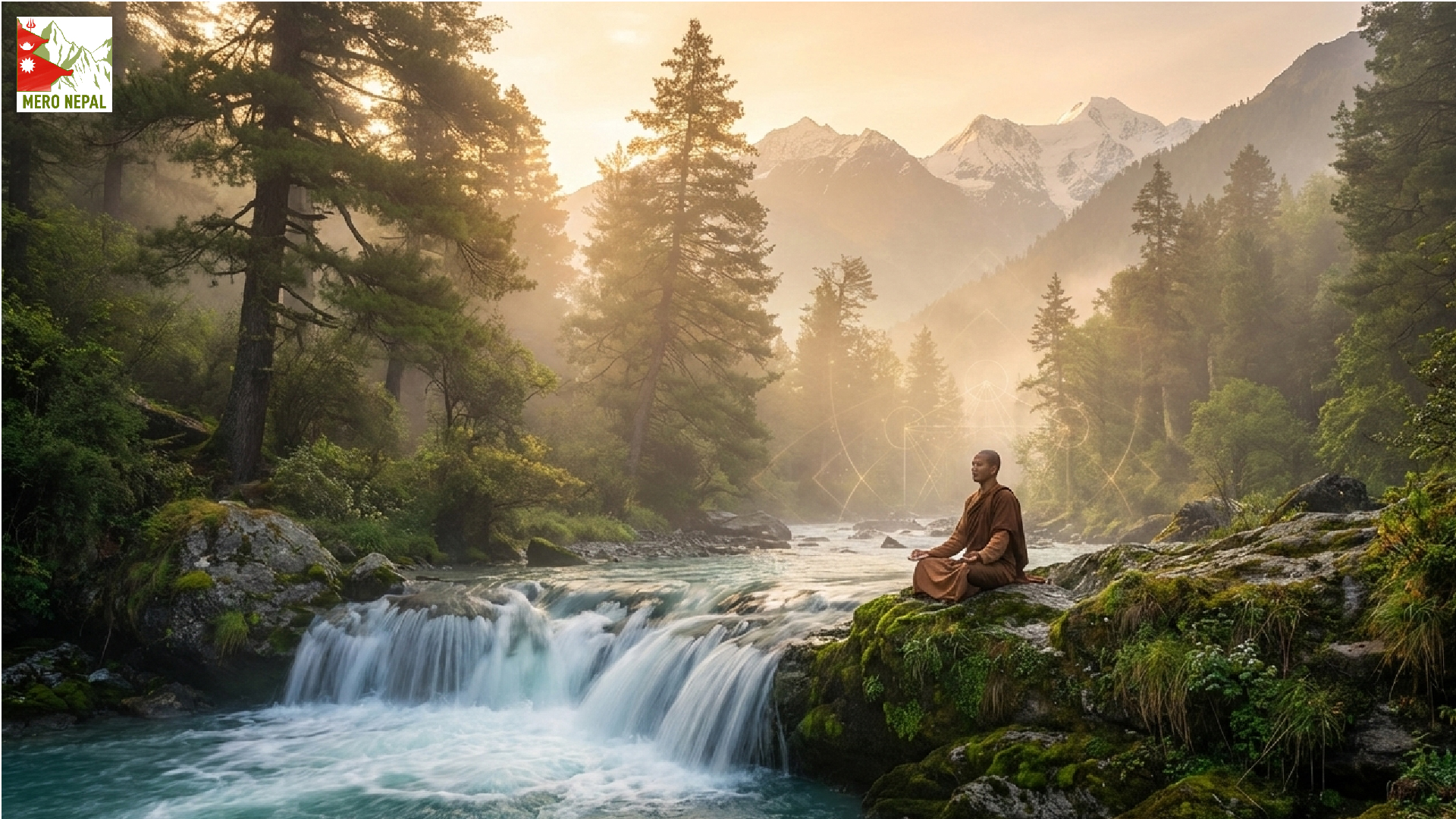
The ponds, rivers, and waterfalls located in Nepal’s hilly and Himalayan regions are not just natural scenery; they are considered sources of pure energy, spiritual power, and mental peace. Since ancient times, sages, ascetics, and meditators have performed rituals, prayers, and meditation practices connected to these waters. The continuous flow of water, the cool Himalayan breeze, and the natural surroundings help focus the mind and deepen meditation. Sitting by the rivers or waterfalls, practitioners feel their inner strength and experience a cosmic alignment that enhances mental clarity, inner stability, and meditation depth.
Key Highlights:
- The continuous flow of water removes negative energy.
- The cool Himalayan breeze and serene surroundings help focus the mind.
- Natural sounds and scenery enhance mental clarity and inner peace.
- Practitioners experience cosmic alignment and increased life energy.
2. Historical and Cultural Significance
Many ponds and waterfalls in Nepal are extremely important from religious, cultural, and historical perspectives. Sites such as the Kaligandaki River, Ganesh Pokhari, and Himalayan waterfalls contain ancient temples, copper inscriptions, and historical texts. Since ancient times, practitioners have performed sacred baths, prayers, festivals, community rituals, meditation, pranayama, and mantra chanting at these locations. Bathing in these waters is believed to remove negative energy, reduce mental stress, and enhance spiritual awareness. The coolness of the Himalayan waterfalls, the sound of flowing water, and the natural environment help stabilize meditation. Historical texts, local traditions, and archaeological evidence confirm the significance of these sites. Each pond or waterfall has its own unique story, spiritual tradition, and energy flow, making spiritual practice in Nepal highly effective.
Cultural and Historical Points:
- Religious Significance: Sites for worship, rituals, and festivals.
- Cultural Importance: Local traditions and community practices.
- Natural Importance: Pure water, Himalayan flow, and energy source.
- Historical Value: Ancient inscriptions and texts confirming significance.
3. Mental and Spiritual Benefits
Practices associated with ponds and waterfalls have a deep impact on mental, physical, and spiritual health. The continuous flow of water, the cool Himalayan environment, and natural sounds stabilize meditation. These practices help eliminate negative thoughts, deepen focus, and enhance life energy. Sitting by a river or waterfall for meditation and pranayama allows practitioners to sense their inner energy, improving emotional balance and mental stability. Water-based practices ensure clarity of mind, emotional equilibrium, and a profound meditation experience.
Key Benefits:
- Reduces mental stress and enhances inner peace.
- Improves concentration and meditation focus.
- Increases positive energy and life force.
- Enhances emotional balance and inner stability.
4. Common Rituals and Practices
Rituals performed at ponds or waterfalls are traditionally considered highly effective. These practices help align practitioners with cosmic energies and planetary influences. Sacred baths, mantra chanting, prayers, and meditation help individuals feel their inner power and create positive energy flow in life.
Main Practices:
- Sacred Bath: Purifies the body, mind, and spirit.
- Mantra Chanting: “Om Namah Shivaya” or location-specific mantras to focus mental energy.
- Prayer and Offerings: Flowers, incense, water, or other sacred items.
- Meditation Practice: Using the flow of water, natural sounds, and surroundings to deepen meditation.
5. Key Sacred Sites
Many ponds and waterfalls in Nepal are famous for spiritual practice. Each site has its own historical story, religious significance, and natural beauty.
Major Sites:
- Kaligandaki River: Famous for Shaligram stones, sacred bathing site for practitioners.
- Ganesh Pokhari: Popular for festivals and ritual offerings.
- Himalayan Waterfalls: Ideal for meditation, pranayama, and experiencing natural energy.
These sites combine natural beauty, historical significance, and spiritual practice.
6. Daily Practices and Meditation Routine
Daily meditation, pranayama, and ritual practice help maintain mental stability, inner peace, and positive energy flow. Early morning is considered the best time to meditate near rivers or waterfalls. Practitioners perform 10–15 minutes of pranayama and breathing exercises, followed by mantra chanting while focusing on positive energy and calmness. Touching or bathing in the sacred waters enhances mental purification. At the end of meditation, practitioners acknowledge the cosmic energy to strengthen inner stability.
Daily Practice Steps:
- Meditate near a river or waterfall in the morning.
- Perform 10–15 minutes of pranayama and breathing exercises.
- Chant mantras while focusing on positive energy and calmness.
- Touch or lightly bathe in the sacred waters for purification.
- End meditation by sensing cosmic energy and expressing gratitude.
Benefits:
- Reduces mental stress.
- Increases positive energy flow.
- Enhances stability and depth in meditation practice.
7. Conclusion
Nepal’s sacred ponds and Himalayan waterfalls are not just natural wonders; they are sources of spiritual power, mental peace, and life energy for practitioners and devotees. Regular meditation, pranayama, and ritual practice provide positive energy, mental clarity, and inner stability.
Summary Points:
For structured guidance, the MeroNepal App can be used to suggest auspicious times and locations, though natural practice remains central.
Ponds and waterfalls enhance mental, physical, and spiritual energy.
Regular meditation, pranayama, and ritual practice strengthen inner stability.


