1. Introduction and Background
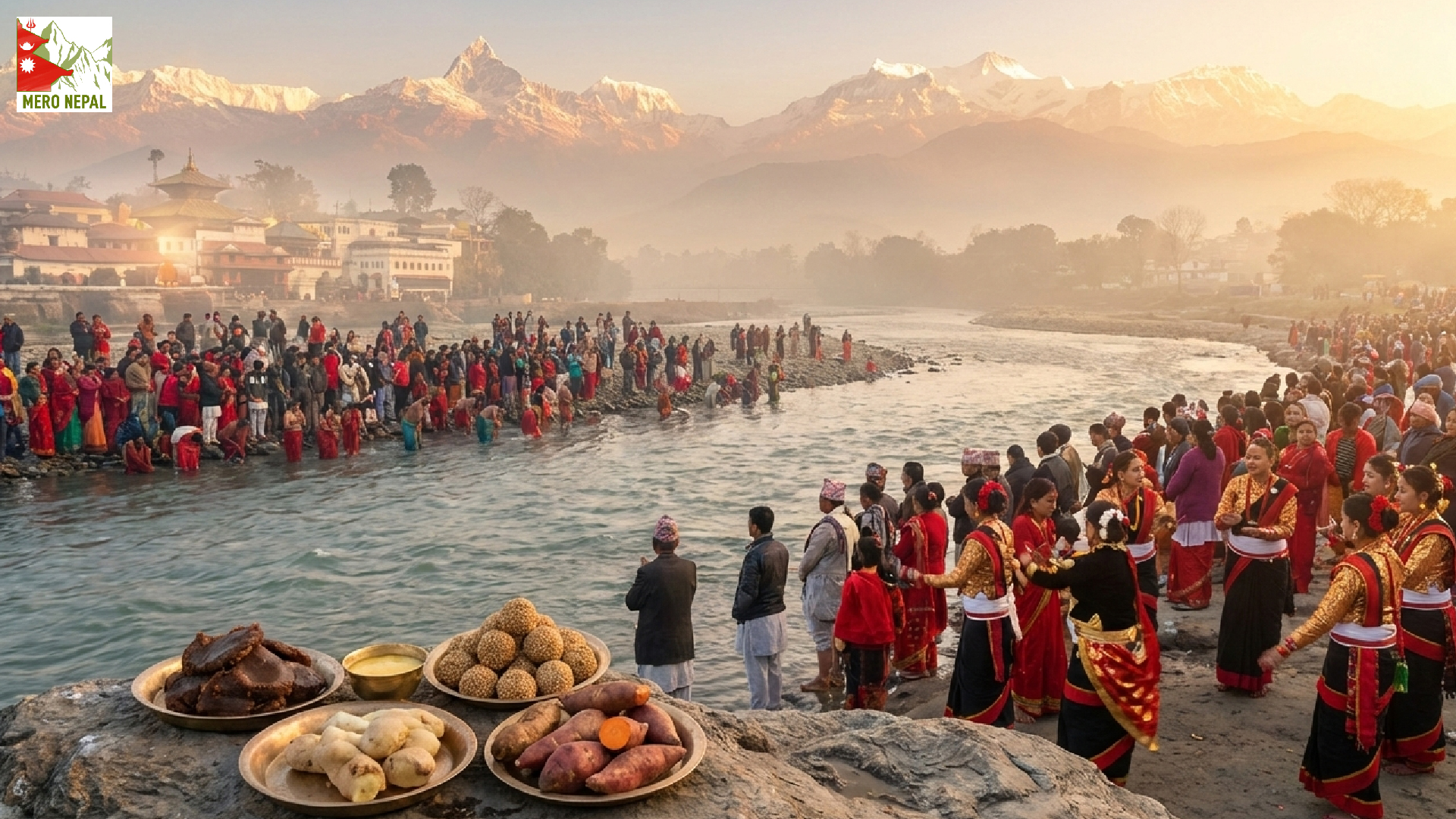
In the geographical and cultural diversity of Nepal, January 1st (Magh 1st), known as Makar Sankranti or Maghe Sankranti, stands as a distinct and multi-dimensional festival. This festival, occurring on the first day of the tenth month of the Vikram Samvat calendar, signifies more than just a date; it highlights the change of seasons, the conclusion and renewal of agricultural cycles, and the interconnectedness between the human body and cosmic energy.
Astronomically, this is the day the sun enters Capricorn (Makar Rashi), marking the start of Uttarayan—the sun’s northward journey when days begin to lengthen and the peak of winter transitions toward warmth. Maghe Sankranti is deeply rooted in Nepali life, celebrated uniquely by communities across the mountains, hills, and plains.
2. The Food Science: Where Tradition Meets Nutrition
The traditional foods chosen by Nepali ancestors for this festival are scientifically sound choices for maintaining body warmth and boosting immunity during peak winter.
Table 1: Nutritional Analysis of Festival Foods
| Food Item | Primary Nutrient/Active Compound | Key Health Benefit |
| Chaku (Molasses) | Iron, Sucrose, Glucose | Instant thermogenic energy; treats anemia; supports postpartum recovery. |
| Ghee (Clarified Butter) | Butyric Acid, Vit A, D, E, K | Gut health (nourishes colon); joint lubrication; aids vitamin absorption. |
| Sesame (Til) | Lignans (Sesamin), Calcium | High-density calcium for bones; triggers fat-burning for body heat. |
| Tubers (Tarul/Yam) | Resistant Starch, Fiber | Low Glycemic Index (sustained energy); prebiotic for gut immunity. |
Scientific Breakdown:
-
Chaku (Molasses): A high-calorie-density food that provides an “instant energy boost.” Its iron content helps combat Iron Deficiency Anemia, and its traditional use in postpartum care (Chakuwasa) supports uterine recovery.
-
Ghee: Rich in Butyric Acid, which reduces gut inflammation. It also acts as a lubricant for joints, which can become stiff during the cold months.
-
Sesame Seeds (Til): These contain sesamin, which increases fatty acid oxidation in the liver, generating internal heat.
-
Tubers (Tarul): Unlike rice, these provide a “sustained release” of energy, preventing blood sugar spikes while feeding healthy gut bacteria.
3. Ethnographic Analysis: A Tapestry of Traditions
Nepal’s diversity is most visible on this day, as different ethnic groups celebrate their own unique histories and governance systems.
Table 2: Cultural Diversity & Community Traditions
| Community | Unique Festival Name | Key Tradition / Significance |
| Tharu | Maghi | New Year; election of local leaders (Barghar); liberation from bonded labor. |
| Newar | Ghya Chaku Sanlhhu | Head massage with oil/ghee; family bonding; Til Madhav Narayan worship. |
| Magar | Maghe Sakrati | Consumption of wild tubers; performing the traditional Hurra dance. |
| Kirat | Yele Sambat | Kirat New Year; honoring King Yalamber; cultural renaissance. |
| Brahman/Chhetri | Makar Sankranti | Makar Snan (ritual bathing); reading of Swasthani Brata Katha. |
Community Highlights:
-
The Tharu Maghi: For the Tharu people, Maghi is a day for community governance. Villages gather to review the past year and democratically elect their local leader (Barghar) and priest (Guruwa). Historically, it also marks the day bonded labor contracts were ended.
-
Newari Ghya Chaku Sanlhhu: This is a celebration of maternal love. The eldest female member of the family applies warm oil or ghee to the heads of family members, a practice meant to balance body temperature and strengthen emotional bonds.
-
Nuwakot’s Bullfighting: In Taruka and Betrawati, Maghe Sankranti is celebrated with traditional bullfighting (Goru Judhai), a natural test of strength between bulls with no intent to kill, serving as post-harvest entertainment.
4. Religious and Spiritual Perspectives
Maghe Sankranti is deeply tied to the Shiva Element and the cleansing power of water.
4.1 Makar Snan (The Ritual Bath)
Taking a ritual bath at “Triveni” (the confluence of three rivers) like Devghat, Ridi, or Pashupatinath’s Aryaghat is believed to wash away sins. Scientifically, the cold dip acts as a form of thermal shock that refreshes the nervous system and tests willpower.
4.2 Pashupatinath and Swasthani
-
Pashupatinath: As the “Master of Time” (Mahakal), Lord Shiva is worshipped to mark the victory of light over darkness as the sun moves north.
-
Swasthani Brata Katha: This month-long ritual, unique to Nepal, usually begins around this time. It emphasizes discipline, physical detox, and spiritual resilience, telling the story of Goddess Parvati’s penance to win Lord Shiva.
5. Geographic Significance
Table 3: Major Pilgrimage Sites
| Location | Notable Event / Significance |
| Devghat/Ridi | Massive religious congregations for holy river bathing (Triveni). |
| Pashupatinath | Spiritual focus on Lord Shiva as the Master of Time (Mahakal). |
| Sali Nadi | The central location for the month-long Swasthani Brata rituals. |
6. Conclusion: Lessons for Modern Society
Maghe Sankranti offers several insights that remain relevant today:
-
Seasonal Nutrition: It is an ancient example of “seasonal eating,” matching metabolic needs to nature’s offerings.
-
Local Food Security: Honoring local tubers and resources promotes food sovereignty.
-
Community Governance: The Tharu Barghar system provides a model for participatory democracy and local accountability.
-
Mental Health: The collective festivals and dances serve as “social therapy” against seasonal affective disorder during the gloomy winter months.
This festival proves that traditional Nepali lifestyle is not just about ritual, but a sophisticated system of health, community, and ecological harmony.
MeroNepal App: Nepali Festivals, Astrology, and Culture in One Place
Explore in-depth insights into Nepal’s indigenous festivals like Maghe Sankranti through the MeroNepal App. Get reliable information on cultural traditions, religious practices, and their scientific perspectives, along with daily tithi, vrat, muhurat, and festival updates. Discover and apply Nepali traditions in your daily life by downloading the MeroNepal App today.
👉 https://play.google.com/store/apps/details?id=com.meronepal.app