Introduction
Kaag Tihar, also called Crow Day, marks the first day of Tihar, one of the most vibrant and widely celebrated festivals in Nepal. Tihar, often referred to as the Festival of Lights, spans five days and honors animals, deities, and family relationships. Kaag Tihar is specifically dedicated to crows, considered messengers of death, fortune, and divine omens in Hindu tradition. Observing this day is believed to remove misfortune, attract positive energy, and bring prosperity to the household throughout the year.
Historical and Cultural Background
In Nepalese tradition, crows have long been considered divine messengers carrying information from the spiritual world to humans. Feeding crows is a centuries-old practice that reflects a deep connection between humans and nature. By offering food to crows, people show respect for all living beings and maintain spiritual and ecological balance. The tradition emphasizes mindfulness, compassion, and gratitude, which are core values in Nepalese culture.
Rituals and Traditions
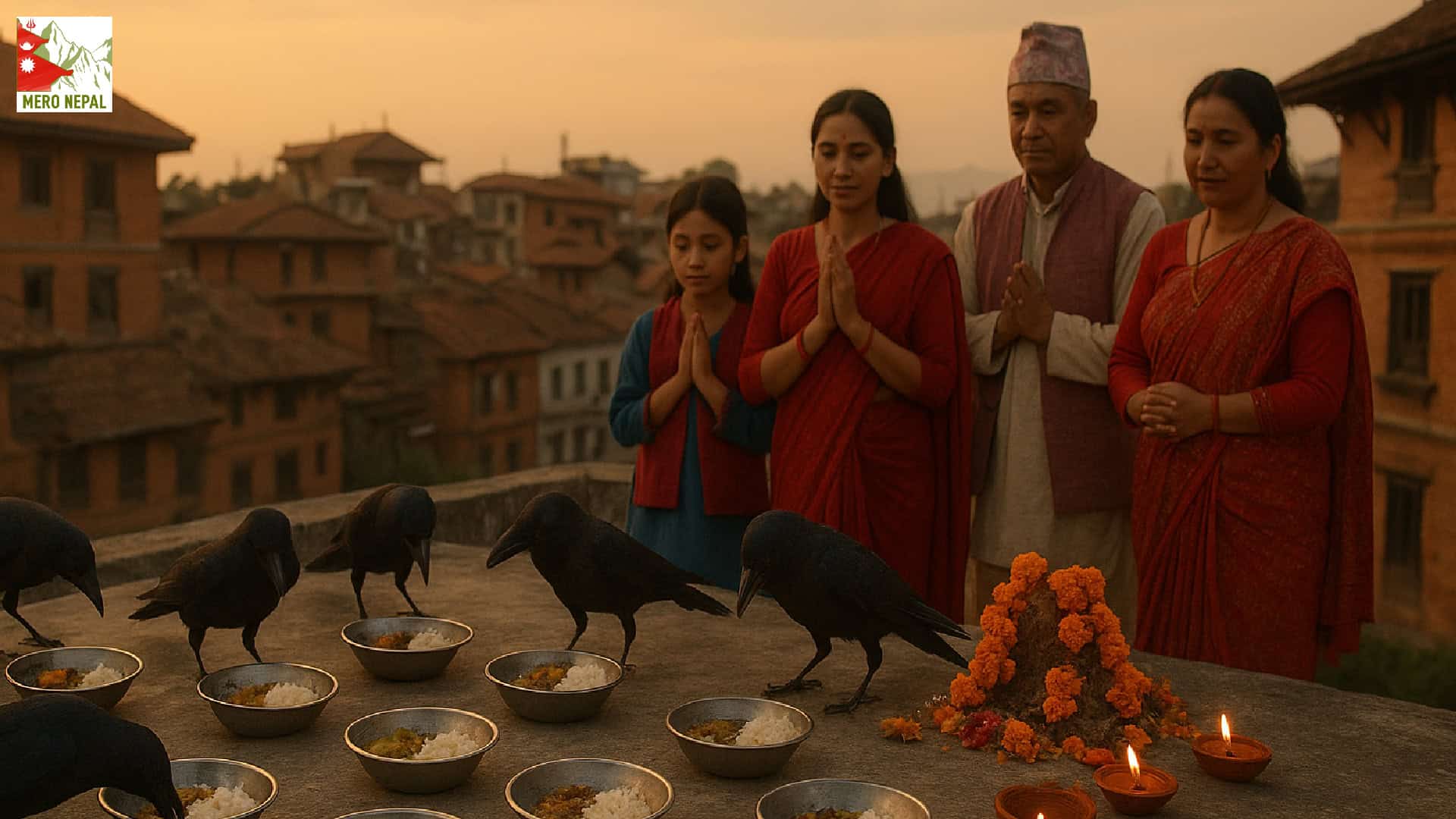
Kaag Tihar is celebrated with meaningful rituals. The main practice is offering small portions of home-cooked food, such as rice, tarkari (vegetable curry), and dal, to crows. Meat is never offered. Feeding the birds is believed to ward off negative energy, invite good luck, and bring blessings for family health and prosperity.
Families often recite short prayers or mantras while offering the food. Although simpler than Laxmi Puja or Bhai Tika, some households decorate their rooftops with flowers and small oil lamps (diyas) to welcome auspicious energy. In some communities, people feed crows collectively in public spaces, promoting social unity and respect for animals.
Symbolism and Spiritual Significance
Crows are seen as intermediaries between humans and divine forces. Honoring them on Kaag Tihar symbolizes:
-
Gratitude to Nature: Expressing appreciation for all living beings.
-
Protection from Misfortune: Crows are believed to carry away negative energy.
-
Spiritual Awareness: Reminding humans of their connection to nature, animals, and the spiritual world.
Kaag Tihar sets the tone for the rest of Tihar, which honors dogs, cows, Goddess Laxmi, self-worship, and siblings, creating a comprehensive celebration of life, devotion, and family.
Modern Observance
Today, Kaag Tihar is observed in both urban and rural areas, adapting ancient traditions to modern life. Urban households place offerings on terraces or balconies. Schools and cultural organizations educate children about the day, promoting values of compassion and respect for animals.
Mobile applications like Mero Nepal provide guidance on rituals, auspicious timings, and cultural stories, helping families maintain traditions in modern life. Through the app, users can learn the significance of each Tihar day, explore regional variations, and follow step-by-step ritual instructions, making the festival accessible and meaningful for everyone.
Social media also plays a role in sharing festival greetings, photos, and informative content, blending tradition with modern connectivity.
Regional Variations
While the core rituals are consistent, regional differences exist:
-
In the Terai region, special foods like poha (flattened rice) and ladoos may be offered.
-
Some communities combine Kaag Tihar with short devotional songs or bhajans, enhancing the spiritual atmosphere.
-
Urban celebrations may include eco-friendly offerings and awareness campaigns to prevent littering while feeding birds.
These variations reflect Nepal’s cultural diversity while maintaining the spiritual essence of Kaag Tihar.
Conclusion
Kaag Tihar is more than a ritual; it is a celebration of gratitude, mindfulness, and harmony with nature. Honoring crows teaches that every creature has significance and that spiritual life is intertwined with compassion and respect for all living beings. Observing this first day of Tihar invites prosperity, peace, and positive energy into homes while preparing for the continuation of the festival.
Mero Nepal App