Introduction
International Women’s Day is celebrated worldwide every March 8. The day aims to honor women’s social, economic, political, and cultural achievements. It also raises awareness about gender equality, women’s rights, education, health, employment, leadership, and empowerment.
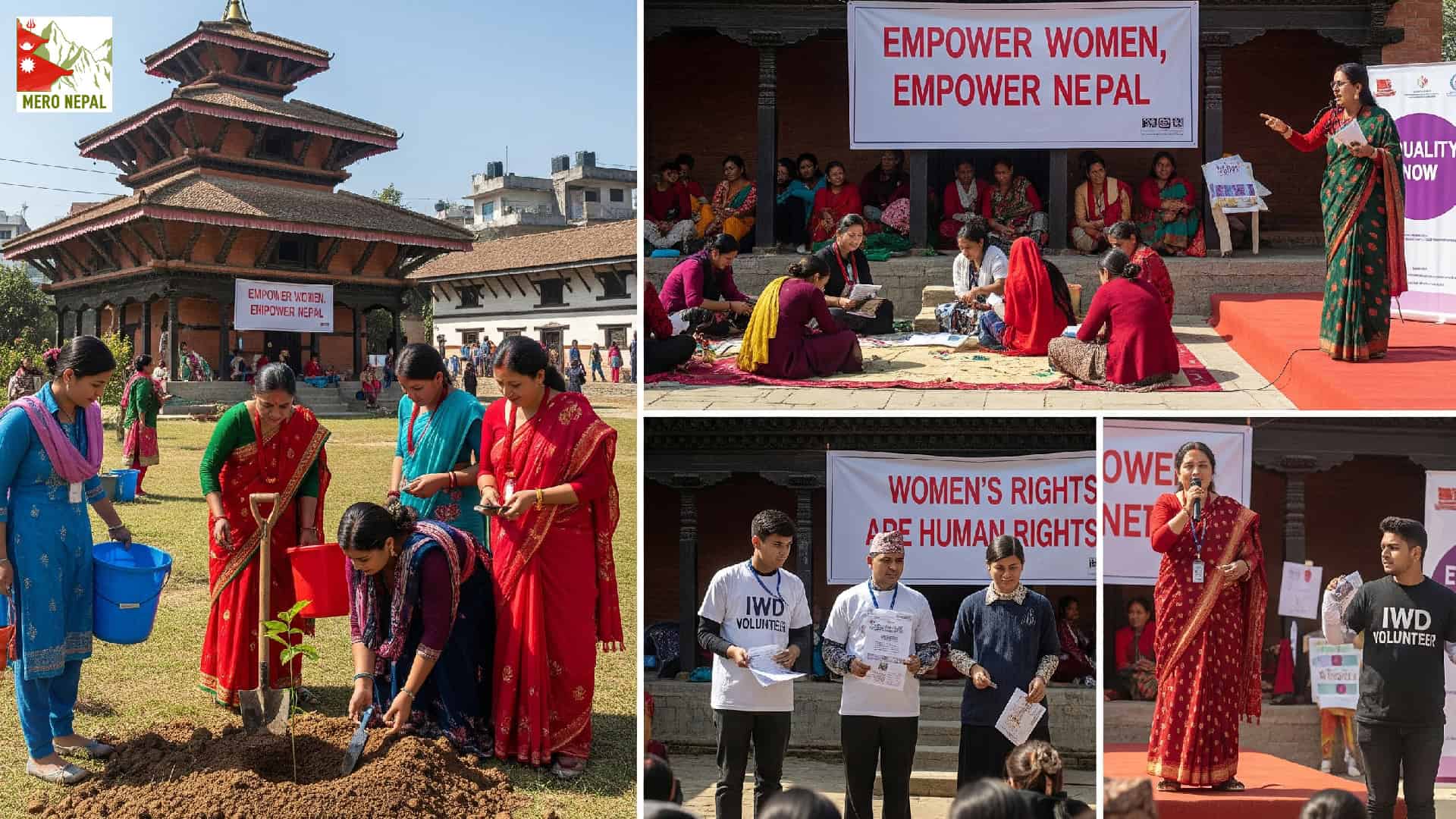
In Nepal, Women’s Day is not just a ceremonial event. It is observed through practical programs related to education, health, entrepreneurship, leadership development, legal rights, and social equality. Schools, universities, government agencies, NGOs, women’s groups, and youth actively participate.
Global Significance
The Women’s Day tradition began during the labor movements in the early 1900s. The United Nations formally recognized it as International Women’s Day in 1975. Each year, programs are organized around specific themes, such as promoting women’s leadership, gender equality, combating violence against women, entrepreneurship, and economic empowerment.
Practices in Nepal
Government Initiatives
The government implements policies and programs focused on women’s education, health, and empowerment. Special plans promote gender equality and employment opportunities. Schools and colleges conduct awareness programs about women’s rights, leadership, and equality. Health camps, employment training, and skill development programs are also organized.
Community and NGOs
Women’s groups and NGOs run projects related to health, education, entrepreneurship, and leadership. Seminars, workshops, training sessions, and awareness rallies are conducted. Youth participate in community initiatives, art projects, awareness campaigns, and competitions focused on women’s rights.
Cultural and Traditional Perspective
In Nepalese society, women’s contributions to family and community are highly valued. Festivals, religious rituals, and traditional ceremonies highlight women’s roles and respect. Modern Women’s Day programs are designed to align with both traditional and cultural values. Women leaders, teachers, and entrepreneurs are honored in communities across towns and villages.
Education and Youth Participation
Schools and universities organize programs on women’s rights, equality, and empowerment. Female students receive leadership training, public speaking opportunities, and entrepreneurship guidance. Youth also promote women’s rights and equality through social media and community activities.
Challenges
Women in rural areas still have limited access to education and health services. Gender inequality persists in some regions. Violence against women and employment gaps remain challenges. Social norms and traditional beliefs sometimes restrict women’s leadership opportunities. Digital access and technology remain limited in certain areas.
Conclusion
International Women’s Day in Nepal is more than a formal observance. It highlights women’s rights, social equality, and empowerment. Government policies, community engagement, NGO contributions, youth participation, and cultural values together promote women’s development and leadership. Strengthening these practices is essential to provide equal opportunities and secure a better future for women.