Social Rules After Birth and Death
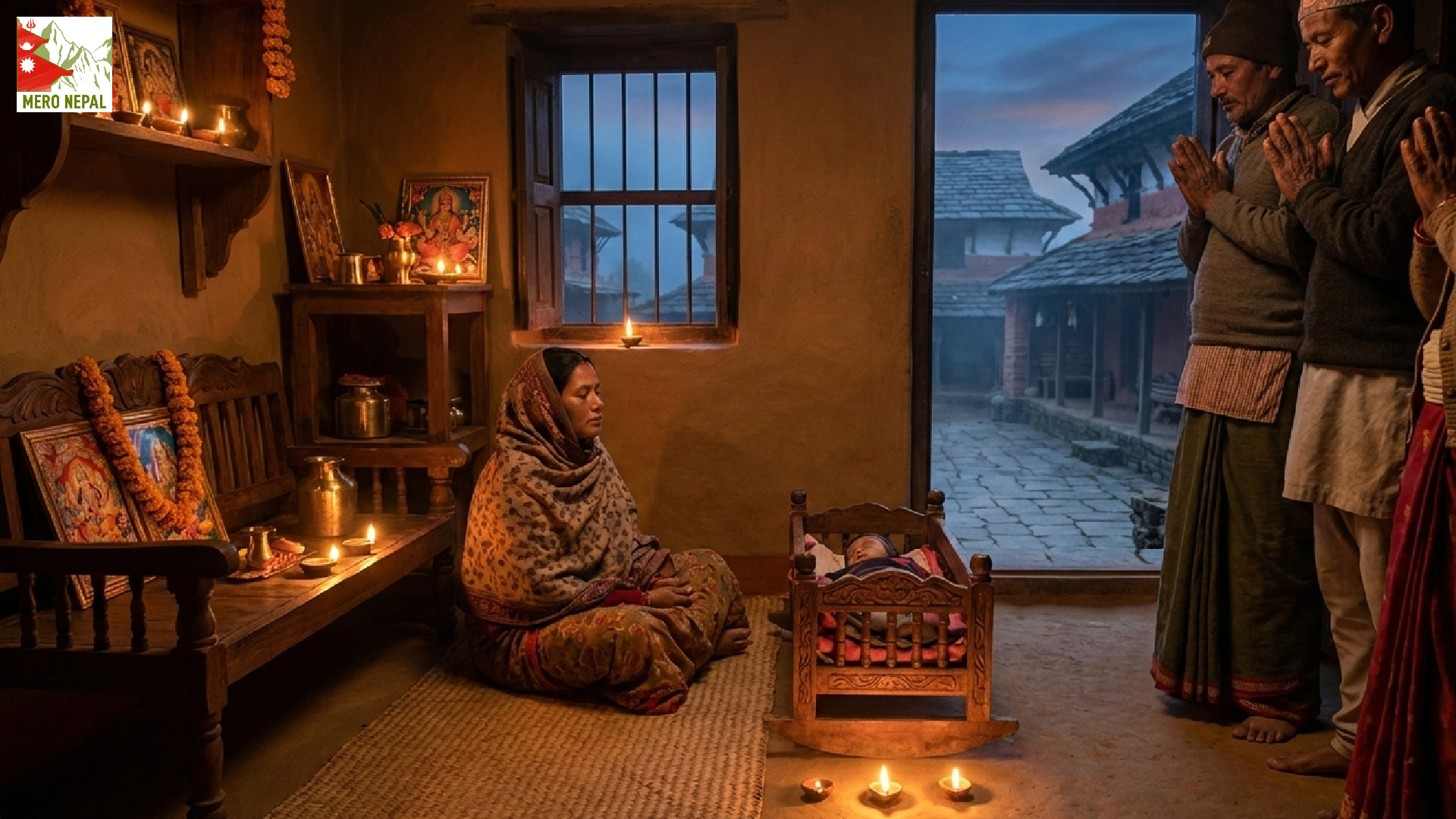
Sutak is a temporary social and religious state observed after major life events like birth and death. During this period, the family limits certain daily activities and temporarily suspends religious practices. The purpose of Sutak is not to show impurity, but to keep the family physically, mentally, and socially safe during the transitional phase. It helps the family handle new responsibilities, cope with grief, and maintain respectful distance from the community.
Nowadays, using the Mero Nepal App, families can easily check Sutak duration, auspicious dates, and related timings. This helps integrate traditional practices smoothly with modern life.
What is Sutak?
Sutak is not just a set of religious rules; it provides social, mental, and emotional management during sensitive life moments like birth and death. During this period, families limit social gatherings, religious ceremonies, and dietary practices.
Traditionally, Sutak also signals the community, protects the family from external pressures, and helps maintain mental balance. The home environment remains calm, organized, and peaceful, providing both emotional relief and social support.
Key aspects of Sutak:
-
Managing major life transitions systematically
-
Ensuring physical and mental rest
-
Sending a quiet signal to the community about the transitional period
Main Types of Sutak
Birth Sutak
Birth Sutak is observed when a child is born. It ensures the health and safety of the mother and newborn. The period allows the family to adjust to new responsibilities and lifestyle changes. Social interactions are limited, and family members cooperate more closely to support each other.
Common aspects of birth Sutak:
-
Providing sufficient rest to the mother
-
Ensuring a safe environment for the newborn
-
Giving the family time to adjust to new roles and responsibilities
Typical duration: Usually 3, 7, or 11 days, depending on caste, region, and family tradition.
App Promotion: Using the Mero Nepal App, you can easily check the duration and auspicious dates for birth Sutak, helping families follow tradition conveniently in modern life.
Death Sutak
Death Sutak is observed when a family member passes away. It allows the family to grieve, adjust mentally, and pay respect to the deceased. During this period, regular social and religious activities are temporarily limited, giving the family inner peace and protection from external pressures.
Main purposes of death Sutak:
-
Allow grief to be expressed in socially acceptable ways
-
Show respect to the deceased
-
Give the family mental space to return to normal life
Typical duration: Usually 13 days for immediate family, shorter or symbolic for distant relatives.
Rules to Follow During Sutak
During Sutak, families pay special attention to religious, social, dietary, and household practices to ensure safety, mental peace, and social respect.
Religious Rules
-
Avoid visiting temples
-
Suspend home rituals, worship, and fasts
-
Cover or avoid touching deity idols
Social Rules
-
Do not attend weddings, feasts, or festivals
-
Limit unnecessary meetings and contacts
-
Stay away from external social obligations
Dietary Rules
-
Eat simple and plain meals
-
Avoid participating in communal feasts
-
Avoid certain specific foods temporarily
Household Management
-
Use separate rooms or areas if possible
-
Maintain extra cleanliness
-
Reduce unnecessary activities
Social and Cultural Significance
Sutak is not just a religious practice; it provides an opportunity for social, mental, and emotional adjustment during major life changes. Birth and death disrupt normal life, and Sutak helps families manage this transition respectfully and systematically.
Sutak provides families with rest, mental calm, and social support. It separates them temporarily from external pressures while maintaining respectful relations with the community.
Key meanings of Sutak:
-
Helps manage transitions systematically
-
Provides rest after grief or childbirth
-
Signals quiet support and respect from the community
Sutak and Misconceptions
Many people mistakenly equate Sutak with impurity. In reality, it is limited to the affected family and is temporary.
The true meaning of Sutak:
-
Only applies to the affected family
-
Does not indicate social inferiority or impurity
-
A time-bound and respectful traditional practice
Variations Among Communities
Sutak practices vary across communities due to:
-
Caste traditions
-
Local customs
-
Hindu-Buddhist syncretic beliefs
-
Urban or rural lifestyle
Examples:
-
Newar community has different durations and procedures
-
Hill communities follow simpler, shorter practices
-
Urban families often follow symbolic rituals
Modern Observance
Many families today observe Sutak in a flexible but meaningful way. Modern lifestyle requires adapting traditional practices as needed. Families often prioritize rest, privacy, and mental balance over strict ritual.
Sutak remains a living, adaptable tradition, balancing cultural heritage with contemporary life.
Ending Sutak and Returning to Normal Life
Sutak ends with house cleaning, purification rituals, and the resumption of worship, social visits, and daily activities.
Using the Mero Nepal App, you can easily track when Sutak ends and which auspicious activities can follow, making the process convenient and organized.
Conclusion
Sutak is not a mark of impurity, but a process that ensures social intelligence, rest, and respect during sensitive life events. Observed with understanding, it provides families with peace, time, and social support.
The Mero Nepal App can be a helpful companion during this period, providing accurate dates, auspicious timings, and guidance to follow traditional rules easily.