Symbolism, Ritual Meaning, and Cultural Significance
Tika is one of the most meaningful and visible ritual symbols in religious and social life. Applied on the forehead during pooja, festivals, and life-cycle rituals, Tika represents blessing, protection, spiritual authority, and social connection. Although it appears simple, its meaning is deeply layered, linking individuals to divine energy, family lineage, and cultural values. Whether during daily worship or major festivals like Dashain, Tika marks moments of reverence, transition, and auspicious beginnings.
In contemporary life, people often rely on tools like the Mero Nepal App to check auspicious days, festival timings, and ritual schedules, helping traditional practices fit smoothly into modern routines.
What Is Tika?
Tika is a sacred mark applied on the forehead, usually at the point between the eyebrows, believed to be the Ajna Chakra, the center of intuition and awareness. The materials used for Tika vary depending on the ritual, deity, and occasion, but each carries a specific symbolic meaning.
Common materials used in Tika include:
Abir (red vermilion): energy, power, and protection
Sandalwood paste: purity, calmness, and devotion
Turmeric: health, prosperity, and purification
Sacred ash (Vibhuti): renunciation and spiritual truth
Rice mixed with curd or water: prosperity and continuity
Tika is not decorative; it is a ritual seal symbolizing the conscious acceptance of divine blessings.
Importance of Tika in Daily Pooja
In daily pooja, Tika is applied after prayers as a sign that worship has been completed and blessings have been received. It creates a symbolic connection between the devotee and the deity and marks the body as spiritually protected. This regular practice strengthens discipline, humility, and spiritual awareness in everyday life.
The spiritual role of Tika in daily worship includes:
Serving as a reminder of faith and devotion
Symbolizing protection from negative influences
Helping internalize divine blessings
Many households follow specific tithis and timings for pooja. Using the Mero Nepal App, devotees can easily check daily lunar dates and auspicious times.
Dashain Tika: Blessings, Jamara, and Family Bonds
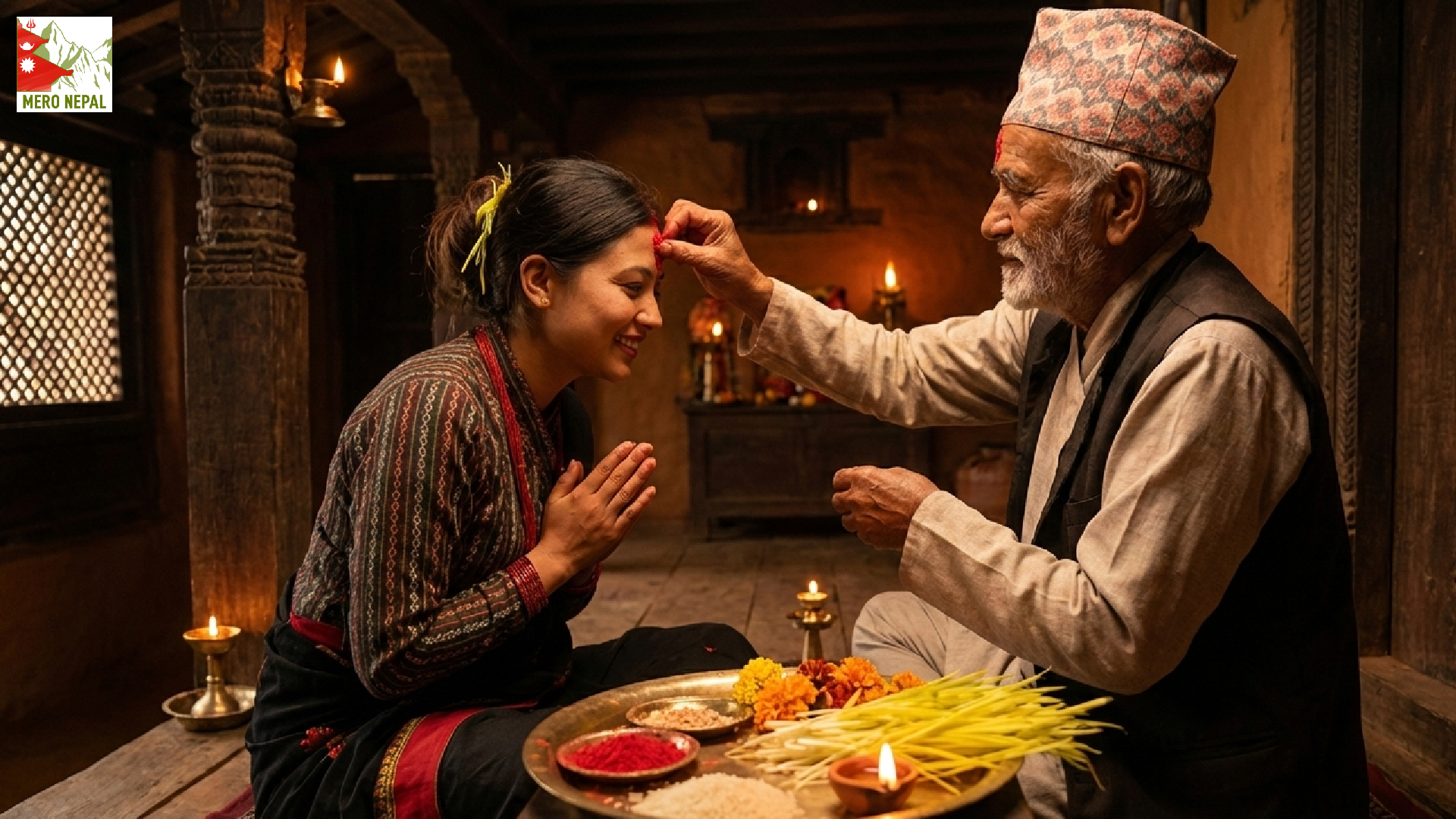
Dashain Tika is the most emotionally powerful and socially significant form of Tika. Applied by elders to younger family members, it conveys blessings for long life, protection, success, and prosperity. Along with Tika, Jamara (sacred barley grass) is placed on the head, symbolizing growth, renewal, and the victory of good over evil.
Dashain Tika represents:
Respect for elders and ancestry
Transmission of blessings across generations
Unity within family and community
Because timing is considered important during Dashain, many families now use the Mero Nepal App to check the exact Dashain Tika muhurta.
Tika in Other Sacred Occasions
Birth and Naming Ceremonies
During naming ceremonies, Tika is applied to bless the child with health, protection, and a prosperous future. It formally introduces the child into family and society.
Bratabandha (Sacred Thread Ceremony)
In Bratabandha, Tika symbolizes the boy’s entry into disciplined spiritual life, representing responsibility, learning, and moral awareness.
Marriage Ceremonies
During weddings, Tika is applied to both bride and groom as a blessing for purity, harmony, and divine witness to the union.
Festivals and Auspicious Days
On festivals and special days, Tika enhances the spiritual atmosphere and transforms celebrations into sacred observances.
Spiritual and Psychological Meaning of Tika
Beyond ritual, Tika carries deep psychological value. Receiving Tika from elders creates a sense of belonging, reassurance, and emotional grounding. Spiritually, it reminds individuals of higher values, self-discipline, and responsibility.
Its deeper meanings include:
Awakening inner awareness
Accepting guidance and blessings
Strengthening cultural identity
Social and Cultural Significance
Tika plays an important role in maintaining social harmony. It communicates respect, celebration, mourning, or sacred transition without words. During festivals like Dashain, Tika temporarily dissolves social distance, strengthening family and community bonds.
Social roles of Tika include:
Symbol of unity and respect
Marker of auspicious moments
Carrier of collective memory and tradition
Tika in Modern Life
In modern lifestyles, the practice of Tika has become more flexible, but its intent and meaning remain intact. While rituals may be simplified, the emphasis on blessings and respect continues. People prioritize emotional connection over elaborate procedures.
Digital tools like the Mero Nepal App help users:
Check auspicious days for Tika
Track festival schedules
Maintain traditions despite busy routines
This keeps cultural practices accessible, practical, and relevant.
Conclusion
Tika is far more than a mark on the forehead. It is a symbolic language of blessing, respect, continuity, and spiritual connection. Whether in daily pooja, Dashain celebrations, or life-cycle rituals, Tika strengthens faith, family bonds, and cultural awareness. When practiced with understanding, it adds depth and balance to life.