

Introduction
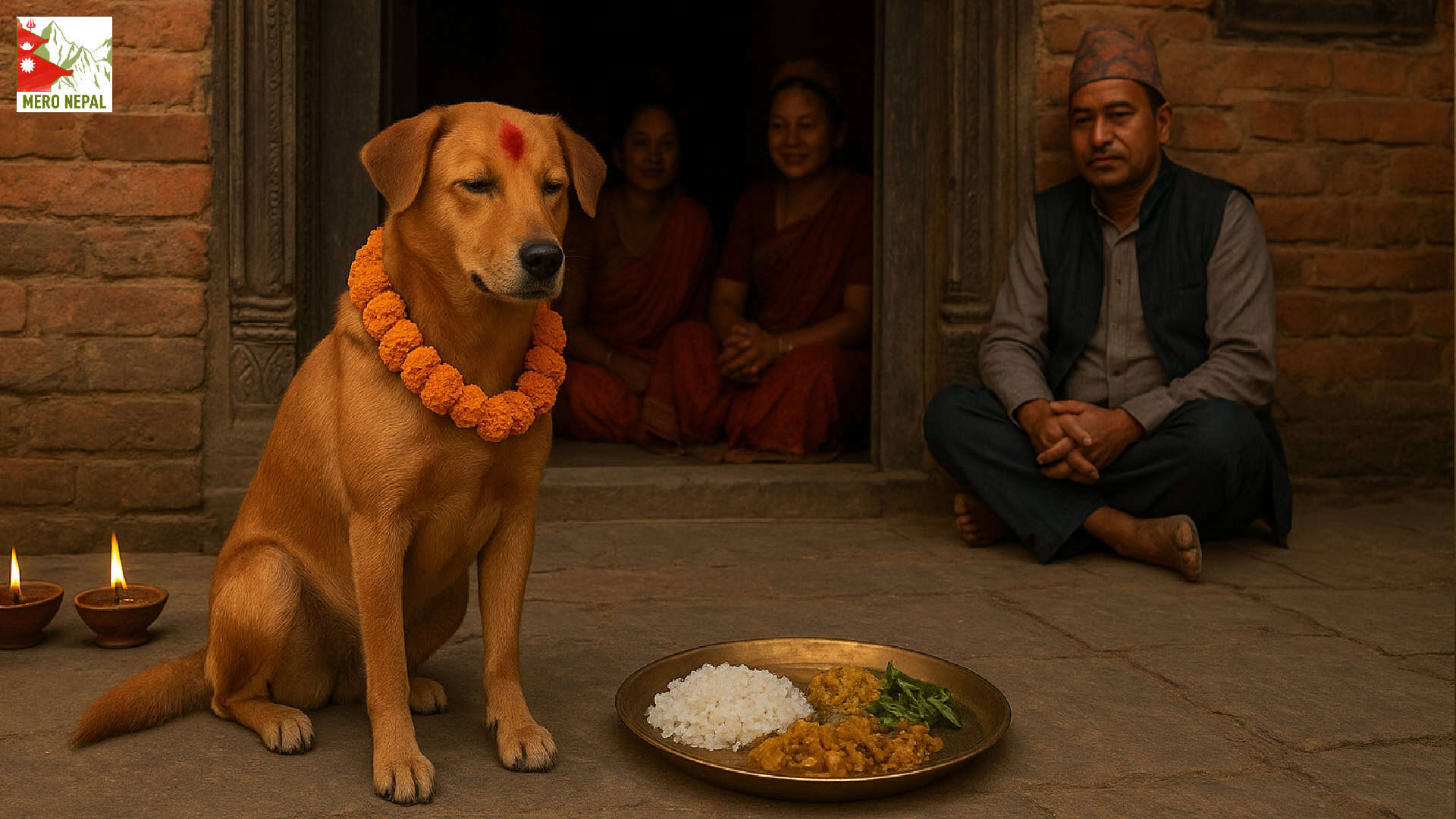
Kukur Tihar, also known as Dog Day, is the second day of the Tihar festival, one of Nepal’s most vibrant and widely celebrated festivals. While the first day, Kaag Tihar, honors crows, the second day is dedicated to dogs, recognizing them as loyal companions, guardians, and spiritual protectors. Kukur Tihar reflects a unique aspect of Nepali culture, where animals are respected and integrated into the spiritual and social fabric of life.
Historical and Cultural Background
In Hindu mythology, dogs hold significant spiritual importance. They are considered companions of Yama, the God of Death, and guardians of the gates of the afterlife. Dogs are believed to guide souls safely to their next journey. The Mahabharata recounts how Yudhishthira refused to enter heaven without his loyal dog, symbolizing devotion and fidelity.
In rural Nepal, dogs have historically protected homes, fields, and livestock. In urban households, dogs are cherished family members. This combination of religious symbolism and practical companionship makes Kukur Tihar highly meaningful.
Rituals and Traditions
The main rituals of Kukur Tihar include:
-
Garlanding (Mala): Dogs are adorned with fresh marigold garlands, symbolizing respect and spiritual honor.
-
Applying Tika: A red tika, often mixed with yogurt and rice, is applied on the dog’s forehead as a blessing.
-
Offering Food: Dogs are served small portions of home-cooked food such as rice, lentils (dal), vegetables, eggs, or milk, avoiding meat. This expresses gratitude for their loyalty and protection.
-
Prayers and Blessings: Families pray for the health and protection of their dogs, believing it brings good fortune and wards off misfortune.
Stray and community dogs are also honored, reflecting the Nepali value of compassion and inclusivity.
Symbolism and Spiritual Significance
Kukur Tihar represents:
-
Faithfulness and Loyalty: Dogs embody devotion and trustworthiness.
-
Guardianship: They are protectors of homes and spiritual guides.
-
Connection to the Divine: As companions of Yama, dogs are linked to the spiritual realm.
-
Harmony with Nature: The festival emphasizes the interdependence between humans and animals.
Thus, Kukur Tihar is both a celebration of loyalty and a reminder of humans’ responsibilities toward all living beings.
Modern Observance
Today, Kukur Tihar attracts global attention. Photos of garlanded dogs with tika are widely shared, showcasing Nepal’s unique tradition.
Animal welfare organizations use this day to raise awareness about stray dog care, vaccination, and responsible pet ownership. Children are taught to feed and treat dogs with kindness, making the festival both spiritual and educational.
Mobile apps like Mero Nepal App provide guidance on rituals, auspicious timings, and cultural stories, helping families follow traditions accurately in modern life.
Regional Variations
-
In rural areas, working dogs guarding livestock are given extra food and ceremonial blessings.
-
In urban spaces, people feed stray dogs to promote inclusivity and compassion.
-
Some Newar communities perform devotional songs or chants while honoring dogs, adding spiritual depth.
These regional differences enrich Kukur Tihar while maintaining its core spiritual and cultural essence.
Global Recognition
Kukur Tihar has gained international recognition as a festival celebrating animal life and human compassion. Global media frequently highlight it as a unique example of humane cultural tradition.
Conclusion
Kukur Tihar is a celebration of love, loyalty, and spiritual gratitude. By honoring dogs, Nepali culture emphasizes respect for all living beings, recognizing dogs as companions, guardians, and divine guides. As the second day of Tihar, it deepens the festive spirit and prepares families for the remaining days of worship, prosperity, and unity.
Mero Nepal App


