Introduction
Dashain is Nepal’s biggest festival, celebrated over nine days. Each day is dedicated to worshipping a different form of Goddess Durga. The seventh day, known as Phulpati, holds immense importance not only from a religious perspective but also historically and culturally. On this day, households bring in essential items for worship, including jamara, flowers, bel leaves, incense, oil lamps, grains, and fruits. Phulpati symbolizes the power and prosperity of Goddess Durga.
Historical Background
Phulpati has a deep-rooted historical tradition in Nepal. According to historical records, bringing Phulpati from Gorkha to Kathmandu became formalized after King Prithvi Narayan Shah expanded his kingdom. The Phulpati was carried with military bands, musical instruments, priests, and palace attendants to the Hanuman Dhoka Palace. The king would then perform rituals to pray for the nation’s power, victory, and prosperity. Although the monarchy has ended, this tradition continues at the state level. Today, Phulpati is brought ceremoniously to the palace in Kathmandu with full military honors, maintaining its formal and grand appearance.
Household Traditions
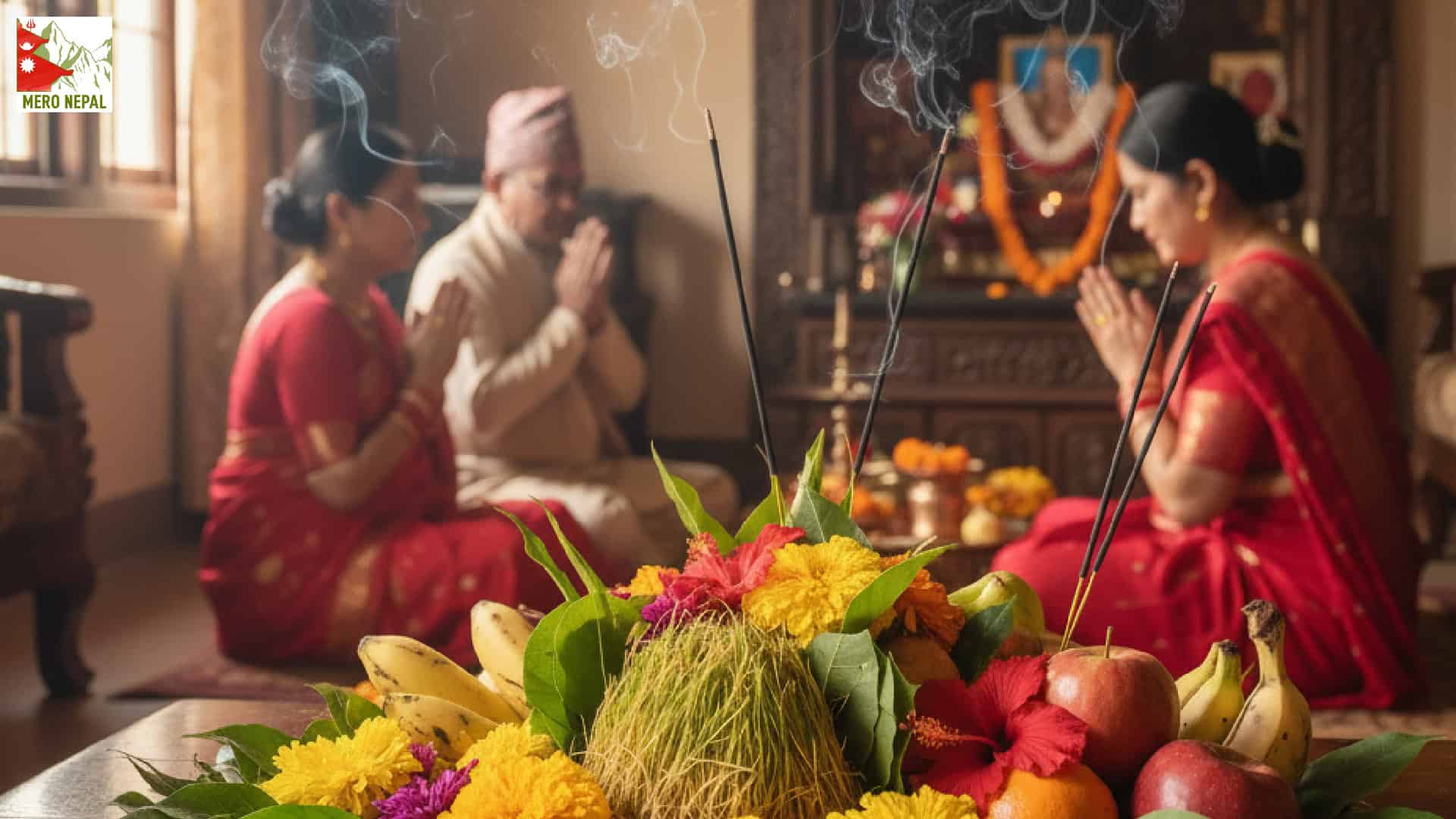
On Phulpati, families bring in materials for worship, including jamara, bel leaves, flowers, incense, fruits, and grains. Jamara is offered to the Goddess on Ashtami and Nawami and symbolizes power. Bel leaves and flowers represent purity and devotion. Incense and oil lamps bring positive energy into the home. Fruits and grains symbolize prosperity and sustenance. Once the Phulpati is brought home, family members gather to perform the rituals together. This day is also seen as a time for family reunion, as relatives living far away often return home for Dashain.
Religious Significance
Phulpati is considered an extremely sacred day. It coincides with Durga Saptami, the seventh day of Dashain. Worship on this day is believed to invite the Goddess’s blessings, power, and prosperity into the household. Bringing jamara inside the home is thought to remove negative energy and create a pure and auspicious environment. Phulpati marks the symbolic entry of Goddess Durga into the household, bringing happiness, peace, and prosperity to the family.
Social and Cultural Significance
Phulpati is not only a religious ritual but also socially and culturally important. Family members who live far away return home, strengthening family unity. Communities gather for collective worship, social visits, and distribution of prasadam (offerings), reinforcing social bonds. Traditions like Phulpati preserve cultural identity, faith, and shared values. Elders often use this day to teach children the significance of the festival, passing traditions from one generation to the next.
Modern Context
In today’s fast-paced world, Phulpati has taken on new dimensions. Many Nepalese live abroad for work or study, making it difficult for everyone to return home. Yet, the festival continues to connect families digitally. Those unable to return can participate in blessings and celebrations via online platforms. Social media is increasingly used to exchange greetings, and even city dwellers with busy lives make time to perform rituals. Phulpati thus blends tradition with modern practices, maintaining its relevance.
Conclusion
Phulpati is not just the seventh day of Dashain; it is a celebration that integrates Nepal’s cultural, historical, religious, and social dimensions. Historically, it connects Gorkha to the palace traditions of Kathmandu, reflecting national pride. Religiously, it invites the power and blessings of Goddess Durga. Socially, it strengthens families and communities. Culturally, it symbolizes Nepalese identity. Phulpati is more than just bringing worship items home; it reflects collective lifestyle, faith, and values.