Introduction
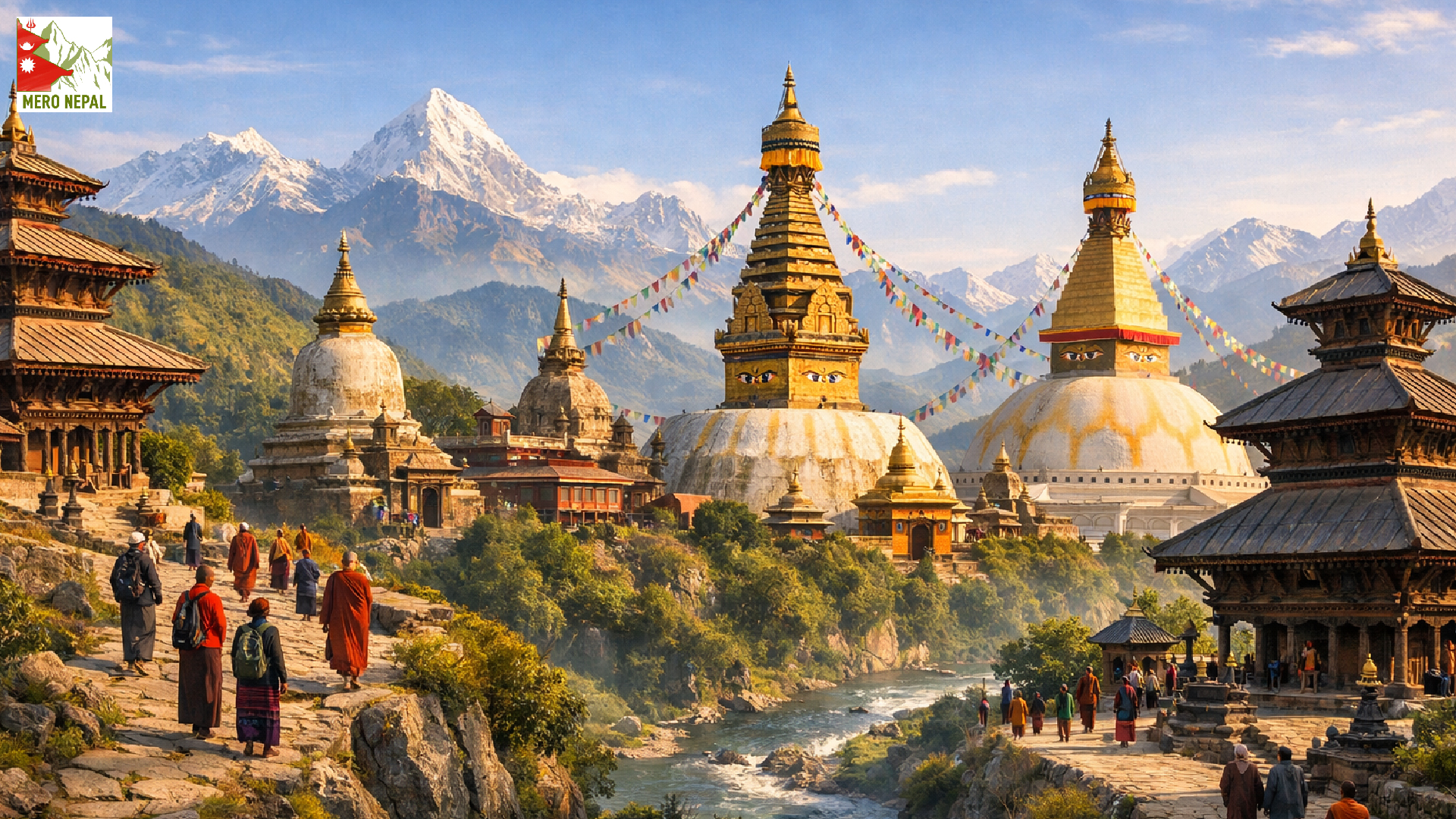
Nepal’s sacred architecture is not merely a collection of historical structures or artistic achievements. It represents a living spiritual system where faith, geography, culture, and daily life intersect. Temples, stupas, monasteries, and pilgrimage sites across Nepal are designed and positioned with deep spiritual intention. These sacred spaces guide religious practice, preserve tradition, and reflect how Nepali society understands the relationship between humans, nature, and the divine.
In Nepali society, sacred architecture is not only a physical space for worship or festivals but also plays a central role in shaping social and cultural structures and community consciousness. Rituals, ceremonies, and festivals performed at these sacred places are believed to have lasting effects on the mind, awareness, and spiritual perspective of devotees.
Spiritual Foundation of Sacred Architecture in Nepal
Nepali sacred architecture is based on the belief that physical space can influence spiritual awareness. Structures are built following traditional principles that consider directions, natural elements, and cosmic balance. Mountains, rivers, forests, and open skies are not separate from religious life—they are integral. Consequently, sacred buildings in Nepal often harmonize with the natural environment.
Elements such as orientation, foundation, spires, sanctum, circumambulation paths, and doors or windows carry symbolic meaning. These architectural features are intended to guide individuals from the material world toward higher consciousness.
Temples as Centers of Living Worship
Temples in Nepal are active centers of devotion rather than static monuments. Daily worship, seasonal rituals, and annual festivals take place continuously. Architecturally, many temples are built with stone, brick, and wood in traditional styles, featuring intricate carvings that convey spiritual stories, moral values, and symbolic meanings.
Most temples rise progressively from the base to the spire, symbolizing the spiritual ascent from the earthly plane. The statues, paintings, and symbols within the temples transmit religious and cultural knowledge across generations. Temple courtyards also host religious, social, and cultural activities, fostering community unity and cooperation.
Stupas and Their Symbolic Meaning
Stupas hold a special position in Nepal’s sacred landscape. Their architecture is highly symbolic, representing elements such as earth, water, fire, air, and consciousness. The circular base represents stability and grounding, the dome signifies the universe, and the spire above symbolizes spiritual awakening.
Circumambulation around stupas is a common spiritual practice, believed to balance body and mind. Small statues, metal decorations, paintings, and symbols incorporated into stupas are intended to inspire devotion, meditation, and spiritual experience.
Pilgrimage Sites and Sacred Geography
Pilgrimage sites in Nepal are closely tied to sacred geography. Riversides, hilltops, caves, and mountain paths are considered spiritually charged spaces. Pilgrimages are not only religious journeys but also processes of self-discipline, endurance, and reflection.
Worship, rituals, and meditation performed at these sites strengthen faith and mental peace. Pilgrimages connect individuals to cultural memory and collective religious identity. Ceremonies, fasting, and rituals held at pilgrimage sites help maintain social cohesion and religious discipline.
Community Life Around Sacred Spaces
Sacred architecture plays a central role in community life. Temples and pilgrimage sites act as gathering places for religious, social, and cultural events. Festivals, rites of passage, and communal rituals take place here, fostering social bonds.
Open courtyards, rest areas, and ritual spaces make collective participation easier. Temples, stupas, and pilgrimage sites thus strengthen community structures, cooperation, and unity.
Art, Craft, and Spiritual Expression
Nepali sacred architecture is closely connected to traditional arts and crafts. Wood carvings, stone sculptures, metalwork, and paintings are not merely decorative; they carry spiritual messages. Each artistic element aims to inspire devotion, educate, and preserve religious knowledge.
Through these crafts, spiritual knowledge is transmitted across generations. Even in times without formal education or writing systems, art and craftsmanship served as effective tools for passing religious teachings.
Continuity in the Modern Era
Despite urbanization, modern development, and technology, sacred architecture continues to play a significant role in Nepal. Restoration projects, community involvement, and adaptive use have kept these sacred sites active.
While modern materials may sometimes be introduced, traditional symbolism and spiritual purpose are preserved. Digital platforms, apps, and online calendars make information about sacred sites, temples, stupas, and pilgrimages easily accessible, bridging traditional knowledge with modern life.
Mero Nepal App – Your Reliable Guide for Religious Knowledge
For detailed information on Nepalese sacred architecture, temples, stupas, pilgrimage sites, daily worship practices, tithis, and festivals, use the Mero Nepal App. This app allows you to explore the history, religious significance, and spiritual meaning of your favorite sacred places with ease.
Download link: https://play.google.com/store/apps/details?id=com.meronepal.app
Conclusion
Nepal’s sacred architecture reflects a profound spiritual perspective where space, structure, and belief are inseparable. Temples, stupas, and pilgrimage sites are living expressions of faith, guiding worship, community life, and cultural continuity.
Through their design, symbolism, and ongoing use, these sacred spaces continue to nurture spiritual awareness, religious practice, and cultural identity in Nepal. Despite the challenges of modern life, they remain vital to the spiritual and cultural fabric of Nepali society.