Rato Machindranath Jatra: The Grand Chariot Festival of Patan
Introduction
Among the many religious and cultural festivals of the Kathmandu Valley, the Rato Machindranath Jatra is one of the most significant and longest. Known as the “Rain God” or “Bunga Dyo,” Rato Machindranath is regarded as the deity who blesses the valley with rainfall, ensuring fertile fields and good harvests. The chariot festival celebrated in Patan (Lalitpur) not only reflects religious devotion but also showcases centuries-old Newar culture and traditions.
Historical Background
Rato Machindranath Jatra is believed to have been celebrated for over a thousand years. According to legend, during a severe drought in the valley, Machindranath was invited from Assam, India, to bring rainfall. Since then, the deity has been worshiped as the god of rain and agriculture. The annual chariot festival continues as a symbol of gratitude and respect for the life-sustaining rains.
Construction and Preparation of the Chariot
The construction of Rato Machindranath’s chariot is itself a grand event. Skilled artisans and carpenters, guided by traditional knowledge, build a towering wooden chariot using centuries-old techniques without modern tools or nails. The chariot is decorated with sacred cloths, flags, and flowers, symbolizing prosperity and blessings for the community.
Cultural Importance of Chariot Construction
The process unites the community. People from different localities contribute time, effort, and resources. For the Newar community, this ritual is not just about worship but also about preserving and transmitting traditional craftsmanship and cultural values to future generations.
The Chariot Procession
Once completed, the giant chariot carrying the deity Rato Machindranath is pulled through the streets of Patan and surrounding areas. Hundreds of devotees pull the chariot with thick ropes while others follow with music, singing, and dancing. The pulling of the chariot itself is seen as an act of devotion and a way to invite rainfall and blessings.
Participation of Devotees
People of all ages, from children to the elderly, take part in the chariot pulling. The festival fosters unity, joy, and religious fervor. Local guthis (community groups) play an essential role in managing the event and ensuring rituals are performed correctly.
Rituals and Offerings
Throughout the procession, devotees offer flowers, fruits, grains, and traditional dishes to the deity. Priests perform regular rituals, chanting prayers and sprinkling holy water. Farmers especially pray for timely rainfall and abundant harvests.
Cultural and Entertainment Aspects
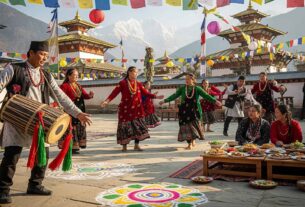
Rato Machindranath Jatra is not only religious but also cultural. Traditional Newar music such as dhimay drums and bhusyah cymbals echo through the streets, while local dances add color to the procession. Children enjoy the festive environment, and the entire community comes alive with joy and celebration.
Duration and Conclusion of the Festival
The chariot festival usually lasts for several weeks. The chariot is pulled from Patan Durbar Square to various localities such as Pulchowk, Jawalakhel, and other parts of Lalitpur. The procession concludes in Jawalakhel, where the deity rests for several days before being taken back to his temple in Bungamati.
Symbolic Importance
Rato Machindranath Jatra symbolizes the close connection between humans, nature, and gods. It emphasizes the importance of rain and agriculture in the agrarian lifestyle of Nepal. The festival also reflects the harmony of devotion, culture, and community spirit.
Modern Relevance
Despite modernization, Rato Machindranath Jatra remains a central cultural identity of Patan and the Newar community. It attracts thousands of visitors, including tourists, researchers, and photographers who come to witness the grandeur of the chariot and the vibrancy of the festival.
Conclusion
Rato Machindranath Jatra is not just a festival but a living heritage that reflects the deep bond of Nepali society with religion, culture, and agriculture. It is a reminder of the importance of unity, devotion, and respect for nature. Festivals like these keep Nepal’s centuries-old traditions alive while connecting the past with the present.
Learn More Through Meronepal App