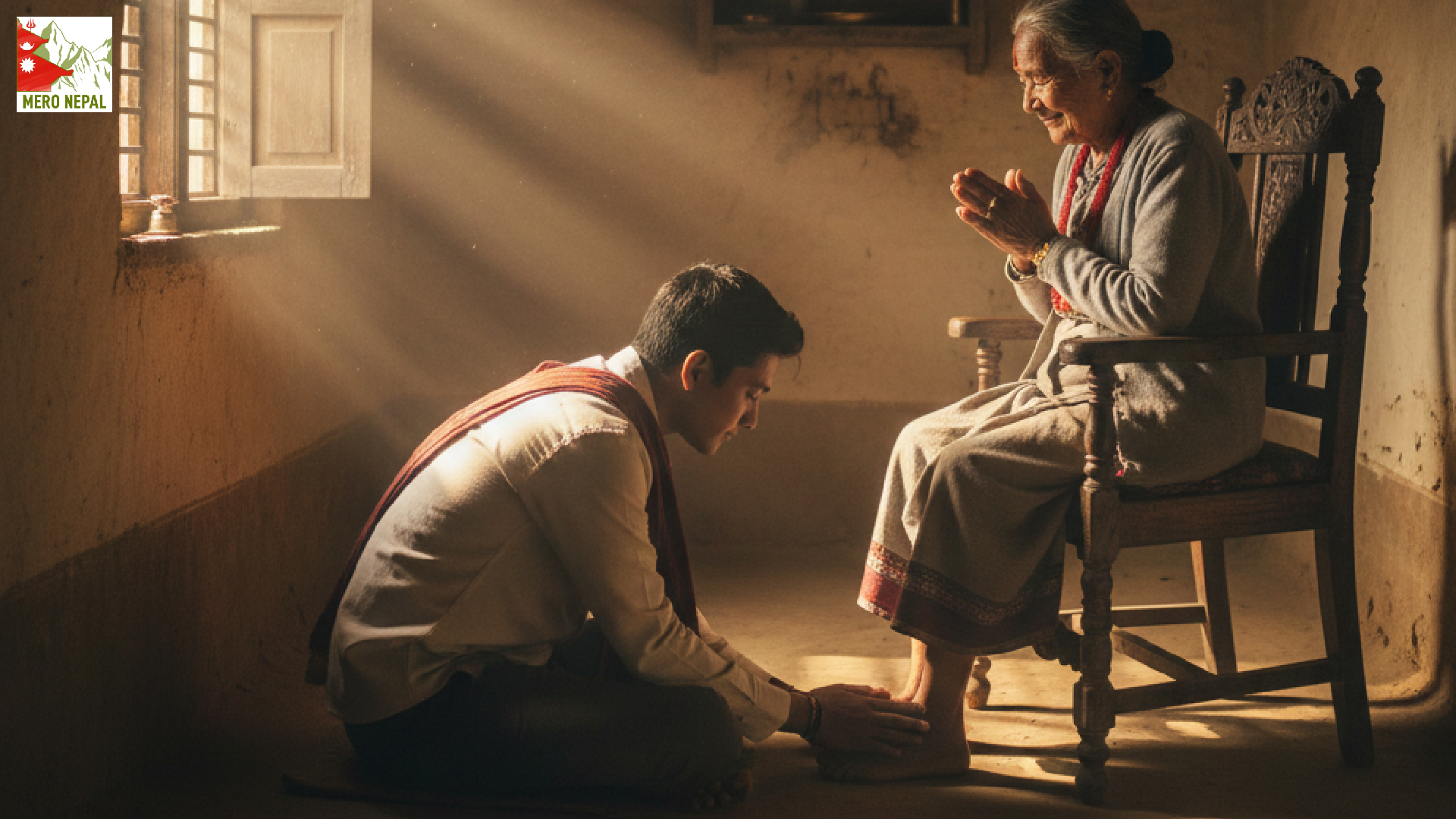
Touching the feet of elders is an important practice in many households. It is not merely a gesture of respect; it carries deep spiritual, social, and psychological meaning. According to traditional belief, elders are bearers of wisdom, life experience, and positive energy. By touching their feet, younger members symbolically receive blessings, guidance, protection, and strength to overcome life’s obstacles.
Today, this practice is not limited to cultural obligation alone. It helps cultivate humility, gratitude, emotional balance, and mindfulness in daily life. Many families now also use digital tools such as the Mero Nepal App to check auspicious days and timings, making it easier to follow traditions in a structured and practical way.
Historical and Cultural Background
The practice of touching elders’ feet dates back centuries. Ancient scriptures and traditional teachings emphasize the importance of honoring elders, as they are seen as the moral and spiritual pillars of the family. This gesture was never meant to be symbolic only; it was believed to bring real spiritual benefits and positive influence into one’s life.
Within society, this tradition also helped maintain discipline, harmony, and respect across generations. Elders were regarded as guides who passed down values, knowledge, and cultural continuity. Touching their feet was understood as a way of accepting their guidance and acknowledging their life-long contributions.
Symbolic Meaning and Spiritual Benefits
Touching elders’ feet carries multiple layers of symbolism:
Humility: Letting go of ego and accepting the value of wisdom and experience.
Gratitude: Expressing thankfulness for care, guidance, and sacrifice.
Blessings: Elders usually respond with words of blessing or a touch on the head, completing a spiritual exchange.
Positive energy: Traditional belief holds that negative influences are reduced and positive energy is transferred.
Emotional connection: Strengthens family bonds and mutual respect.
From a mental perspective, this practice promotes inner calm, discipline, and clarity in decision-making.
Occasions and Ritual Importance
Touching elders’ feet is practiced in many situations:
Daily life: Morning greetings, returning home, or after personal achievements.
Festivals: Dashain, Tihar, and other celebrations place special emphasis on receiving elders’ blessings.
Life rituals: Weddings, naming ceremonies, housewarming rituals, and the start of new responsibilities.
New beginnings: Before journeys, education, business ventures, or major life decisions.
It is believed that performing this act at the right time helps ensure that important events proceed smoothly and without obstacles.
How the Ritual Is Performed
Traditionally, the practice follows a respectful and mindful process:
Sitting or bending down at a lower level
Touching the feet gently, usually with the right hand
Bowing the head in respect
Receiving blessings verbally or through a touch on the head
Performing the act during mornings, auspicious timings, or special occasions
The simplicity of the act reinforces its sincerity and spiritual depth.
Practice in Modern Life
Using the Mero Nepal App, people can:
This balance between tradition and modern tools keeps the practice relevant and sustainable.
Mental and Social Benefits
Touching elders’ feet offers benefits beyond spirituality:
Encourages humility and emotional maturity
Strengthens family unity and mutual understanding
Preserves cultural values across generations
Provides psychological reassurance during major life decisions
A simple act thus contributes to personal growth, family harmony, and cultural continuity.
Stories and Beliefs
Many families share experiences where elders’ blessings are believed to have brought success:
Students receiving blessings before examinations
Families beginning businesses after seeking elders’ blessings
Major decisions feeling lighter and more confident after performing the ritual
These stories reinforce the belief that the tradition is meaningful, practical, and emotionally grounding.
Conclusion
Touching elders’ feet is not just a traditional custom; it is a spiritual bridge between generations. It embodies respect, humility, gratitude, positive energy, and emotional connection. Even in modern life, this simple practice continues to nurture family relationships, cultural awareness, and mindful living.