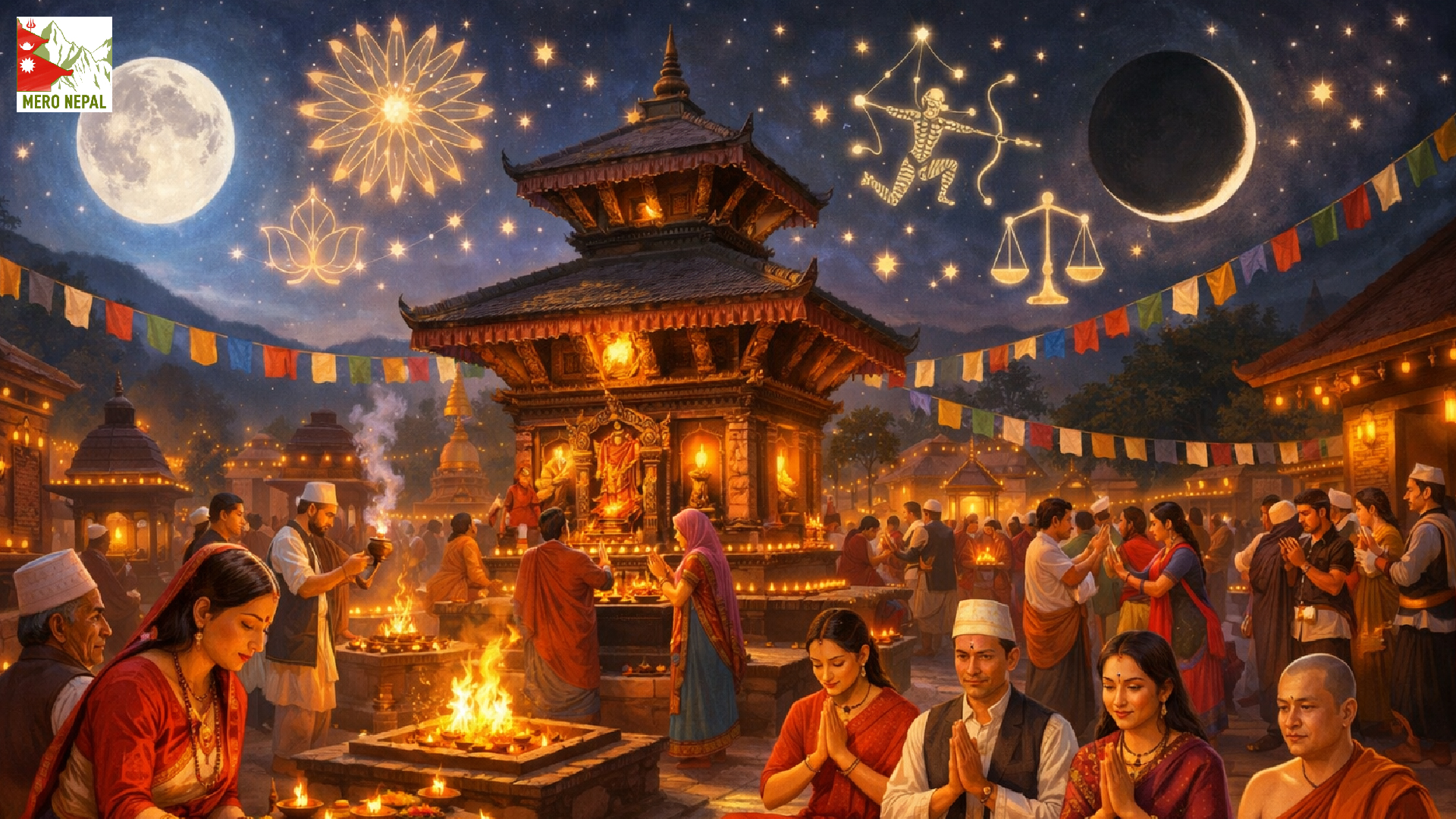
In Nepal, the Panchang holds a vital place in religious, cultural, and social life. Panchang is a traditional timekeeping system based on the movements of the sun, moon, planets, and stars. It provides information on the tithi (lunar day), weekday, nakshatra (constellation), yoga, and karan, guiding auspicious timings for daily activities, rituals, festivals, weddings, housewarmings, journeys, business, and education.
The Panchang reflects a deep understanding of the connection between human life and cosmic cycles, helping maintain discipline, cultural awareness, and spiritual consciousness within Nepali society.
Structure and Significance of the Panchang
The Panchang is composed of five main components: Tithi, Vara (weekday), Nakshatra, Yoga, and Karan.
Tithi: Determined by the position of the moon relative to the sun. Each tithi has unique characteristics and suitability for specific activities. For example, Amavasya (new moon) is ideal for ancestor worship and meditation, while Purnima (full moon) is favorable for communal rituals, charity, and festival celebrations.
Vara (Weekday): Each day has specific energy affecting rituals, work, and personal life. Monday is considered suitable for meditation and spiritual practices, while Friday is ideal for religious ceremonies and charitable acts.
Nakshatra: The position of stars and planets affects a person’s fortune, personality, and capacity. There are 27 nakshatras in Nepali astrology, each with unique qualities and influences.
Yoga: Represents the combined influence of the sun and moon, affecting the energy of the day. Certain yogas are suitable for weddings, charity, or rituals, while others favor meditation, study, and fasting.
Karan: Half-day units that help determine the best times for rituals and activities.
The combined influence of these five elements helps determine the overall auspiciousness of a day, ensuring that important decisions are undertaken under favorable cosmic conditions.
Historical Background of Panchang in Nepal
The Panchang system in Nepal has been in use for thousands of years. Ancient scholars, kings, and astrologers studied the sun, moon, and planetary movements to guide religious, social, and administrative decisions.
Temples, monasteries, and palaces in the Kathmandu Valley historically relied on Panchang calculations to schedule ceremonies, festivals, and civic events. Ancient inscriptions and local calendars document its significance in maintaining social order, religious discipline, and cultural continuity.
Use of Panchang in Religious Rituals
Panchang is crucial for religious ceremonies such as weddings, naming ceremonies, housewarmings, fasts, pujas, and ancestor worship. Astrologers consult Panchang to select the most auspicious muhurta (moment) for these events.
Examples:
Weddings: Choosing a favorable tithi and yoga ensures prosperity, harmony, and happiness for the couple.
Housewarming: An auspicious muhurta promotes peace and prosperity for the family.
Puja and Charity: Performing religious offerings and donations at the right time maximizes spiritual benefits.
Correct use of Panchang not only enhances the success of rituals but also strengthens faith, cultural continuity, and social discipline.
Role in Festivals and Cultural Events
Major Nepali festivals such as Dashain, Tihar, Chhath, and Indra Jatra are scheduled according to the Panchang. Celebrating festivals on precise tithis ensures community participation, cultural harmony, and organized festivities.
By standardizing festival dates and timings, the Panchang promotes social cohesion and preserves Nepal’s cultural and religious traditions.
Application in Daily Life
Panchang also guides daily life and personal decision-making:
Business: Choosing an auspicious time for starting a business, signing agreements, or launching projects ensures success and prosperity.
Travel: Planning journeys at favorable times enhances safety and positive outcomes.
Education: Scheduling exams, competitions, study sessions, and cultural activities based on Panchang improves efficiency and results.
Using Panchang fosters discipline, awareness of time, and informed decision-making in everyday life.
Use in Education, Society, and Agriculture
Panchang is not limited to religious purposes:
Education: Exams, competitions, cultural programs, and school events are scheduled according to auspicious days.
Society: Weddings, family ceremonies, and business activities are coordinated for harmony and discipline.
Agriculture: Farmers plan sowing, planting, and harvesting based on lunar dates for optimal results.
This ensures life across sectors—social, educational, and agricultural—remains structured and harmonious.
Modern Use: Digital Panchang and Apps
Even in the digital age, Panchang remains relevant. Mobile apps, online calendars, and digital Panchang platforms provide daily information on tithi, nakshatra, yoga, karan, and muhurta.
This modern adaptation preserves traditional knowledge while making it accessible and convenient for contemporary Nepalis.
For accurate daily Panchang information, use the Mero Nepal App. It provides:
Daily tithi, nakshatra, yoga, and muhurta
Festival dates and guidance on rituals
Cultural articles on Nepali traditions
The cloud-based updates ensure reliable, real-time information.
Download link: https://play.google.com/store/apps/details?id=com.meronepal.app
Conclusion
The Panchang holds immense cultural and spiritual significance in Nepal. It guides religious rituals, festivals, daily life, education, business, and agricultural activities.
By blending traditional knowledge with modern digital tools, the Panchang continues to maintain discipline, spiritual awareness, cultural continuity, and social harmony in Nepali life.