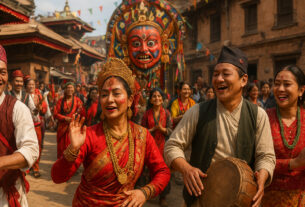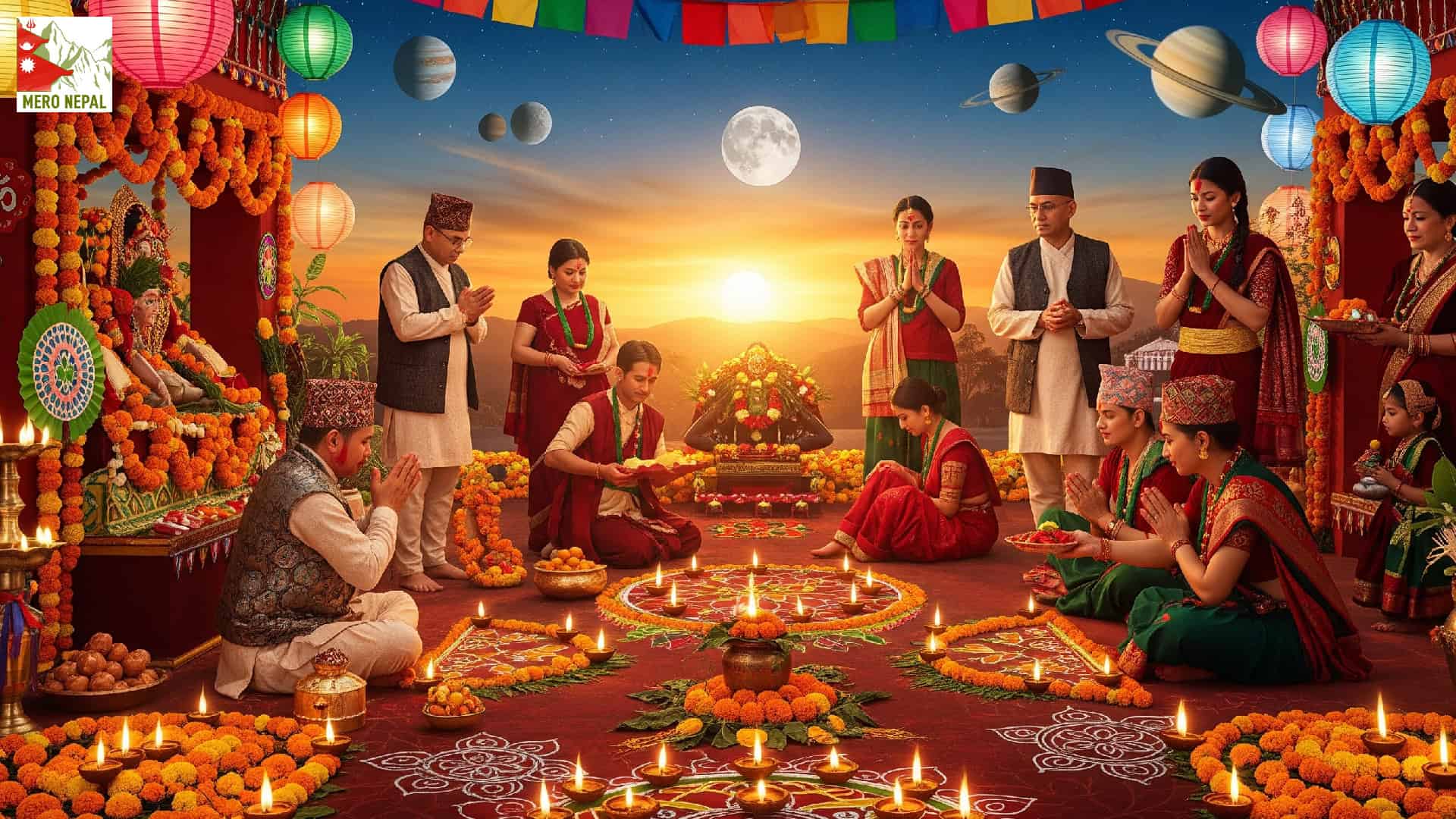
Nepal’s rich cultural and religious traditions are deeply connected with astrology and astronomy. The dates, timings, and rituals of festivals are not chosen randomly; they are guided by the positions of the sun, moon, and planets. Understanding the impact of planetary positions on Nepali festivals helps us appreciate the spiritual, social, and cultural significance of these celebrations.
The Role of Astrology in Nepali Festivals
Astrology plays a central role in determining auspicious times (muhurta) for festivals. Priests and astrologers study the positions of the sun, moon, and planets to decide the most favorable times for prayers, rituals, and family gatherings.
Key aspects:
Tithi (lunar date): Most Nepali festivals follow the lunar calendar; certain dates are considered especially auspicious.
Nakshatra (lunar constellation): The moon’s position in a particular constellation helps determine ritual timings.
Planetary positions: Planets like Jupiter, Venus, Mercury, and Mars influence the spiritual significance and auspiciousness of the festival.
Major Festivals and Planetary Influence
1. Dashain
Dashain, Nepal’s longest and most popular festival, is observed according to the lunar calendar. The positions of the sun and moon determine the nine-day celebrations, including Durga Puja and Vijaya Dashami.
Planetary impact:
Auspicious planetary alignment determines ritual timings.
Spiritual benefits of worship and blessings are enhanced.
Strengthens family bonds and spreads positive energy in society.
2. Tihar
Tihar, the festival of lights, involves Bhai Tika, Laxmi Puja, and other rituals. Its dates are set according to the lunar calendar and planetary positions.
Planetary impact:
Favorable planetary alignment brings prosperity to homes.
Enhances the spiritual significance of rituals like Bhai Tika and Laxmi Puja.
Promotes love, harmony, and cooperation within families and communities.
3. Maghe Sankranti
Maghe Sankranti marks the sun’s entry into the Capricorn zodiac.
Planetary impact:
The sun’s position is believed to promote health and prosperity.
Rituals and offerings performed at the correct time increase spiritual energy.
Aligns the festival with traditional practices and seasonal observances.
4. Chhath Puja
Chhath Puja is dedicated to worshipping the Sun God. The rituals depend on precise lunar dates and planetary positions.
Planetary impact:
Performing rituals at the correct planetary alignment enhances their spiritual effectiveness.
Brings purity, health, and prosperity to the family.
Strengthens social harmony and community bonds.
Importance of Planetary Positions
Spiritual benefit: Celebrating festivals at auspicious times aligns human life with the universe.
Cultural continuity: Astrology helps preserve traditions across generations.
Community harmony: Celebrating at the right time fosters positive energy and unity.
Family well-being: Proper timing of rituals brings peace, happiness, and prosperity to households.
Tips for Celebrating Festivals According to Planetary Positions
Consult a local priest or astrologer to determine auspicious times.
Use the Nepali lunar calendar (Panchang) for festival planning.
Schedule rituals, offerings, and family gatherings according to planetary positions.
Prepare ahead of time to reduce festival-day stress.
Conclusion
Nepali festivals are more than religious rituals—they are deeply rooted in our culture and aligned with celestial movements. Understanding the impact of planetary positions on Nepali festivals ensures that celebrations are spiritually meaningful, socially harmonious, and culturally continuous.
👉 For detailed festival dates, rituals, and cultural information, download the Mero Nepal App and plan your celebrations according to planetary positions.