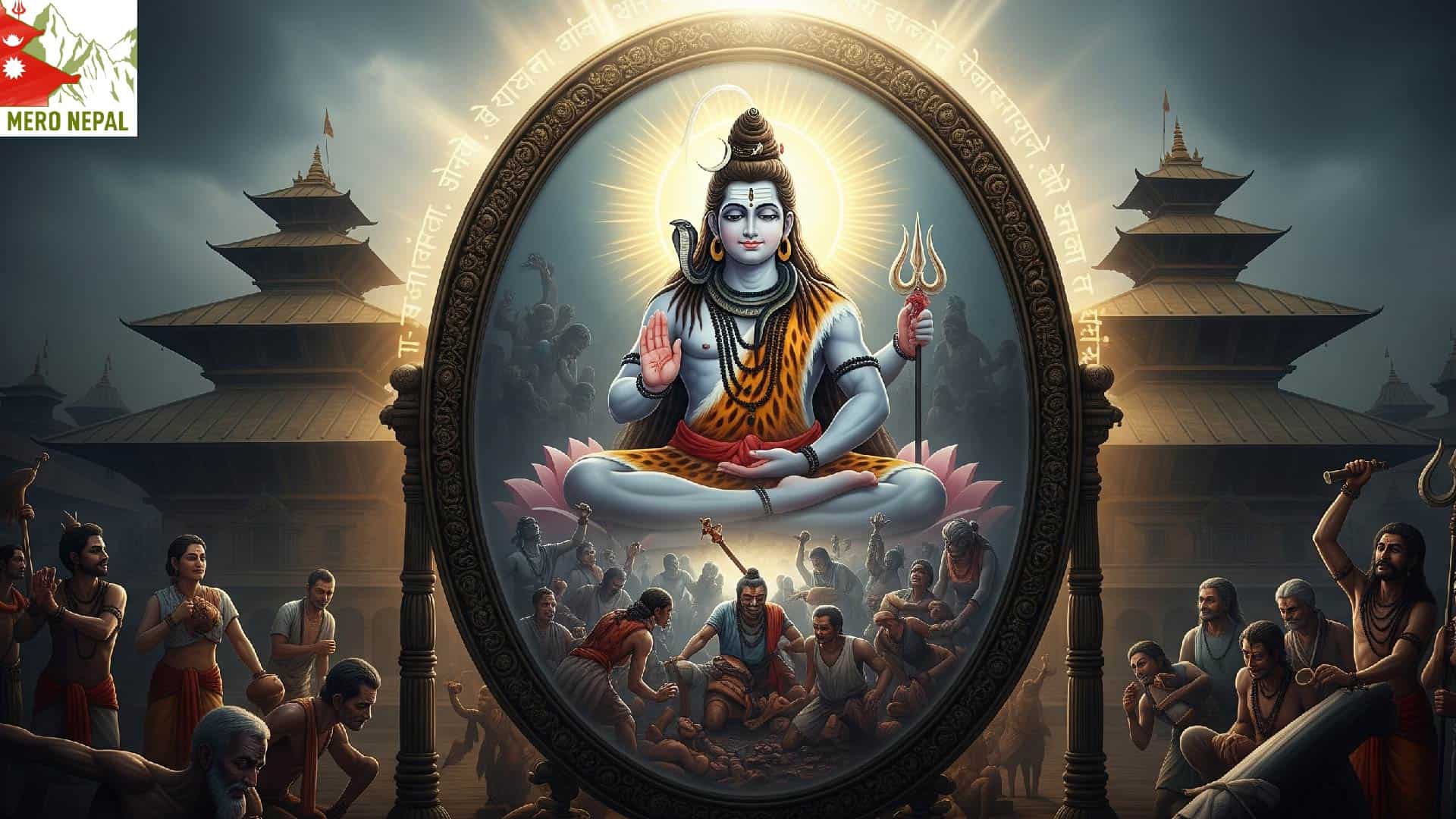
Preface: The Pain of the Age and the Light of the Scriptures
The rampant corruption, moral degradation, and uncontrolled growth of unrighteousness in the present society have caused deep concern and sorrow in the heart of every conscientious citizen. This is not merely a personal observation but a collective and bitter experience brought about by the transformation of the Yuga Dharma.
Surprisingly, the contemporary problems we face today perfectly match the symptoms of Kali Yuga described thousands of years ago in the revered scriptures of Sanatan Hindu Dharma such as the Srimad Bhagavatam, Vishnu Purana, and Garuda Purana. This alignment establishes that our current disheartening situation is not a random event but an integral part of a preordained cosmic cycle.
The aim of this report is not merely to list sins and their consequences but to deeply analyze the spiritual science of karma. It will explore how the sins committed by individuals—especially social crimes like corruption—impact their own life, their post-death journey, and most importantly, their descendants, and for how many generations this impact lasts. Finally, within Nepal’s specific context, it will clarify the destructive yet benevolent role of Lord of Lords, Pashupatinath, in bringing such sinners to the court of divine justice.
Chapter 1: The Reality of Kali Yuga — Symptoms as Described in the Srimad Bhagavatam
The Srimad Bhagavatam, regarded as the essence of all Puranas, in its Twelfth Canto records the detailed explanation by Sage Shukadeva to King Parikshit regarding the characteristics of Kali Yuga. These symptoms astonishingly match the realities of the modern world, especially of Nepali society. The moral, social, and environmental degradation we see today is not an accidental occurrence but a naturally expected sign of Kali Yuga as foretold in Hindu scriptures thousands of years ago. Understanding this helps us perceive the current misery not as an unexpected calamity but as an inevitable and predicted phase of Yuga Dharma.
Decline of Virtues
Shukadeva says that under the influence of powerful time, eight principal virtues will gradually diminish from human beings during Kali Yuga. The Srimad Bhagavatam verse states: श्रीशुक उवाच ततश्चानुदिनं धर्मः सत्यं शौचं क्षमा दया। कालेन बलिना राजन्नङ्क्ष्यत्यायुर्बलं स्मृतिः॥१॥
Meaning: O King! Under the influence of the mighty force of time, day by day religion, truth, purity (both internal and external), forgiveness, compassion, lifespan, physical strength, and memory will all decline.
The fall of these virtues hollows out society from within. The destruction of religion detaches man from duty; the absence of truth erodes trust; and the lack of compassion makes society cruel and insensitive.
Social and Moral Degradation
The scriptures describe symptoms of social collapse that are clearly visible today:
- Wealth as the Ultimate Standard: In Kali Yuga, a person’s worth will not be judged by lineage, character, or knowledge, but solely by wealth (वित्तमेव कलौ नॄणां जन्माचारगुणोदयः) । The wealthy—regardless of how they acquired their wealth—will be considered noble and respected. This mindset in countries like Nepal grants prestige to those who accumulate wealth through corruption and immorality, leaving honest people discouraged and demotivated.
- Justice Linked to Power: Law and justice will operate based only on power. Those with influence will bend justice in their favor, while the innocent and powerless will be denied it. Rulers themselves will be corrupt, and to attain power they will not hesitate to kill each other.
- Erosion of Human Relationships: Marriage will be reduced to a mere formal contract between man and woman. Relationships will be based on selfish interests and will eventually become meaningless. Success in trade will depend not on honesty but on deceit and fraud.
Hypocrisy and Pretension: People will consider outer cleanliness, like bathing, to be equivalent to the purification of the soul. The identity of a Brahmin will be based not on knowledge and penance but merely on the thread (janai) worn on the body. Those who are cunning and self-serving will be considered wise.
Natural and Material Crises
The moral decline will also reflect in nature. The maximum human lifespan will be reduced to 100 years in Kali Yuga, and towards the end of the age it will drop to only 20 years. Famine, drought, and excessive taxation by governments will force people to eat leaves, roots, and even inedible meat. The earth’s fertility will diminish, and roads will be infested with thieves and robbers.
Chapter 2: The Inescapable Law of Karma — “As You Sow, So Shall You Reap”
One of the foundational pillars of Sanatan Dharma is the doctrine of karma—a universal and inescapable law of cause and effect, where every physical, verbal, and mental action produces a definite result. Dharma and karma are inseparably connected; dharma guides which actions are righteous and which are unrighteous. Hindu scriptures place karma as supreme, because a person must inevitably reap the fruits of whatever actions they perform.
Under Kali Yuga’s influence, guiding virtues like religion, truth, and compassion diminish, naturally pushing people’s actions towards unrighteousness and sin. A society that considers wealth as the ultimate goal motivates individuals to commit crimes like corruption. Such negative actions add to one’s Sanchita Karma making not only the present life miserable but also creating a vicious cycle of suffering for countless future births.
Karma is generally classified into three types:
Sanchita Karma: The total accumulated store of good and bad actions from countless previous births—like an endless ledger of the soul.
Prārabdha Karma: That portion of Sanchita Karma which has ripened to bear fruit in the present life. One’s birth, family, pleasures, pains, and major life events are all dictated by this karma.
Kriyamāṇa Karma: The new actions one performs in the present through free will. The acts of a corrupt official today form his Kriyamāṇa Karma, which will determine his future Prārabdha and his journey in the next birth.
Ignorance and lack of wisdom lead to negative actions (sins), whose fruits are painful, while righteous actions aligned with the scriptures generate merit (punya) that yields happiness. For example, a government officer who protects the innocent according to his duty performs righteous action (punya), while taking bribes to free the guilty is a grave sin (pāpa).
Chapter 3: The Immediate Punishment of Sin — Experiencing Hell on Earth
Many believe that the fruit of sin is only experienced after death, but the Garuda Purana clearly states that a sinner begins to suffer hellish pains while still alive. The momentary material success or “enjoyment” experienced by corrupt people is an illusion. From the scriptural perspective, this so-called success is merely the consumption of the last remnants of merit from past lives. Once that store of merit is exhausted, the fruits of their present sinful acts begin to attack from all directions. The sinner’s present joy is merely the prologue to tomorrow’s intense suffering.
According to the Garuda Purana, sinful actions bring the following results even during one’s lifetime:
Financial Ruin: Wealth gained through deceit and corruption never brings lasting happiness. Such wealth is wasted on unnecessary diseases, legal troubles, and addictions. Businesses incur repeated losses, eventually leading to poverty.
Family Conflict: Families built on a foundation of unrighteousness never know peace. There is constant conflict, disputes, and unrest at home.
Physical and Mental Illness: Sin robs a person of mental peace, filling the mind with fear, anxiety, and despair. This mental unrest also breeds severe physical illnesses.
Suffering of Descendants: One of the gravest pains for a sinner is related to his offspring—miscarriages, the death of children, children born sickly, or those who take to the wrong path.
Painful Death: A person who lives a life of sin often dies an extremely painful death. At the time of death, he sees terrifying messengers of Yama. Such people often meet untimely deaths, increasing the likelihood of their souls being pushed into the realm of restless spirits (preta yoni).
Chapter 4: The Hereditary Effect of Sin — Ancestral Curse and the Ruin of Descendants
“How many generations suffer from the sin of one person?” The answer lies in Hindu ancestral science (Pitṛi Vidyā). Sins—especially social crimes like corruption that disgrace the entire family—are not limited to personal karma. They become a form of “offense against the ancestors” (Pitṛi Dosh), plunging the entire lineage into a terrible spiritual debt and curse. Every coin of illicit wealth earned by a corrupt person burns away the peace, happiness, and fortune of his own children’s future.
According to the Garuda Purana, Pitṛi Doṣh is one of the most potent and destructive afflictions. When a person tarnishes his family name, dharma, and honor through corruption or other vile acts, the ancestors (Pitṛi), upon seeing such deeds, become deeply distressed, ashamed, and dissatisfied. This dissatisfaction takes the form of a powerful curse whose effects last for many generations.
Effects of Pitri Doṣh:
Destruction of the Lineage: Dissatisfied ancestors halt the progress of the family. As the saying goes, “Those who forget their ancestors leave their children in sorrow.” Such families may have no children, or if they do, the children may die young, suffer chronic illness, or turn into lineage-destroyers.
Continual Failure: Members of a cursed lineage find no success in any sphere of life. Business, jobs, and family life all collapse, and obstacles arise in every endeavor despite all efforts.
Financial Scarcity and Discord: Poverty and shortage never leave such a family, regardless of earnings. The home is constantly plagued by illness, grief, and disputes.
Influence of Unfulfilled Spirits: The Garuda Purana warns against using certain belongings of the deceased, especially clothing. Doing so can attract the unfulfilled spirit of the dead, causing severe physical and mental distress, and also invoking Pitṛi Doṣh.
The scriptures generally recognize the influence of karma up to seven generations, and the severe effects of Pitṛi Doṣh are clearly seen for at least three generations. This curse continues until a virtuous descendant performs special rituals, Sraddha, and righteous deeds to satisfy and liberate the ancestors.
Chapter 5: The Ultimate Truth After Death — The Hellish Punishments Described in the Garuda Purana
The sufferings experienced in this life are merely a trailer; the real and terrifying punishment for sin begins after death. The Garuda Purana (Preta Kalpa) vividly describes the journey to Yama’s realm and the tortures of various hells.
When a sinner dies, fearsome messengers of Yama bind his subtle body with ropes and drag him along a dark and painful path to Yama’s abode. Upon arrival in Yama Puri, Chitragupta records a detailed account of all the sins and merits of the soul’s life. According to their karma, sinful souls are sent to different hells.
The Garuda Purana mentions 8.4 million hells, of which 21 are described as the most terrible. In Naraka Loka, the sinner gets no rest—not for a moment. The ground burns like hot iron, tree leaves are sharp like swords, and even while tormented by extreme hunger and thirst, not a grain of food or drop of water is available.
The following table explains some major sins and the hells and punishments described for them in the Garuda Purana.
| Sin/Crime | Associated Hell | Nature of Punishment |
|---|---|---|
Corruption, misappropriation of others’ wealth, stealing others’ property. | Tamisra | Throwing the sinner into deep darkness and continuously beating them with whips and sticks without giving food or water. |
Adultery with another’s spouse, sexual violence, betrayal | Andha Tamisra | Gouging out the eyes and immersing them in boiling hot oil; when they faint, reviving them only to repeat the same torture |
| Killing innocent animals or birds for food | Kumbhipaka | Placing them in a large vessel of boiling oil and cooking them alive. |
| Giving false testimony, falsely accusing the innocent | Raurava | Having them bitten and pierced with tridents by venomous and ferocious serpent-like creatures called Ruru. |
| Disrespecting parents and teachers, blaspheming religion | Vaitarani River | Throwing them into a foul-smelling river filled with excrement, urine, blood, pus, and bones, where poisonous creatures tear at their body. |
| Oppressing the weak by abusing power | Maharaurava | Allowing wild and ferocious beasts to rip apart their body and devour the flesh. |
Chapter 6: God of Gods, Mahadeva — The Justice and Punishment of Pashupatinath
It is relevant to connect the above-mentioned laws of karma and the provisions of punishment with Nepal’s spiritual center, Lord Pashupatinath. Lord Shiva is not only Shiva — the benefactor of devotees — but also Rudra, the fierce destroyer of unrighteousness and injustice. His work of destruction is indispensable for the balance of creation, for without the annihilation of the old and corrupted, the birth of the new and pure is impossible. (In dissolution itself is hidden the seed of creation.)
In the land of Nepal, the ultimate divine power that enforces this infallible law of karma is Lord Pashupatinath. Every misdeed committed by the corrupt and sinful in this sacred land is a direct offense against the guardian deity of the nation, and its punishment is inevitable. When both the rulers and the citizens become steeped in corruption and unrighteousness, they insult the deity of the nation. As a result, the country gradually loses divine protection and collectively suffers. Political instability, natural disasters, economic crises, and social breakdowns are not merely the outcomes of human error; they are also signs of the collective karmic consequences and divine displeasure the nation is facing. Thus, the corrupt and sinful not only destroy themselves and their lineage, but also make the entire nation a participant in divine wrath and suffering.
In Lord Shiva’s abode of Kailash, natural enemies — lion and bull, peacock and serpent — coexist peacefully, presenting the supreme ideal of justice, love, and harmony. When humans disrupt this cosmic balance through corruption, violence, and sin, Shiva’s destructive power — the catastrophic fire of His third eye — becomes active. The punishment of the corrupt is thus a necessary process for the restoration of this universal justice.
Conclusion: The Path to Redemption — “Dharma Protects Those Who Protect It”
This detailed analysis makes it clear that in Kali Yuga, the path of sin may appear attractive and easy for a short time, but its ultimate result is extremely destructive and terrifying for the individual, their lineage, and their soul. However, the scriptures not only present the problem but also provide solutions.
The Garuda Purana itself suggests ways to avoid the torments of hell. Chief among them are virtuous deeds, charity, and the performance of piṇḍa-dāna and śrāddha rituals for the salvation of one’s ancestors. To remove ancestral defects (pitṛ doṣa), effective measures include performing śrāddha on the death anniversaries of ancestors, worshiping the Peepal tree, and lighting a lamp daily in the southern direction of the home. Yet, the highest remedy is self-knowledge, meditation on the Supreme, and selfless devotion. Devotion performed with control over the mind and senses can cut even the complex bonds of karma.
The scriptures foretell that at the end of Kali Yuga, when the vessel of sin overflows, Lord Vishnu will incarnate as Kalki to annihilate the wicked and restore Satya Yuga. But instead of waiting for that great destruction and cosmic dissolution, we must change before time demands it. The core principle of Sanātana Dharma is “Dharma protects those who protect Dharma.” Therefore, repentance, virtuous action, and devotion are the only luminous path to cross this dark age and to secure the future of ourselves and our descendants.
Download Nepal’s Best Astrology App: meronepal.app